
The Diverging Fate of Asian Stocks Amid a Stalling Global Rally
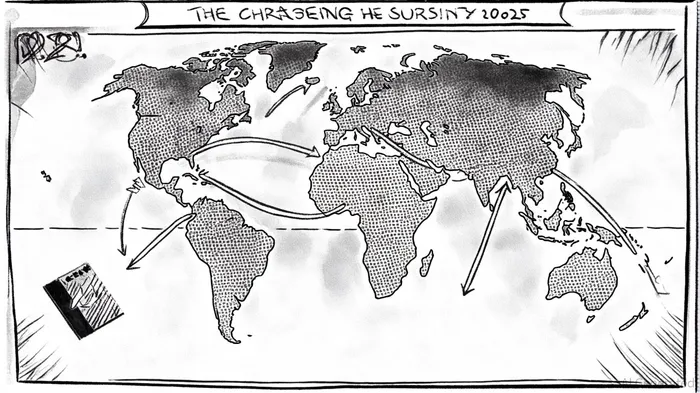
The global equity rally, once buoyed by synchronized economic growth and accommodative monetary policies, has shown signs of stalling in 2025. Against this backdrop, Asian stock markets have diverged sharply from global benchmarks, driven by a confluence of trade policy shifts, geoeconomic fragmentation, and strategic recalibrations by regional players. This divergence underscores the growing importance of granular analysis in emerging markets, where traditional correlations are breaking down and localized dynamics are taking precedence.
Global Context: Tariffs and Trade Realignment
The U.S. trade policies under President Donald Trump have fundamentally reshaped global commerce. By January 2025, the average effective U.S. tariff rate had surged to 18.2%, the highest since the 1930s . These tariffs, targeting everything from manufacturing inputs to consumer goods, have disrupted long-standing supply chains and forced countries to rethink their trade dependencies. According to a report by the World Economic Forum, over one-fifth of global employers now cite “increased restrictions on trade and investment” as a critical factor in their strategic planning [2]. This has catalyzed a shift in trade networks, with China redirecting exports to Europe and Canada to mitigate the impact of U.S. tariffs .
Regional Divergence: China, India, and Southeast Asia
The Asian stock market is no longer a monolith. China, India, and Southeast Asia are following divergent paths, each shaped by unique economic strategies and geopolitical imperatives.
China's Strategic Redirection: As the world's second-largest economy, China has accelerated its pivot away from U.S.-centric trade. By leveraging its manufacturing prowess, China has deepened trade ties with the European Union and Canada, securing alternative markets for its exports . This shift has been mirrored in its stock market, where sectors tied to domestic consumption and technology have outperformed global peers, reflecting a focus on self-reliance.
India's Self-Reliance Push: India's “Make in India” initiative has gained momentum, with the government incentivizing domestic manufacturing to reduce reliance on global supply chains. This strategy has attracted foreign direct investment (FDI) in sectors like semiconductors and renewable energy, driving growth in Indian equities despite global headwinds [2]. The country's stock market has also benefited from a surge in demand for skills related to cybersecurity and AI, as highlighted in the World Economic Forum's Future of Jobs Report 2025 .
Southeast Asia's Manufacturing Hub: Southeast Asian economies, particularly Vietnam and Indonesia, have emerged as critical nodes in the global supply chain. By positioning themselves as alternatives to China, these nations have attracted capital inflows and diversified their export baskets. Their stock markets have shown resilience, supported by robust manufacturing activity and strategic partnerships with both Western and Asian firms [2].
Strategic Hedging: Currency Diversification and Sectoral Shifts
Emerging markets are increasingly adopting hedging mechanisms to navigate the volatility of geoeconomic fragmentation. Currency diversification has become a priority, with countries reducing exposure to the U.S. dollar by expanding trade in euros, yuan, and regional currencies . For instance, China's cross-border trade in yuan has risen, while Southeast Asian nations have deepened currency swap agreements with non-U.S. partners.
Sectoral shifts are equally pronounced. The Future of Jobs Report 2025 notes that industries tied to the green transition and digital transformation are outpacing traditional sectors [2]. In India, for example, renewable energy and IT services have become key growth drivers, while Southeast Asia's focus on electric vehicle (EV) manufacturing has attracted significant investment. These trends highlight the need for investors to prioritize sectors aligned with long-term structural shifts rather than short-term macroeconomic cycles.
Conclusion: Navigating a Fragmented Landscape
The diverging trajectories of Asian stocks reflect a broader realignment of global economic power. While the U.S. trade policies have created headwinds, they have also spurred innovation and resilience in emerging markets. For investors, the key lies in identifying regional strengths and hedging against geopolitical risks. China's pivot to domestic demand, India's self-reliance agenda, and Southeast Asia's manufacturing renaissance each present distinct opportunities—and challenges—that require nuanced strategies.
As the global rally stalls, Asian markets offer a mosaic of possibilities. Those who can decode the interplay of trade policy, regional dynamics, and strategic hedging will be best positioned to capitalize on this new era of economic fragmentation.







Comentarios
Aún no hay comentarios