
The Divergence Between Asia and U.S. Markets Amid Rising U.S.-China Trade Tensions: Strategic Asset Reallocation and Risk Mitigation in Emerging Markets
The U.S.-China trade conflict, now in its eighth year, has entered a new phase of volatility in 2025, with far-reaching implications for global markets. Recent escalations-including President Trump's 130% tariff threat on Chinese imports and Beijing's rare earth export restrictions-have reignited fears of a full-scale trade war[2]. While U.S. markets have experienced sharp corrections, Asian economies have demonstrated surprising resilience, driven by strategic reallocation of capital and proactive risk mitigation. This divergence underscores a critical shift in global investment dynamics, as emerging markets recalibrate to a world of fragmented trade and geopolitical uncertainty.
Market Divergence: Asia's Resilience vs. U.S. Vulnerability
The U.S. and Asian markets are diverging sharply in response to trade tensions. In October 2025, Trump's announcement of 130% tariffs on Chinese goods triggered a 4% drop in the S&P 500, the worst single-day performance since April[1]. Conversely, Asian markets, while initially shaken, have stabilized due to China's aggressive diversification of trade partners. European, Southeast Asian, and Latin American markets now account for over 40% of China's exports, reducing its reliance on the U.S. and insulating it from retaliatory measures[2].
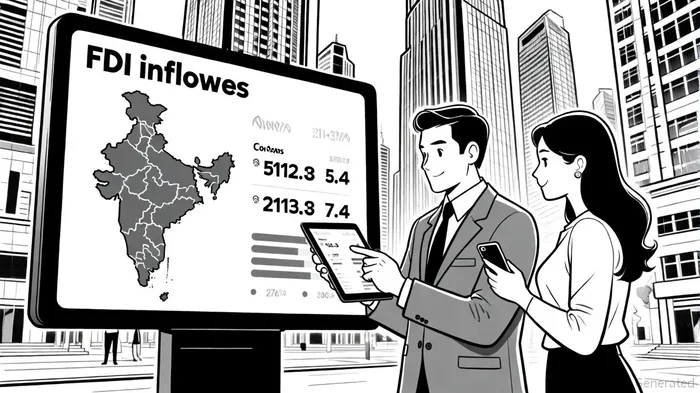
This shift reflects a broader trend of "strategic decoupling," where both nations prioritize domestic supply chains and technological self-sufficiency[4]. For instance, U.S. multinationals are accelerating nearshoring to Mexico and friendshoring to India, while China is deepening economic ties with the RCEP bloc. As a result, Asian markets are outperforming U.S. counterparts in attracting foreign capital. In Q1 2025, India's FDI inflows surged 15% year-on-year to $18.62 billion, driven by investments in technology and manufacturing[1]. Vietnam, meanwhile, saw FDI hit $21.5 billion in the first half of 2025, a 32.6% increase, as firms sought to avoid U.S. tariffs[3].
Strategic Asset Reallocation: Beyond China
Investors are increasingly separating China from broader emerging market (EM) allocations, recognizing divergent fundamentals. China's equity market, weighed down by regulatory crackdowns and a property crisis, has underperformed EM peers, while India and Southeast Asia have attracted inflows due to robust domestic demand and policy reforms[1]. For example, India's services sector-particularly fintech and AI-now accounts for 19% of total FDI inflows, reflecting confidence in its digital economy[3].
Vietnam's strategy of lowering import duties on U.S. goods under Decree 73/2025/NĐ-CP to promote trade balance[1] highlights how emerging markets are adapting to U.S. protectionism. Similarly, India's liberalized FDI policies-raising caps to 100% in insurance and coal mining-have made it a magnet for capital fleeing China's regulatory uncertainty[1]. These moves are not merely reactive; they reflect long-term structural shifts. Vietnam's GDP growth target of 8% in 2025, for instance, hinges on public-private partnerships and innovation-driven sectors like semiconductors[4].
Risk Mitigation: Navigating Geopolitical Storms
Emerging markets are adopting multifaceted risk mitigation strategies to buffer against trade war shocks. Vietnam's government has prioritized regulatory reform, streamlining FDI procedures and establishing state-backed investment funds for high-tech industries[4]. India, meanwhile, is leveraging its demographic dividend and domestic consumption base to reduce reliance on imports, particularly in pharmaceuticals and IT[2].
However, challenges persist. U.S. tariffs on Vietnamese exports-such as the 46% levy on electronics-threaten to undermine gains, while India's stock market volatility (a $180 billion wipeout in early 2025) underscores investor anxiety[2]. To address these risks, both nations are diversifying trade partnerships. Vietnam's participation in the EU-Vietnam Free Trade Agreement and India's Look East policy exemplify efforts to spread economic exposure[4].
Conclusion: A New Era of Fragmented Capital Flows
The U.S.-China trade conflict has accelerated a paradigm shift in global investment. While U.S. markets grapple with policy uncertainty and rising costs, Asia's emerging economies are capitalizing on strategic reallocation and proactive governance. For investors, the lesson is clear: diversification and sector-specific focus are essential in a world of geopolitical fragmentation. As Trump's latest tariff threats demonstrate, the trade war remains a wildcard-but for those who adapt, opportunities abound in markets that prioritize resilience over short-term expediency.







Comentarios
Aún no hay comentarios