
The Disruptive Potential of On-Demand Delivery in Retail: Strategic Partnerships as a Catalyst for E-Commerce Growth
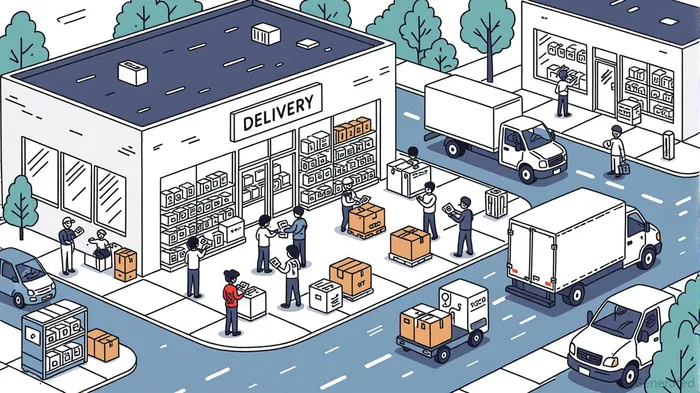
The retail landscape is undergoing a seismic shift, driven by the convergence of on-demand delivery platforms and local retail cooperatives. This transformation is not merely a technological upgrade but a redefinition of how value is created and distributed in e-commerce. Strategic partnerships between entities like Ace Hardware and DoorDashDASH-- exemplify this shift, unlocking scalable innovation, enhancing customer convenience, and fostering local economic resilience. For investors, these collaborations represent a compelling opportunity to capitalize on the future of retail while addressing systemic challenges in traditional commerce.
The Scalability of Digital Retail Innovation
On-demand delivery has evolved from a niche service to a cornerstone of modern retail. By 2025, the global online food delivery market is projected to reach $1.39 trillion, while grocery delivery is expected to hit $938.98 billion, growing at a 9.74% CAGR. These figures underscore a broader trend: consumers now demand frictionless delivery options, with 60% expecting real-time tracking and adjustable delivery windows. To meet these expectations, platforms like DoorDash and retailers like Ace Hardware are leveraging AI-driven optimization and 5G infrastructure to streamline logistics. For instance, micro-fulfillment centers—small, urban warehouses that enable rapid order processing—have expanded by 200% since 2022. This infrastructure allows local retailers to compete with e-commerce giants by reducing delivery times and operational costs.
Ace Hardware's partnership with DoorDash illustrates this scalability. By integrating on-demand delivery from over 4,000 locally owned stores, the collaboration enables the hardware retailer to bypass traditional supply chain bottlenecks while maintaining its community-centric model. For investors, this partnership highlights a critical insight: scalability in retail is no longer about centralized warehouses but about distributed networks that empower local businesses to participate in the digital economy.
Enhancing Customer Convenience Through Collaboration
Convenience is the linchpin of modern e-commerce. In 2025, 83% of U.S. online shoppers prioritize free shipping, and 56% use smartphones for pre-purchase research. Delivery platforms are addressing these demands by embedding personalization and flexibility into their services. For example, DoorDash's AI algorithms optimize delivery routes in real time, reducing wait times by up to 30% in urban areas. When paired with Ace Hardware's localized inventory, this technology ensures that customers receive hardware and tool products faster than traditional retail models can deliver.
Moreover, the partnership aligns with the rise of mobile-first shopping. By 2027, 70% of Asia-Pacific consumers will use smartphones for real-time logistics tracking, a trend mirrored in North America. Ace Hardware's integration with DoorDash's app allows customers to access localized inventory, adjust delivery preferences, and receive instant updates—all through a single interface. This seamless experience not only retains customers but also drives cross-selling opportunities, as users exposed to Ace Hardware's products may explore other services offered by DoorDash's network.
Local Economic Impact: Beyond Transactional Value
Critics often argue that on-demand delivery platforms extract value from local economies by relying on gig workers and undercutting traditional retail. However, strategic partnerships like Ace Hardware and DoorDash demonstrate a different narrative. By enabling local stores to offer delivery services, these collaborations create jobs and retain economic activity within communities. For example, the Drivers Coop Colorado—a worker-owned rideshare cooperative—shows how delivery platforms can be structured to benefit local workers, with driver-members earning 25–30% more than traditional gig workers.
Ace Hardware's model further amplifies this impact. As a cooperative with over 5,600 locally owned stores, the company reinvests profits into communities while leveraging DoorDash's logistics to expand its reach. This synergy is not hypothetical: a similar partnership between Batteries Plus and Civic Marketplace saved public agencies 30% on procurement costs while supporting 700 local storefronts. For investors, such models prove that profitability and community benefit are not mutually exclusive but complementary.
A Compelling Case for Investors
The financial metrics of on-demand delivery platforms and their retail partners reinforce their investment potential. DoorDash's Q2 2025 revenue surged 24.9% year-on-year to $3.28 billion, driven by 761 million service requests. Meanwhile, Ace Hardware reported $2.8 billion in Q2 2025 revenue, with a 3.9% year-on-year increase. These figures suggest that the partnership is not only viable but also scalable, as both entities capitalize on complementary strengths: Ace Hardware's localized inventory and DoorDash's logistics expertise.
However, risks persist. Rising labor and food costs, regulatory scrutiny (e.g., DoorDash's pending $3.9 billion Deliveroo acquisition review), and margin pressures could challenge growth. Yet, the broader trend—toward localized, tech-enabled retail—is resilient. As e-commerce matures, consumers will increasingly favor platforms that balance speed with sustainability, and partnerships like Ace Hardware and DoorDash are uniquely positioned to meet this demand.
Conclusion
The fusion of on-demand delivery and local retail cooperatives is redefining e-commerce. For investors, the key lies in identifying partnerships that combine technological scalability with community-centric value creation. Ace Hardware and DoorDash's collaboration is a blueprint for this future: it leverages AI and logistics innovation to enhance convenience, scales through distributed networks, and strengthens local economies. As the retail sector evolves, such strategic alliances will not only drive growth but also set new standards for sustainable, inclusive commerce.







Comentarios
Aún no hay comentarios