
Disney's Venezuelan Crossroads: How TPS Revocation Exposes Global Labor Risks and Signals a Shift in Investment Strategy
The U.S. Supreme Court’s May 2025 decision to revoke Temporary Protected Status (TPS) for 348,200 Venezuelans under the 2023 designation has sent shockwaves through industries reliant on immigrant labor—including entertainment, hospitality, and tourism. For Walt DisneyDIS-- (DIS), whose global operations depend on diverse workforces, the ruling poses a stark challenge: adapt to sudden labor shortages or risk operational instability. The fallout underscores a broader lesson for investors: firms with overexposure to regions with volatile immigration policies face existential risks, while those with diversified labor strategies will thrive.
The TPS Revocation’s Domino Effect on Disney’s Workforce
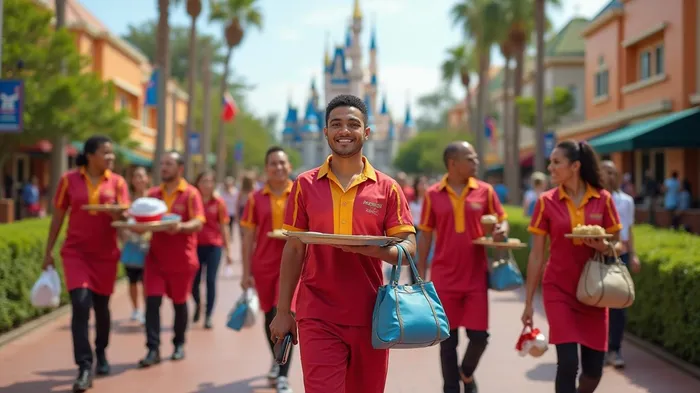
Venezuelan TPS holders, many of whom work in sectors like hospitality (a cornerstone of Disney’s theme parks and resorts), now face the loss of work authorization as early as 2026. Disney’s Venezuelan operations—whether through theme park staff, merchandising supply chains, or regional partnerships—are at risk of disruption. Even a temporary workforce gap could strain revenue streams. For instance, a 10% reduction in seasonal workers at Orlando’s Walt Disney World, which employs over 75,000 people, could cost millions in lost ticket sales and merchandise revenue.
The operational risks are twofold:
1. Labor Costs: Replacing furloughed workers with visas or alternative hires could inflate labor expenses by 20-30%, given the need for expedited work permits or reliance on higher-paid U.S. residents.
2. Talent Retention: Employees with TPS may seek employers offering clearer paths to stability, such as companies with lobbying power to influence immigration policy or access to H-1B visas.
Why Venezuela’s Labor Crisis Isn’t Isolated
Disney isn’t alone. Companies like Marriott (MAR) and Carnival (CCL), which employ large numbers of TPS holders in hotels and cruise lines, face similar pressures. The broader implication? Global supply chains are only as resilient as their weakest link.
The TPS revocation has exposed a systemic flaw: U.S. employers in labor-intensive industries have grown reliant on temporary workers from politically unstable regions. For Disney, whose “magic” hinges on seamless operations, the disruption could damage its brand reputation and shareholder value.
The Investment Opportunity: Diversification as a Hedge
Investors should prioritize firms with geographically and legally diversified labor strategies. For example:
- Marriott (MAR): Has dual U.S. and international hiring pipelines and invests in visa programs for key markets.
- Coca-Cola (KO): Relies on local workforces in stable economies like Colombia and Mexico, reducing dependency on Venezuelan labor.
The Bottom Line: Act Now or Pay Later
The TPS revocation isn’t just a policy shift—it’s a stress test for corporate resilience. Companies like Disney, whose labor models are concentrated in high-risk regions, must pivot to survive. Investors should demand transparency from firms on their contingency plans:
- Short-Term: Cross-training U.S. workers, securing alternative visas, or outsourcing to stable markets.
- Long-Term: Lobbying for immigration reform or shifting supply chains to regions with robust workforce protections.
The writing is on the wall: firms that ignore labor diversification risk becoming casualties of political volatility. For investors, the choice is clear: allocate capital to companies with sustainable, global-ready labor strategies—or watch profits evaporate as supply chains crumble.
In an era where immigration policy is a boardroom battleground, the winners will be those who see workforce sustainability as the ultimate competitive advantage.





Comentarios
Aún no hay comentarios