
Disney's Strategic Position Amid the Warner Bros Takeover Battle
The media landscape is undergoing a seismic shift as the battle for Warner BrosWBD-- Discovery (WBD) intensifies, with Netflix and Paramount locked in a high-stakes bidding war. While the outcome remains uncertain, one company stands to benefit quietly from this consolidation: The Walt Disney CompanyDIS--. With its diversified business model, robust streaming growth, and strategic focus on IP-driven content, Disney is emerging as a hidden beneficiary in a sector increasingly defined by consolidation and competition.
The WBDWBD-- Takeover: A Double-Edged Sword for Disney
, including HBO and DC Studios, could reshape the entertainment industry. If finalized, . TV series demand, . However, Disney's recent financial performance and strategic positioning suggest it is well-equipped to weather such challenges.
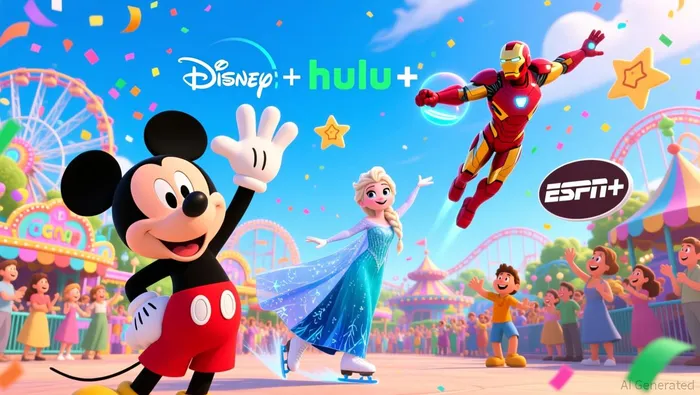 In fiscal 2025, Disney reported strong results, with its direct-to-consumer segment (Disney+, Hulu, . Meanwhile, the Experiences segment, driven by theme parks and cruise operations, delivered record operating income. These diversified revenue streams insulate DisneyDIS-- from the cyclicality of linear TV, a sector where WBD's Global Linear Networks division is struggling.
Strategic Resilience in a Consolidating Market
Disney's decision to forgo acquisition opportunities, as emphasized by , underscores its confidence in its existing portfolio. Franchises like Marvel, Star Wars, and The Simpsons remain cultural touchstones, while and ensure a steady pipeline of high-margin content. This focus on organic growth contrasts with WBD's exploration of a potential spin-off of its Discovery Global division, a move that could dilute its value.
The threat of a Netflix-WBD merger is real, but Disney's integrated ecosystem-combining streaming, parks, sports, and content creation-provides a unique competitive edge. Analysts note that Disney's forward price-to-sales ratio , reflecting market confidence in its stable earnings and long-term visibility. Furthermore, Disney's recent consolidation of Disney+ and Hulu into a unified platform has enhanced user experience and reduced operational complexity, a critical advantage in an era where customer retention is paramount.
Antitrust Concerns and the Future of Content Diversity
While a Netflix-WBD merger could dominate the market, it also raises antitrust red flags. Historical precedents, such as , highlight the risks of reduced creative diversity and mid-budget film production. Disney's diversified model, which balances blockbuster franchises with mid-tier content and family-friendly programming, positions it to fill the gap left by such consolidation. Additionally, its advertising-supported platforms, including ESPN+ and Hulu, offer a scalable revenue model that rivals WBD's ad-dependent linear networks.
Investment Implications
For investors, Disney's strategic discipline and financial resilience make it an attractive play in a consolidating media landscape. The company's plans to double its stock buyback target to $7 billion and its focus on cost management further enhance shareholder value. While WBD's shareholders face a critical decision on whether to tender shares to Paramount's $30-per-share offer, Disney's management has signaled no immediate need for external deals, allowing it to focus on executing its core strengths.
In conclusion, Disney's ability to leverage its IP, diversify revenue streams, and adapt to streaming trends positions it as a quiet winner in the WBD takeover saga. As the media industry consolidates, Disney's integrated ecosystem and disciplined approach will likely ensure its continued dominance-and its shares remain a compelling investment for those seeking exposure to the sector's next phase.





Comentarios
Aún no hay comentarios