
Disney's Q1 Earnings: Testing the Peak Demand Monetization Engine
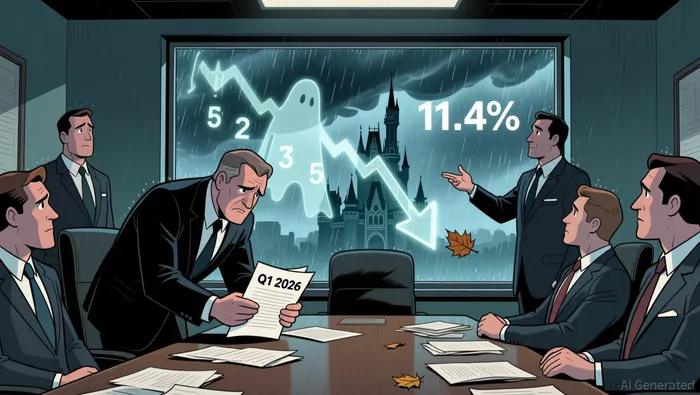
The stage is set for a critical test. Disney is expected to report first-quarter earnings soon, with analysts forecasting a profit of $1.56 per share. That figure represents an 11.4% year-over-year decline from the $1.76 posted last year. On the surface, it looks like a transitional quarter. The full-year outlook, however, frames the real challenge. The company's full-year EPS guidance of $6.60 implies a significant acceleration in the second half, positioning Q1 as the proving ground where peak demand must be monetized.
This is the core investment question: how effectively can Disney convert its structural peak demand into top-line growth? The seasonal backdrop is favorable, but the execution is under the microscope. The company's guidance for the quarter includes headwinds like theatrical slate comparisons and lower political advertising revenue. Against this, it must demonstrate pricing power and cost discipline to deliver a quarter that doesn't just meet expectations but signals strength for the more profitable second half.
The setup is further shaped by two key structural drivers aimed at boosting returns. First, the board has doubled the share repurchases target to $7 billion. Second, the landmark OpenAI licensing and investment agreement announced last month provides a new avenue for monetization and technological integration. These initiatives are meant to enhance shareholder returns, but their impact will be measured against the immediate task: turning Q1's seasonal peak into a profitable reality. The outcome will reveal the true strength of Disney's pricing engine.
The Peak Demand Calendar: From Holidays to Financial Impact
The operational calendar is Disney's first test of its monetization engine. The company's financial performance in any quarter is inextricably linked to the timing and intensity of seasonal demand peaks. For Q1, the critical window is defined by a series of high-spending holidays and school breaks that allow for premium pricing and elevated per-capita spending. These include New Year's Day, the Martin Luther King Jr. Day holiday weekend, and the Valentine's Day and Presidents' Day period. These are the days when the parks command their highest ticket prices and guests are most willing to pay for dining, merchandise, and experiences, directly boosting top-line revenue.
Yet these peaks come with a cost. The operational strain of managing heavy crowds requires a proportional increase in labor and support services. This creates a fundamental tension: while revenue per guest can spike, so too can variable costs. The margin protection story hinges on Disney's ability to manage this cost discipline. The company must ensure that the incremental revenue from premium pricing outweighs the added expenses of staffing and operations during these intense periods. Without tight control, the financial benefit of peak demand can be eroded.
<p>For all that, the calendar also offers a strategic baseline. The period from mid-January to early February is historically one of the least crowded windows at the resort. This provides a valuable opportunity for operational efficiency, allowing the company to fine-tune processes, train staff, and manage inventory without the pressure of peak demand. More importantly, it sets the stage for the subsequent holiday peaks. A well-run, efficient operation during this quieter period can be leveraged to handle the surge in guests and spending that follows, turning seasonal volatility into a predictable financial rhythm. The Q1 test is whether Disney can monetize its peak demand while keeping the underlying engine running smoothly.
Valuation and Scenario Analysis
The financial outcome for Q1 hinges on a single, critical equation: can Disney's peak demand-driven revenue surge outpace its rising costs? The evidence from last year provides a clear benchmark for success. The company's total segment operating income increased 12% for the year, a powerful demonstration of operational discipline that turned seasonal strength into bottom-line growth. This is the model the market will scrutinize. The risk is that cost discipline falters under the weight of higher labor and support expenses during the holiday peaks, eroding the margin benefit of premium pricing.
Analysts are pricing in a successful navigation of this transition. The average analyst price target of $135.28 implies an 18.5% upside from recent levels. This optimism is built on the expectation that Disney will deliver a Q1 that meets its own guidance, setting the stage for the weighted second-half growth in both Entertainment and Experiences. The stock's recent underperformance versus the broader market and its sector suggests this target is not guaranteed; it assumes the company avoids the headwinds of theatrical slate comparisons and lower political advertising without a corresponding drop in profitability.
The most significant near-term risk, however, is that the company's most talked-about strategic initiative does not yield commercial benefits in the near term. The landmark OpenAI licensing and investment agreement is a long-term bet on technological integration and new monetization. But for Q1, the stock's valuation is almost entirely reliant on the execution of its traditional parks and streaming businesses. If the OpenAI partnership fails to generate tangible, near-term revenue or cost savings, the entire valuation premium could be re-rated downward, leaving Disney to prove its value through conventional financial performance alone. The Q1 report will be the first real test of that bet.
Catalysts and Risks: The Q1 Watchlist
The coming earnings report is the primary catalyst. Disney must deliver a quarter that meets its own guidance, with the profit of $1.56 per share expectation serving as the baseline. More critical than the headline number will be management's commentary on the path to the full-year EPS target of $6.60. Any deviation from that trajectory, or signs of cost discipline faltering during the holiday peaks, will immediately challenge the market's optimistic scenario. The stock's recent underperformance versus its sector suggests investors are waiting for this confirmation.
A secondary, near-term catalyst is the rollout of new promotional offers. The company is set to introduce a 3-day, 3-park deal for Disney+ subscribers this spring. This targeted promotion aims to boost near-term park traffic and subscriber engagement. Its success will be a direct test of Disney's ability to leverage its streaming audience to drive physical park visits, a key pillar of its integrated monetization strategy. Early adoption and traffic lift from this offer will provide a real-time signal of demand strength.
The main risk is that the favorable crowd calendar fails to translate into the expected revenue lift. The evidence shows mid-January to early February is historically one of the least crowded periods, which is good for operations but bad for revenue. The real test comes with the subsequent holiday weekends. If traffic and spending during the Martin Luther King Jr. and Valentine's Day periods fall short of expectations, it would undermine the peak demand thesis. Equally, stagnation in streaming subscriber growth would weaken the broader growth narrative, leaving the stock reliant solely on parks performance. In that scenario, the valuation premium built on the OpenAI partnership and future growth would be exposed.







Comentarios
Aún no hay comentarios