
Disney's Path to Recovery in 2026: Strategic Growth Drivers and Valuation Opportunities
The Walt DisneyDIS-- Company's journey toward recovery in 2026 hinges on a dual strategy: capitalizing on its physical and digital assets while navigating the challenges of a competitive entertainment landscape. Recent financial results, strategic investments, and analyst projections suggest that Disney is positioning itself for a rebound, driven by theme park expansions, artificial intelligence (AI) integration, and streaming platform optimization.
Financial Resilience and Mixed Q3 2025 Performance
Disney's Q3 2025 results underscored both its resilience and vulnerabilities. Revenue rose 2% year-over-year to $23.7 billion, with the Experiences segment-encompassing theme parks and cruises-contributing significantly to growth, reporting a $2.5 billion segment operating income, up $294 million from the prior year. The Direct-to-Consumer (DTC) segment also showed promise, generating a $346 million profit amid 183 million Disney+ and Hulu subscriptions. However, the Entertainment division faced headwinds, with a 15% decline in operating income due to weaker theatrical performance and lower content licensing revenue.
Despite these mixed results, adjusted earnings per share (EPS) surged 16% to $1.61, exceeding analyst expectations. This outperformance, however, was met with a 3.2% post-earnings stock decline, reflecting market skepticism about the company's long-term growth trajectory. Historically, Disney's stock has underperformed on earnings days, averaging a -0.2% return, suggesting short-term volatility may persist.
Strategic Growth Drivers: Parks, AI, and Global Expansion
Disney's 2026 recovery plan centers on three pillars: theme park expansion, AI-driven efficiency, and streaming innovation.
1. Theme Park Investments and Premium Pricing
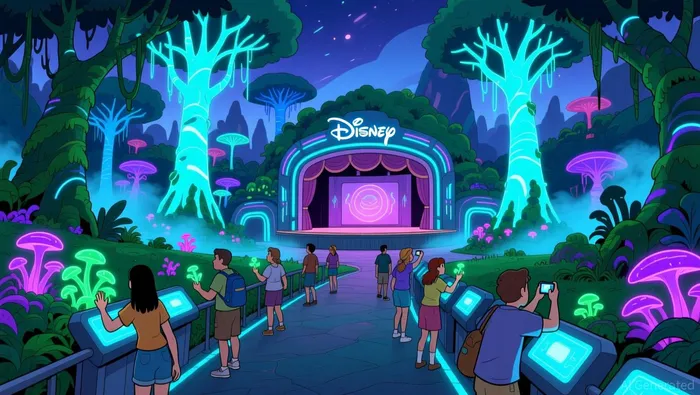
Disney is allocating $60 billion over the next decade to enhance its Parks, Experiences, and Products segment, focusing on capacity increases at existing domestic parks rather than new locations. This strategy leverages high-demand intellectual properties (IPs) like Avatar, Frozen, and Marvel to create immersive, premium-priced attractions. For instance, the upcoming Avatar-themed expansion at Walt Disney World is expected to drive higher ticket prices and ancillary spending. Additionally, and are projected to add $400–$500 million in annual EBITDA, bolstering the Experiences segment.
2. AI Integration and Cost Efficiency
Disney's $1 billion equity investment in OpenAI and a licensing agreement to generate AI-driven content featuring its iconic characters signal a bold foray into AI. This partnership, coupled with internal AI tools for animation and voice generation, has already reduced production cycles by 30–40%, cutting costs and expanding margins. Analysts project these efficiencies will further strengthen Disney's content pipeline, enabling faster delivery of high-quality material for streaming and theatrical releases.
3. Streaming and Global Reach
The DTC segment remains a critical growth engine. Disney+ and Hulu's 183 million subscriptions, up 2.6 million from the previous quarter, reflect steady progress in reducing churn. The company's integration of Hulu into Disney+ and the expansion of ESPN's global footprint-particularly in Asia-are expected to attract live sports viewers and diversify revenue streams. Analysts forecast continued DTC revenue growth in 2026, with operating income as a key contributor to overall profitability.
Valuation Analysis: Attractive Metrics and Analyst Outlooks
Disney's current valuation appears undervalued relative to industry peers. Trading at a forward P/E ratio of 15.4X, the stock is below the Zacks Media Conglomerates industry average of 17.97X. Analysts project earnings of $6.59 for fiscal 2026, representing 11.13% year-over-year growth. A 12-month price target of $137.75 implies a potential 24.67% upside from current levels, driven by anticipated revenue growth in the Experiences and DTC segments.
The company's robust financial health further supports its valuation case. With strong cash reserves, a lean balance sheet, and a 6.03% return on capital, Disney is well-positioned to fund its strategic initiatives while maintaining shareholder returns. A planned $7 billion share repurchase program for fiscal 2026 underscores its commitment to enhancing equity value.
Risks and Challenges
While Disney's strategy is compelling, risks remain. The theme park segment's reliance on discretionary spending makes it vulnerable to economic downturns. Additionally, the streaming market's saturation and subscriber acquisition costs could pressure margins. The company's AI initiatives, though innovative, require sustained investment and regulatory clarity.
Conclusion
Disney's path to recovery in 2026 is anchored in its ability to monetize physical experiences, leverage AI for cost efficiency, and expand its digital footprint. With a balanced valuation, strong cash flow, and a pipeline of high-impact projects, the company offers a compelling case for investors willing to navigate short-term volatility. As the Experiences segment drives operating income growth and streaming platforms mature, Disney's strategic bets could unlock significant value-provided its execution aligns with ambitious projections.







Comentarios
Aún no hay comentarios