
Why Dios Fastigheter AB's Green Transition Play Makes It a Hidden Gem in Nordic Real Estate
The real estate sector in Northern Sweden is undergoing a seismic shift as the region becomes a hub for renewable energy infrastructure, EV corridors, and sustainable industrial complexes. Dios Fastigheter AB (STO:DIOF), a property company often overlooked by investors focused on short-term volatility, is positioning itself at the heart of this transformation. Despite a recent 2.21% stock decline driven by near-term occupancy challenges, the company's 12% surge in property management income in Q2 2025, coupled with its strategic alignment with the green transition, suggests this dip presents a rare buying opportunity. Let's dissect why DIOF's undervalued stock could be a long-term winner.
The Financial Foundation: Cash Flow, Leverage, and Debt Refinancing
Dios Fastigheter's Q2 results highlight a robust financial engine. Property management income jumped 12% year-over-year to SEK268 million, fueled by tenant renewals, energy efficiency gains (a 5.8% improvement), and cost discipline. While the economic occupancy rate dipped slightly to 90% from 91% in 2024, this reflects intentional asset rotation—selling non-core properties like a Bologna office for SEK700 million—and focusing on high-growth, green-linked assets.
The company's debt refinancing in Q2 is equally compelling. By refinancing SEK5 billion in debt, it slashed its credit margin by 5 basis points, reducing the average interest rate to 4%—a 20 basis point drop from Q1. This refinancing extended debt maturity to 2.6 years, while maintaining a conservative loan-to-value (LTV) ratio of 43%, far below the 55% threshold management aims to stay under. With SEK1.7 billion in unused credit facilities, DIOF's balance sheet is a fortress, offering flexibility for acquisitions and shareholder returns.
The Green Transition Catalyst: Why Northern Sweden Matters
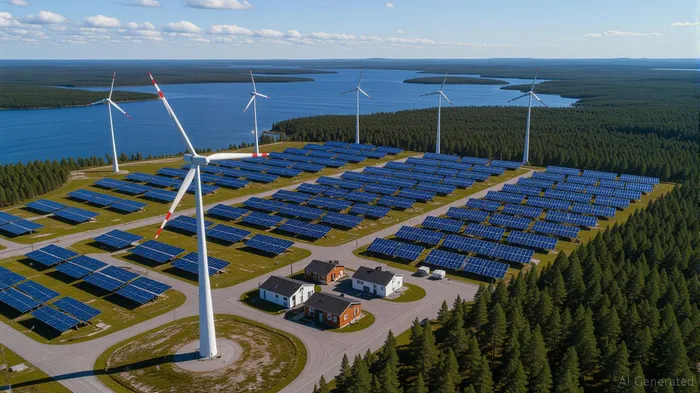
Dios Fastigheter's growth isn't just financial—it's spatial. The company has 32% of rental income tied to public-sector tenants, including municipalities and utilities, which fund green infrastructure projects like wind farms, EV charging corridors, and data centers. In Q2, it acquired a SEK1.6 billion property in UMO, a region critical to Sweden's renewable energy grid, which should boost management income per share by ~4%.
The “green premium” is already materializing. Properties in Northern Sweden's energy corridors command higher occupancy stability and rent growth due to their strategic utility. For instance, a recent acquisition in the Kiruna region, near major lithium mines, has a 3.6-year lease maturity, ensuring steady cash flow. CEO David Carlson's focus on asset rotation—selling underperforming assets and buying into green-linked properties—aligns with a 20% annual target for property management income growth, a goal supported by Q2's 12% jump.
Addressing the Near-Term Challenges: Temporary Hurdles, Not Headwinds
Critics point to vacancy-related rent declines (like-for-like rents fell due to Q1 vacancies) and a SEK130 million unrealized value drop in Q2. However, these are cyclical issues, not structural. The occupancy dip is tied to strategic divestments and new developments—90% occupancy remains strong, and the company projects stabilization by late 2025 as leases renew. Meanwhile, the unrealized loss stems from specific underperforming properties being sold, not a sector-wide collapse.
The real risk? Tenant renewal uncertainty for public-sector leases averaging just 2.3 years in new acquisitions. But here's the catch: public-sector clients in green infrastructure projects have long-term government mandates, making renewals far more predictable than commercial tenants.
Valuation and Investment Thesis: A Hidden Gem at 2.21% Off?
Dios Fastigheter trades at a discount to its Nordic peers, with a price-to-book ratio of 0.8x versus the sector average of 1.2x. This undervaluation ignores its 20%+ growth pipeline in green-linked assets and 41% LTV, which allows aggressive acquisitions. Even after the recent dip, the stock offers a 4.5% dividend yield, backed by a SEK2 billion cash buffer and stable cash flow.
Investors should view the 2.21% decline as a buying opportunity. The company's 2025 targets—including a 10% annual growth in property management income and a maintained LTV under 55%—are achievable given its refinanced debt, geographic focus, and tenant diversification.
Final Call: Buy DIOF for the Green Transition Play
Dios Fastigheter AB is a patient investor's dream. Its underappreciated exposure to Northern Sweden's green transition, fortress balance sheet, and disciplined asset rotation make it a standout in a sector still pricing in macroeconomic uncertainty. While occupancy and valuation metrics may fluctuate in the short term, the long-term tailwinds of renewable energy infrastructure spending are undeniable.
Investment advice: Accumulate DIOF on dips below its 52-week average, with a 12-18 month horizon. Monitor occupancy trends in H2 2025 and the execution of its acquisition pipeline. For income-focused investors, the dividend yield and cash flow stability add further appeal.
In a world where ESG investing is no longer optional, DIOF's alignment with Sweden's green future—and its hidden value—could soon attract the attention it deserves.







Comentarios
Aún no hay comentarios