
A Diminished Chancellor: Navigating the Merz Era in German Markets
Political Landscape: A Fragile Start
Friedrich Merz’s ascension to the German chancellorship in May 2025 marked a historic low point for political stability in post-war Germany. His narrow victory—securing 325 votes in the second round of voting after a stunning first-round failure—exposed deep fissures within his CDU/CSU-SPD coalition. With public approval at just 38%, MerzTOMZ-- inherits a government reliant on a 12-seat majority, a precarious foundation for an agenda that demands sweeping reforms.
The coalition’s survival hinges on navigating two existential risks: internal dissent over fiscal priorities and the rising threat of the far-right AfD, now the Bundestag’s largest opposition bloc. Analysts warn that any misstep could trigger new elections, further destabilizing markets.
Economic Policy: Ambition Meets Realpolitik
Merz’s economic blueprint centers on a €500 billion infrastructure and climate fund, aimed at modernizing railways, energy grids, and digital systems. While the plan enjoys broad support, execution faces hurdles. Key reforms—such as corporate tax cuts and accelerated investment write-offs—are vulnerable to coalition disagreements.
The government’s decision to exempt defense spending from Germany’s strict debt brake (Schuldenbremse) signals a priority shift. Defense stocks like Rheinmetall (XTRA:RHMG) and Hensoldt (XTRA:HAG) may benefit, though initial post-election volatility underscores investor skepticism.
Market Reactions: A Delicate Balancing Act
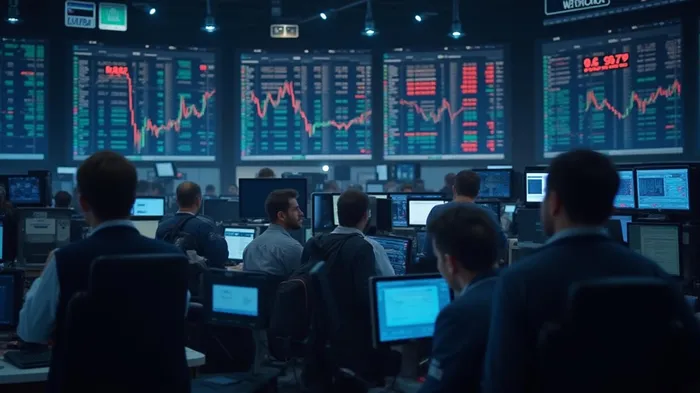
Markets initially recoiled at Merz’s first-round defeat, with the DAX plunging 1% as investors priced in political paralysis. However, his eventual confirmation stabilized equities, though gains were modest. Defense and infrastructure sectors rebounded after initial dips, reflecting hopes that Merz’s agenda will proceed despite coalition tensions.
The euro (EUR) held steady against the dollar (~$1.13), but bond yields for German 10-year Bunds remained range-bound, reflecting lingering uncertainty. Investors now await clarity on two key fronts:
1. U.S. Trade Tariffs: A 20% tariff on EU goods, imposed in April 2025, threatens Germany’s export-driven economy.
2. Coalition Cohesion: SPD resistance to welfare reforms and stricter immigration policies could delay legislative progress.
Risks and Opportunities: Where to Look
Infrastructure and Defense: The €500B fund provides a tailwind for companies like Siemens (SIE) (rail and energy) and Thyssenkrupp (TKA) (construction). Monitor parliamentary votes on fiscal rules for signs of coalition unity.
Cyclical Exports: Auto giants Volkswagen (VOW) and BMW (BMW) face headwinds from U.S. tariffs and China’s manufacturing dominance. Near-term upside hinges on tariff resolution.
Safe-Haven Assets: Gold and the Swiss Franc (CHF) may gain traction if Middle East tensions (e.g., Gaza humanitarian crises) escalate, spilling over into German diplomacy.
Conclusion: Caution Amid Stakes
Merz’s administration begins with immense promise and peril. While the infrastructure fund and defense spending offer long-term growth pathways, near-term risks—including coalition fractures, U.S. trade disputes, and AfD obstruction—are acute.
Data underscores the fragility:
- Germany’s GDP shrank 0.2% in 2024, with Fitch forecasting 0.6% annual growth through 2029—well below pre-pandemic norms.
- The DAX’s post-election stabilization (+0.5% recovery from May lows) reflects investor hope, but volatility persists.
Investors should adopt a tactical approach:
- Overweight infrastructure and defense stocks if coalition cohesion improves.
- Underweight cyclicals until U.S. trade risks are resolved.
- Monitor the EUR/USD pair for geopolitical spillover effects.
In a landscape where political capital is as scarce as growth, Merz’s ability to unify his coalition will dictate whether Germany’s economy can rebound—or remain mired in stagnation. The markets are watching closely.







Comentarios
Aún no hay comentarios