
Dimensional US Large Cap Value ETF: Navigating Dividend Sustainability in a Volatile Market
The Dimensional US Large Cap Value ETF (DFLV) has long been a cornerstone for value investors seeking exposure to large-cap U.S. equities with a focus on undervalued opportunities. As the market grapples with shifting macroeconomic conditions, understanding the sustainability of DFLV's quarterly distributions becomes critical for long-term investors. This article examines the fund's recent dividend activity, underlying portfolio dynamics, and key risks, offering insights into whether DFLVDFLV-- remains a viable holding for those prioritizing income and capital preservation.
Q2 2025 Dividend Update: Growth Amid Uncertainty
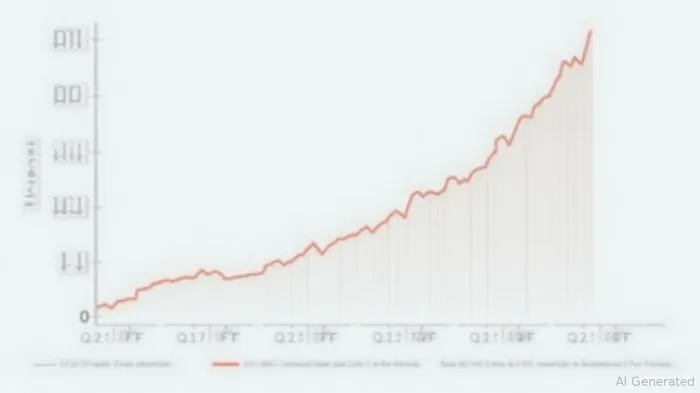
DFLV's June 23, 2025, dividend announcement underscored its consistent payout strategy. The ETF declared a distribution of $0.1442 per share, marking the second increase in 2025. Earlier in the year, its dividend rate rose from $0.50 to $0.53 in March, followed by another boost to $0.55 in June—both exceeding 3% increases. This upward trajectory signals confidence in the fund's underlying portfolio and its ability to generate stable returns.
However, the sustainability of these distributions hinges on two factors: the health of large-cap value stocks and DFLV's expense management.
The Case for Sustainability: Portfolio Construction and Policy
DFLV's investment policy mandates at least 80% of net assets in large-cap U.S. companies, with a focus on value-oriented metrics such as low price-to-book or price-to-earnings ratios. This approach aligns with the principles of value investing, which historically thrive during periods of market volatility or correction.
The fund's non-fundamental policy allows flexibility to adjust holdings, but its long-term focus on large-cap stability provides a buffer against sector-specific downturns. For instance, large-cap firms often have stronger balance sheets and more diversified revenue streams than smaller peers, making them less susceptible to abrupt declines.
Risks to Watch: Market Sentiment and Expense Pressures
While DFLV's dividend history is positive, challenges loom.
- Market Volatility: Large-cap value stocks could underperform if growth-oriented sectors regain dominance. A prolonged bull market for tech or emerging sectors might divert capital away from value names, squeezing dividend yields.
Expense Management: The fund's expense ratio—critical for long-term sustainability—is not explicitly disclosed in recent reports. Dimensional Funds, the sponsor, typically offers cost-efficient ETFs, but without transparency on Q2 2025's expenses, investors must assume consistency with historical averages (e.g., 0.15–0.20%).
Dividend Cyclicality: The fund's payout relies on dividends from its underlying holdings. If large-cap companies cut dividends (e.g., due to economic slowdowns or capital reallocation), DFLV's distributions could follow.
Investment Strategy: Balancing Income and Risk
For long-term investors, DFLV remains a compelling option if paired with proper diversification. Here's how to approach it:
- Hold for Income: The fund's rising dividends and large-cap focus make it a stable income generator, especially in a low-yield environment.
- Monitor Expense Ratios: While Dimensional's reputation for cost efficiency is reassuring, investors should periodically check DFLV's expense ratio to ensure it doesn't erode returns.
- Diversify Across Factors: Pair DFLV with growth-oriented ETFs or international value plays to balance exposure.
Conclusion: A Solid Bet for Patient Investors
DFLV's Q2 2025 dividend increases and its disciplined portfolio strategy position it as a reliable tool for value investors. While risks like market shifts and expense inflation exist, the fund's focus on large-cap stability and dividend-paying firms provides a robust foundation. For those with a multi-year horizon, DFLV merits consideration—but always within a diversified portfolio.
In the words of Warren Buffett: “Risk comes from not knowing what you're doing.” For DFLV, staying informed on its dividend trajectory and cost structure will help investors mitigate that risk.





Comentarios
Aún no hay comentarios