
Digitap's ($TAP) Non-KYC Visa: A Game-Changer in Crypto Adoption
The crypto landscape in 2025 is defined by a critical divergence: utility-driven projects that bridge digital assets with real-world use cases, and speculative memecoins that thrive on social media hype. As the industry matures, investors are increasingly prioritizing solutions that address tangible pain points-such as financial inclusion, privacy, and seamless asset management-over tokens with fleeting cultural appeal. Digitap's Non-KYC VisaV-- card, powered by its native $TAP token, stands at the forefront of this utility-driven revolution, offering a compelling counterpoint to the volatility and uncertainty of memecoins.
The Utility-Driven Power of Digitap's Non-KYC Visa
Digitap's No-KYC Visa card is more than a payment tool; it is a gateway to financial empowerment for the unbanked and underbanked. By eliminating the need for traditional KYC processes, the card democratizes access to global financial systems, a critical feature in a world where over one billion adults lack formal banking services. This approach aligns with a broader macro trend: Visa-issued crypto cards saw a 525% surge in net transaction volume in 2025, underscoring growing demand for crypto-linked payment solutions.
Digitap's platform combines crypto and fiat spending in a single interface, allowing users to transact without manual conversions. This dual-currency functionality is a key differentiator, reducing friction for everyday users. As of late 2025, the project had connected over 120,000 wallets to its ecosystem, with user growth accelerating through Q1 2026. During this period, Digitap's token presale raised $2.44 million, selling 144.8 million $TAP tokens, a testament to its community-driven adoption.
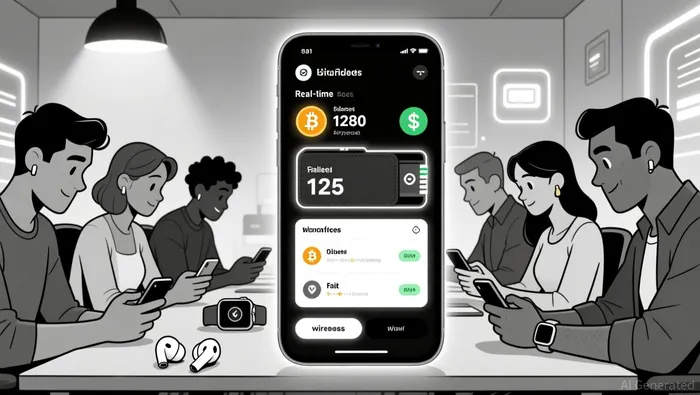
Privacy is another cornerstone of Digitap's value proposition. In an era where data leaks and forced KYC checks are rampant, the no-KYC model appeals to users seeking control over their financial data. This aligns with a broader shift in consumer preferences toward decentralized, self-sovereign solutions. Furthermore, Digitap's roadmap includes integrating SEPA and SWIFT for international transfers, which could significantly expand its transaction volume and global reach.
Memecoins: Cultural Hype vs. Real-World Utility
While memecoins like Shiba InuSHIB-- (SHIB) and DogecoinDOGE-- (DOGE) have captured public imagination, their utility remains largely speculative. For instance, SHIB's ecosystem includes DeFi platforms like ShibaSwap, which reported $1.5 billion in TVL in 2023. However, such projects often rely on community-driven hype rather than sustainable infrastructure. Similarly, Dogecoin's adoption by companies like Tesla and AMC Theatres highlights its novelty but does not address systemic issues like transaction speed, scalability, or privacy.
Meme coins also face regulatory headwinds. Their speculative nature makes them vulnerable to crackdowns, as seen with the SEC's scrutiny of unregistered tokens. In contrast, Digitap's compliance with Visa's global network and its focus on privacy-positioned it as a more resilient asset in a tightening regulatory environment.
Comparative Value: Why Utility Outpaces Speculation
The key distinction between Digitap and memecoins lies in their value creation models. Digitap's No-KYC Visa card generates utility through real-world adoption metrics: 120,000+ connected wallets, a $3 million presale, and a projected token price of $0.14 upon listing. These metrics reflect demand for a product that solves immediate problems-such as cross-border payments and asset conversion-rather than relying on social media virality.
Memecoins, by contrast, derive value from speculative trading and community engagement. While projects like Rare Pepes and FlokiFLOKI-- NFTs have demonstrated commercial viability, their long-term sustainability remains unproven. For investors, this creates a high-risk, high-reward dynamic that is ill-suited to a maturing crypto market.
Investment Thesis: A Future-Proof Play
Digitap's roadmap positions it as a future-proof investment. By targeting the $1.2 trillion global crypto payment market, the project is capitalizing on a sector poised for exponential growth. Its focus on privacy, financial inclusion, and seamless integration with existing financial systems aligns with macroeconomic trends, including the rise of decentralized finance and the decline of traditional banking intermediaries.
In contrast, memecoins face an uphill battle to transition from cultural artifacts to functional assets. While their community-driven models can generate short-term gains, they lack the infrastructure to sustain long-term value. For investors seeking exposure to the next phase of crypto adoption, Digitap's utility-driven approach offers a more robust and scalable proposition.
Conclusion
As the crypto industry evolves, the divide between utility-driven projects and speculative tokens will only widen. Digitap's Non-KYC Visa card exemplifies the former, combining privacy, accessibility, and real-world use cases to drive mainstream adoption. With a growing user base, strategic partnerships, and a clear roadmap, $TAP is well-positioned to outperform memecoins in both risk-adjusted returns and long-term value creation. For investors, the choice is clear: utility wins.





Comentarios
Aún no hay comentarios