
The Digital Shift in Social Security: Implications for Retirement Portfolios and Financial Innovation
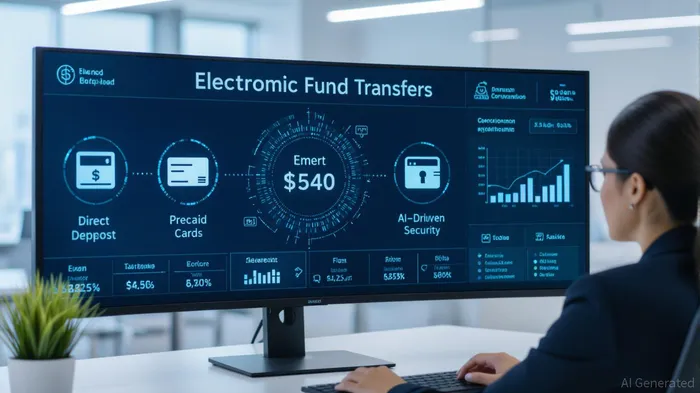
The impending transition of the Social Security Administration (SSA) to a fully electronic payment system by September 30, 2025, marks a pivotal moment in the evolution of retirement finance. This shift, driven by cost efficiency, security, and modernization goals, will reshape how millions of beneficiaries access their benefits—and, in turn, create new opportunities for investors in financial services and technology.
The Mechanics of the Transition
By eliminating paper checks, the SSA aims to reduce administrative costs by over $2 million annually while accelerating payment delivery and minimizing fraud risks. Approximately 500,000 beneficiaries—primarily those without bank accounts—will need to adopt the Direct Express® prepaid card or enroll in direct deposit. While this group represents a small fraction of the 68 million Social Security recipients, the broader implications for financial infrastructure are significant.
For retirement portfolios, the transition underscores the growing importance of digital financial literacy. Beneficiaries who previously relied on paper checks may now need to navigate online banking, mobile payment apps, or card-based transactions. This shift could amplify demand for user-friendly financial tools, particularly among older demographics, and highlight the role of financial institutionsFISI-- in bridging the digital divide.
Opportunities in Financial Services
The move to electronic payments creates a clear tailwind for companies serving the unbanked and underbanked. The Direct Express card, a government-issued prepaid debit card, is a case in point. While the SSA manages the program, private-sector partners that provide similar services—such as reloadable cards or digital wallets—could see increased adoption. Investors should monitor firms like PayPal (PYPL) or Square (SQ), which have expanded their reach into underserved markets, as well as regional banks offering low-cost accounts tailored to seniors.
Moreover, the SSA's emphasis on identity verification and fraud prevention—such as requiring in-person or two-factor authentication for payment updates—signals a broader trend toward secure digital transactions. This could benefit cybersecurity firms and identity verification platforms, including LexisNexis Risk Solutions or ID.me, which are increasingly integrated into government and financial systems.
Tech-Driven Efficiency and AI Integration
The SSA's adoption of AI for hearings, recordings, and administrative processes reflects a larger push to modernize public services. This trend mirrors private-sector investments in automation and data analytics, where companies like Workday (WDAY) or ServiceNow (NOW) are streamlining operations for clients. For investors, the intersection of government modernization and tech innovation presents opportunities in cloud computing, AI-driven customer service, and blockchain-based payment systems.
Strategic Considerations for Investors
- Sector Diversification: While fintech and cybersecurity firms stand to gain, traditional banks may also benefit from increased demand for direct deposit services. A balanced portfolio could include both disruptors and established institutions.
- Regulatory Risks: The SSA's mandate is non-negotiable, but regulatory shifts in financial services (e.g., data privacy laws) could impact growth trajectories. Investors should prioritize companies with strong compliance frameworks.
- Long-Term Trends: The move to electronic payments aligns with broader demographic and technological shifts, such as aging populations and the rise of digital banking. These trends are likely to persist, offering durable growth potential.
Conclusion
The Social Security payment overhaul is more than a bureaucratic update—it is a catalyst for financial innovation. For retirees, it necessitates adaptation to digital tools, while for investors, it highlights the growing interdependence between public policy and private-sector solutions. By focusing on companies that enable secure, accessible, and efficient financial systems, investors can position themselves to capitalize on a structural shift that will redefine retirement finance for years to come.





Comentarios
Aún no hay comentarios