
The Digital Oracle: How High-Profile Financial Media Shapes Crypto Volatility and Investor Behavior
The cryptocurrency market has long been a playground for volatility, but in 2024–2025, the role of high-profile financial media and social influencers has amplified this turbulence to unprecedented levels. From Elon Musk's cryptic tweets to the strategic content of "finfluencers" on TikTok and YouTube, the intersection of digital media and crypto investing has created a feedback loop where sentiment directly drives price action. This article examines how financial media advice shapes market dynamics, the tools investors use to navigate this chaos, and the systemic risks that regulators must address.
The Power of a Single Post: Case Studies in Media-Driven Volatility
Financial media's influence on crypto markets is no longer anecdotal. A single tweet from an influential figure can trigger massive price swings. For example, Elon Musk's 2024 tweet endorsing a privacy-focused cryptocurrency led to a 44% surge in Bitcoin's 24-hour trading volume, according to The Financial Analyst. Similarly, Reddit's WallStreetBets community, known for its GameStop short squeeze, has extended its collective power to crypto, with coordinated buying sprees creating short-term price spikes, as shown in a ScienceDirect study. These events underscore how retail investor behavior, amplified by social platforms, can override fundamental analysis.
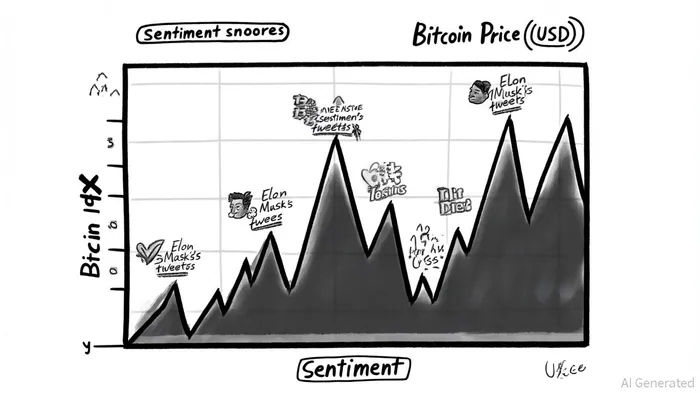
The rise of "finfluencers"-individuals like Dave Portnoy, who leveraged his 3 million followers to promote Dogecoin-has further complicated the landscape. A 2024 study found that finfluencers often exploit psychological triggers, such as social identity and FOMO (fear of missing out), to drive impulsive trades among younger demographics, according to a Cambridge study. However, their credibility is questionable: an event study revealed that 70% of YouTube influencers' bullish or bearish predictions resulted in negative abnormal returns for investors, according to The Financial Analyst.
Sentiment Analysis: The New Frontier in Crypto Investing
To navigate this media-driven volatility, investors increasingly rely on sentiment analysis tools. Advanced models like the attention-augmented hybrid CNN-LSTM have proven superior to traditional methods like VADER in capturing nuanced investor sentiment from social media, per a Scribd analysis. These tools analyze not just the tone of posts but also the emotional intensity and contextual relevance, enabling traders to anticipate market shifts. For instance, a 2025 study demonstrated that LLMs like ChatGPT-4 could identify target-level financial sentiment in news headlines with 92% accuracy, outperforming older models, according to The Financial Analyst.
Despite these advancements, challenges persist. Over 60% of traders still rely on manual monitoring of social media sentiment, and algorithmic models struggle with sarcasm, memes, and regional dialects, as documented in an MDPI paper. Moreover, the ethical implications of using AI to predict investor behavior remain contentious, particularly when such tools are employed by hedge funds to front-run retail trades.
Systemic Risks and Regulatory Gaps
The unchecked influence of financial media has exposed systemic risks. Pump-and-dump schemes, often orchestrated by finfluencers, have left retail investors bearing the brunt of market crashes. A 2024 report highlighted how influencers like Portnoy promoted cryptocurrencies without disclosing financial incentives, leading to accusations of market manipulation, according to a Scribd analysis. Meanwhile, regulators lag behind: while the SEC's 2024 approval of a BitcoinBTC-- ETF boosted institutional confidence (83% of which plan to increase crypto allocations in 2025, per an EY report), enforcement against fraudulent social media campaigns remains inadequate.
The psychological toll on investors is equally concerning. A Cambridge study found that finfluencers create "cult-like" communities, fostering dependency and impulsive trading behaviors. This dynamic is exacerbated by platforms like TikTok, where viral crypto content often prioritizes entertainment over education.
The Road Ahead: Balancing Innovation and Investor Protection
As crypto markets mature, the need for regulatory clarity and ethical guidelines becomes urgent. Proposed solutions include mandatory disclosure of influencer compensation, algorithmic monitoring of manipulative content, and standardized sentiment analysis frameworks for institutional investors, as argued in a Scribd analysis. Meanwhile, the anticipated approval of a Bitcoin ETF has already shifted public sentiment: 46% of the general population believe it will positively impact the blockchain industry, according to The Financial Analyst.
For individual investors, the key lies in critical thinking. While sentiment analysis tools offer valuable insights, they should complement-not replace-fundamental research. As one 2025 MDPI paper concluded, "The future of crypto investing will be defined by those who can distinguish between noise and signal in the digital age."





Comentarios
Aún no hay comentarios