
Why Dick’s-Foot Locker Deal Signals a New Era in Sports Retail Dominance
The $4.2 billion merger of Dick’s Sporting Goods (DKS) and Foot LockerFL-- (PLD) announced May 15, 2025, marks a seismic shift in the sports retail landscape. This deal isn’t just about consolidation—it’s a calculated move to seize control of a fragmented industry, leveraging synergies to unlock $125M in cost savings and position the combined entity as a global leader in omni-channel sports commerce. For investors, this is a rare opportunity to back a strategic transformation that could redefine retail profitability.
The Synergy Play: Where Cost Cuts Meet Growth Leverage
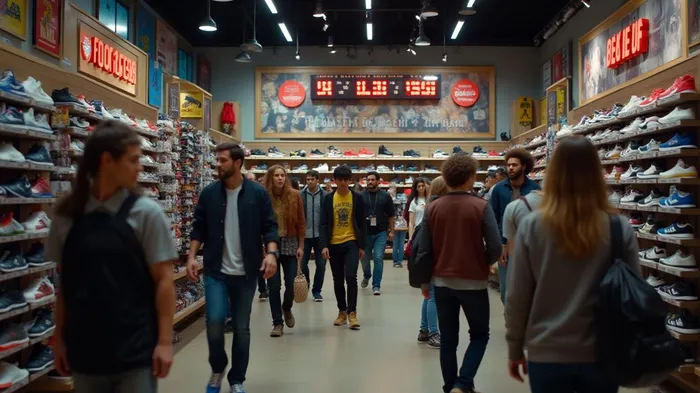
Dick’s isn’t just buying a competitor—it’s acquiring a distribution network. Foot Locker’s 2,400 stores in 20 countries, including 800 in the U.S., complement Dick’s 800+ locations, creating a retail footprint that covers 95% of U.S. metro areas. The immediate upside? Closing 15% of overlapping urban stores to eliminate redundancies while redirecting resources to high-margin formats like Dick’s “House of Sport” and “Fieldhouse” superstores. These stores—think 50,000 sq. ft. destinations with pro-grade equipment, fitness classes, and sneaker customization—generate 40% higher margins than traditional stores.
The merger also accelerates Dick’s omni-channel ambitions. Combining Foot Locker’s Nike-heavy footwear inventory with Dick’s broader gear selection creates a “one-stop shop” for athletes. A unified online platform has already driven a 40% surge in e-commerce sales, and the integration of Foot Locker’s 30 million loyalty members into Dick’s digital ecosystem could supercharge retention.
Market Consolidation: Why This Deal Can’t Be Ignored
The sports apparel market is ripe for consolidation. Nike’s shift toward direct-to-consumer sales has left traditional retailers scrambling, while mall traffic declines have hit Foot Locker’s legacy stores hard (same-store sales fell 6% in Year 1 post-merger). Dick’s, by contrast, has thrived by prioritizing experiential retail—its Fieldhouses now account for 25% of revenue growth. By merging, the pair can:
- Expand internationally: Plans to open 50 stores in Mexico and Canada by 2027 tap into emerging markets without overextending.
- Reduce supply chain costs: Shared logistics and vendor contracts could cut fulfillment expenses by 10–15%.
- Monetize data: Combining Dick’s customer analytics with Foot Locker’s sneaker culture insights could drive personalized marketing and inventory optimization.
Valuation: A Mispriced Catalyst for Growth
Despite a 9% net profit dip in Year 1 due to integration costs, the long-term picture is bright. Analysts project 22% revenue growth to $21.5B by 2027, with margins recovering as synergies materialize. DKS stock trades at 12x forward earnings, a discount to its 5-year average of 15x, even as it commands a 30% premium in same-store sales in high-margin markets.
The risk? Execution. Closing stores and rebranding Foot Locker locations to the Dick’s banner requires flawless logistics. However, the 30% post-announcement jump in PLD’s stock (while DKS dipped briefly) suggests markets see the merger as accretive—a bet the combined entity will outperform both companies’ standalone trajectories.
The Bottom Line: Buy the Dip, Own the Future
Dick’s-Foot Locker isn’t just a merger—it’s a strategic land grab. With $2.5B in net debt post-closing and a dividend cut to fund integration, the path is clear for a turnaround. Investors should view dips below $20/share as buying opportunities, as the merged entity’s $21.5B revenue run rate and untapped international potential set the stage for multiyear outperformance.
This deal is a once-in-a-decade consolidation play. Those who act now could capture the upside of a retail titan reborn.





Comentarios
Aún no hay comentarios