
Dianthus Therapeutics’ Claseprubart and Its Implications for the Myasthenia Gravis Market
The recent Phase 2 success of DianthusDNTH-- Therapeutics’ Claseprubart (DNTH103) in treating generalized Myasthenia Gravis (gMG) has positioned the company as a compelling player in a rapidly expanding therapeutic market. With positive efficacy and safety data from the MaGic trial, coupled with a robust financial runway, Dianthus now faces the critical task of translating these results into commercial success. This analysis evaluates the investment potential of Dianthus Therapeutics in light of Claseprubart’s progress, contextualized within the competitive and financial landscape of the gMG market.
Phase 2 Trial Success: A Strong Foundation
Dianthus Therapeutics reported statistically significant improvements in key endpoints for Claseprubart in its Phase 2 MaGic trial. Both the 300mg and 600mg doses, administered every two weeks via subcutaneous autoinjector, demonstrated clinically meaningful reductions in MG-ADL and QMG scores at Week 13. Notably, the 300mg dose achieved comparable efficacy to the higher dose, suggesting a potential for simplified dosing without compromising therapeutic benefit [2].
The safety profile further strengthens the drug’s appeal: no serious infections, autoimmune events, or drug-related adverse events were reported [2]. This contrasts with existing therapies like Soliris (eculizumab) and Imaavy (nipocalimab), which carry risks of infections and require intravenous or frequent subcutaneous administration [5]. Claseprubart’s mechanism—targeting the active C1s complement protein—offers a novel approach to gMG, potentially addressing unmet needs in a market dominated by monoclonal antibodies and FcRn inhibitors [1].
Market Dynamics: Growth and Competitive Challenges
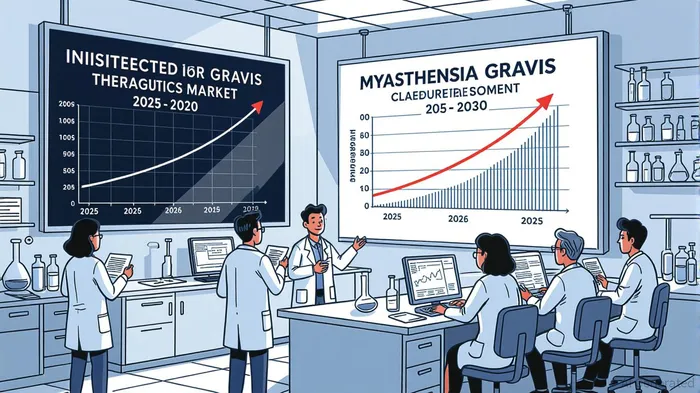
The global gMG therapeutics market is projected to grow at a compound annual growth rate (CAGR) of 7.91% from 2025 to 2030, reaching $2.96 billion by 2030 [1]. This expansion is driven by rising diagnostic rates, advancements in biologics, and the introduction of late-stage pipeline products. However, the market is highly competitive, with established players such as Roche (Soliris), Johnson & Johnson (Imaavy), and ArgenxARGX-- (VYVGART) dominating the landscape [5].
Claseprubart’s differentiation lies in its unique mechanism and dosing convenience. While competitors like Imaavy and VYVGART require monthly or biweekly subcutaneous injections, Claseprubart’s every-two-weeks regimen could enhance patient adherence and reduce healthcare costs [2]. Additionally, its favorable safety profile may appeal to physicians wary of infection risks associated with other therapies [5]. Despite these advantages, Dianthus will need to demonstrate long-term efficacy in Phase 3 trials to secure a significant market share.
Financial Position: Strengths and Risks
Dianthus Therapeutics’ financial position is a mixed picture. As of Q3 2025, the company reported a cash balance of $343 million, providing operational runway through the second half of 2027 [2]. This liquidity supports ongoing trials, including the planned Phase 3 study for gMG in 2026. However, the company’s recent financial results were bearish: Q3 2025 revenue fell to $0.19 million, far below analyst estimates of $0.87 million, and EPS of -$0.88 missed expectations [1]. These figures highlight the risks of relying on a single late-stage asset, as Claseprubart’s success is critical to the company’s valuation.
Investors must weigh the potential of Claseprubart against the company’s current financial strain. If the drug secures regulatory approval, Dianthus could capture a meaningful portion of the $2.96 billion gMG market by 2030. However, setbacks in Phase 3 trials or delays in commercialization could exacerbate cash burn, necessitating additional fundraising at a potentially unfavorable valuation.
Investment Implications
The investment case for Dianthus hinges on three factors:
1. Phase 3 Trial Execution: A successful Phase 3 trial would validate Claseprubart’s Phase 2 results and unlock partnerships or premium valuations.
2. Market Differentiation: Claseprubart’s dosing convenience and safety profile position it to compete with top-tier therapies, but pricing and reimbursement strategies will be pivotal.
3. Financial Management: Prudent use of existing cash reserves and potential partnerships could mitigate risks, while a robust Phase 3 readout might attract investors seeking high-growth biotech opportunities.
While the market lacks direct projections for Claseprubart’s market share, its best-in-class potential and alignment with growth trends in subcutaneous delivery suggest it could capture 5–10% of the gMG market by 2030, translating to $150–300 million in annual revenue. This would represent a significant milestone for Dianthus, though it remains contingent on clinical and regulatory success.
Source:
[1] Dianthus Therapeutics Announces Positive Data for Claseprubart (DNTH103) from the Phase 2 MaGic Trial in Generalized Myasthenia Gravis, Supporting Its Potential Best-In-Class Profile [https://markets.financialcontent.com/wral/article/gnwcq-2025-9-8-dianthus-therapeutics-announces-positive-data-for-claseprubart-dnth103-from-the-phase-2-magic-trial-in-generalized-myasthenia-gravis-supporting-its-potential-best-in-class-profile]
[2] Dianthus Therapeutics Highlights Recent Business Achievements and Reports Q3 Financial Results [https://investor.dianthustx.com/news-releases/news-release-details/dianthus-therapeutics-highlights-recent-business-achievements-3/]
[5] Johnson & Johnson's IMAAVY Gets FDA Approval, Taking On Top Players in Myasthenia Gravis Market [https://www.prnewswire.com/news-releases/johnson--johnsons-imaavy-gets-fda-approval-taking-on-top-players-in-myasthenia-gravis-market--delveinsight-302462818.html]





Comentarios
Aún no hay comentarios