
Diana Shipping's Strategic Asset Monetization and the Dry Bulk Sector's Valuation Crossroads
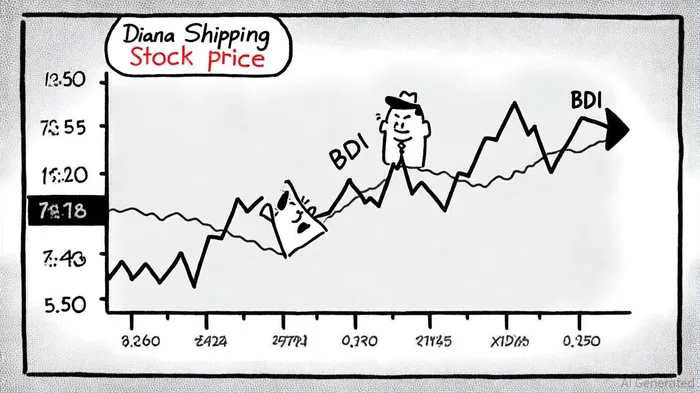
In September 2025, Diana Shipping Inc.DSX-- (DSX) announced the sale of its 2016-built Ultramax dry bulk vessel, m/v DSI Drammen, for approximately $26.86 million before commissions, with delivery expected by October 31, 2025 [1]. This transaction, part of a limited partnership structure where DianaDSX-- holds a 25% stake and Norwegian firm Ecobulk AS owns 75%, underscores the company's ongoing efforts to optimize its fleet and unlock liquidity amid a challenging dry bulk market. The sale follows a broader industry trend of asset monetization, as shipping firms grapple with oversupply, weak demand, and regulatory uncertainties.
Strategic Rationale: Fleet Optimization in a Stagnant Market
Diana's decision to divest the DSI Drammen aligns with its fleet modernization strategy. The company has simultaneously secured time charter agreements for other vessels, such as the Ultramax DSI Andromeda and Kamsarmax Medusa, locking in daily rates of $14,000 and $13,000 respectively [2]. These charters provide stable cash flows while avoiding the capital outlays and regulatory risks associated with owning older, non-compliant vessels. Diana's focus on methanol dual-fuel newbuilds—scheduled for delivery in 2027 and 2028—further signals its commitment to aligning with decarbonization mandates and future-proofing its fleet [1].
The dry bulk sector, however, remains in a precarious position. According to a report by Seatrade Maritime, the market faces a supply-demand imbalance, with 33 million deadweight tons (dwt) delivered in 2024 and another 36 million dwt projected for 2025, far outpacing demand growth driven by Chinese stockpiling and agricultural trade [3]. Analysts at Maritime Strategies International (MSI) note that absorbing this excess capacity would require 240 million tonnes of incremental cargo demand—a “tall order” given China's slowing construction sector and weak industrial activity [3]. Diana's asset sales and chartering strategy reflect a pragmatic response to these headwinds, prioritizing flexibility over long-term commitments.
Market Reactions and Valuation Implications
While direct market reactions to Diana's recent sale remain opaque—no immediate stock price data is available post-announcement—the company's broader financial performance reveals investor skepticism. Diana's shares hit a 52-week low of $1.72 in 2025, despite securing favorable charters and reporting a Q2 net income of $4.5 million [4]. Analysts remain divided: JefferiesJEF-- downgraded the stock to “Hold” with a $5 price target, while HC Wainwright initiated coverage with a “Buy” rating at $9.50 [5]. This divergence highlights the sector's uncertainty, as investors weigh Diana's fleet optimization efforts against macroeconomic risks like U.S.-China trade tensions and potential retaliatory tariffs [6].
The dry bulk sector's valuation dynamics are further complicated by corridor-specific volatility. While Capesize rates have weakened due to China's reduced iron ore imports, agricultural trade—particularly Brazil's 2024/25 corn harvest—has buoyed demand for Supramax and Panamax vessels [7]. Diana's focus on Ultramax and Kamsarmax segments positions it to capitalize on this divergence, though its recent revenue decline (12.93% year-on-year in Q4 2024) underscores the fragility of current earnings [2].
Long-Term Outlook: Balancing Scrapping and Newbuilds
Diana's strategic pivot toward asset monetization and chartering mirrors industry-wide shifts. As noted by Taylor Maritime, the dry bulk orderbook remains modest (less than 10% of the total fleet), offering a buffer against prolonged downturns but failing to address structural oversupply [3]. Diana's planned scrapping of older vessels, such as the 2005-built Alcmene and 2010-built Selina, further aligns with analysts' calls for accelerated fleet rationalization [5]. However, the company's reliance on joint ventures and limited partnerships—such as its 25% stake in the DSI Drammen sale—introduces complexity in tracking its net asset value and earnings visibility.
Conclusion: A Cautionary Path Forward
Diana Shipping's recent vessel sale and fleet optimization efforts exemplify the delicate balancing act required in today's dry bulk market. While asset monetization provides short-term liquidity, the sector's long-term recovery hinges on resolving supply-demand imbalances, geopolitical tensions, and regulatory transitions. For Diana, the success of its methanol-powered newbuilds and chartering strategy will be critical in restoring investor confidence. As the company navigates these challenges, its ability to adapt to evolving trade patterns—such as the shift toward agricultural commodities—will determine whether its strategic recalibration translates into sustainable value creation.





Comentarios
Aún no hay comentarios