
The Diamond Dilemma: Assessing Botswana's Economic Resilience in the Age of Lab-Grown Competition
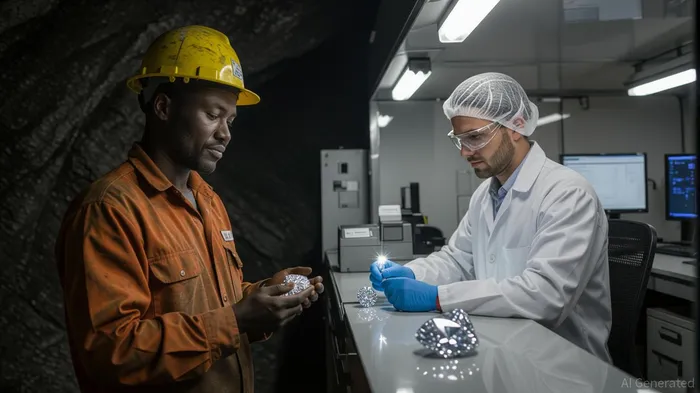
The diamond industry in Botswana, once a paragon of economic stability and sustainable resource management, now faces an existential crisis driven by the meteoric rise of lab-grown diamonds. In 2025, Debswana, the country’s flagship diamond producer and a joint venture with De Beers, slashed its production target by 40%, reducing output to 15 million carats from 25 million in 2023 [1]. This drastic move reflects a global market where lab-grown diamonds now command 20% of the market share, undercutting natural diamonds by 30-40% in price [2]. For Botswana, where diamonds contribute 25% of GDP and 75% of foreign exchange earnings [3], the implications are dire.
The Perfect Storm: Market Forces and Economic Vulnerability
The decline of Botswana’s diamond sector is not merely a function of technological disruption but a confluence of structural vulnerabilities. Lab-grown diamonds, indistinguishable from natural ones in appearance and increasingly affordable, have reshaped consumer preferences—particularly among younger buyers prioritizing ethical and cost-effective alternatives [4]. Compounding this, global economic uncertainty, U.S. tariffs, and a fragmented supply chain have further eroded demand [5]. Debswana’s 2024 sales revenue plummeted by nearly 50%, forcing temporary mine closures at Jwaneng and Orapa and voluntary redundancies to curb costs [1].
The economic fallout is stark. Botswana’s growth forecast has been slashed to near-zero, with diamonds accounting for 86% of current account revenues [3]. The government has resorted to draining its Government Investment Account to offset the shortfall, while public services face cuts and recruitment freezes [6]. Analysts warn that without urgent diversification, the country risks a prolonged recession, as its diamond-dependent model becomes increasingly untenable [7].
Strategic Responses: Adaptation or Survival?
Debswana’s response has focused on short-term survival and long-term repositioning. The company has prioritized high-margin projects, such as the Jwaneng underground expansion, to extend mine life [8]. Meanwhile, Botswana’s government has signaled a strategic pivot: increasing its stake in De Beers to gain greater control over the value chain and investing in renewable energy, technology, and agriculture to diversify its economy [9]. President Duma Boko has also championed local diamond processing to add value and create jobs, a move aimed at mitigating the immediate impact of declining raw diamond exports [10].
However, these efforts face significant hurdles. The global diamond market is expected to consolidate, with smaller producers struggling to compete against lab-grown alternatives and larger players leveraging scale [11]. For Botswana, the challenge lies in balancing short-term fiscal stability with long-term structural reform.
Investment Risks and Opportunities
From an investment perspective, Botswana’s diamond sector presents a paradox. The immediate risks are clear: declining revenues, political instability, and a weakened currency could deter capital. Yet, the country’s strategic assets—its political stability, skilled workforce, and reputation for ethical mining—offer a foundation for recovery. Investors must weigh these factors against the likelihood of continued market volatility.
For those willing to take a long-term view, opportunities exist in Botswana’s diversification initiatives. The government’s push into renewable energy and technology aligns with global trends, while its emphasis on sustainable mining could appeal to ESG-focused investors. However, success hinges on execution: without rapid progress in these areas, Botswana’s economic model remains exposed to external shocks.
Conclusion
Botswana’s diamond industry stands at a crossroads. The rise of lab-grown diamonds has exposed the fragility of an economy built on a single resource, but it has also catalyzed a necessary reckoning with diversification. For investors, the key lies in discerning between short-term distress and long-term potential. While the risks are substantial, Botswana’s strategic resilience—rooted in its governance and adaptability—could yet turn this crisis into a catalyst for transformation.
Source:
[1] Botswana Diamond Giant Slashes Output as Global Market Downturn Deepens [https://discoveryalert.com.au/news/botswana-diamond-crisis-2025-market-impact/]
[2] Synthetic Stones Are Sinking Botswana's Diamond-Based Economy [https://news.yahoo.com/synthetic-stones-sinking-botswana-diamond-132630820.html]
[3] Botswana: Diamond market turmoil raises risks for undiversified economy [https://credendo.com/en/knowledge-hub/botswana-diamond-market-turmoil-raises-risks-undiversified-economy]
[4] Botswana in a tight position as lab diamonds sparkle a little ... [https://www.howwemadeitinafrica.com/botswana-in-a-tight-position-as-lab-diamonds-sparkle-a-little-brighter/179062/]
[5] 5 Factors That Will Impact the Diamond Industry in 2025 [https://nationaljeweler.com/articles/13712-5-factors-that-will-impact-the-diamond-industry-in-2025]
[6] Botswana Halts Diamond Mining Amid Global Market Downturn [https://www.ntu.edu.sg/cas/news-events/news/details/botswana-halts-diamond-mining]
[7] Lab-Grown Gems Are Robbing Botswana of Its Diamond [https://www.bloomberg.com/news/articles/2025-09-02/botswana-economy-slumps-as-lab-grown-diamonds-spur-market-crisis]
[8] How Debswana is Responding to the Diamond Market Downturn [https://discoveryalert.com.au/news/debswana-diamond-market-downturn-response-2025/]
[9] Botswana positioning itself to gain majority control of De [https://africanminingmarket.com/botswana-positioning-itself-to-gain-majority-control-of-de-beers/23033/]
[10] Botswana to slash growth forecast amid prolonged [https://www.reuters.com/world/africa/botswana-slash-growth-forecast-amid-prolonged-diamond-market-downturn-2025-06-02/]
[11] How Botswana's Sustainable Natural Diamond Story [https://www.forbes.com/sites/kyleroderick/2025/06/28/how-botswanas-sustainable-natural-diamond-story-sparkled-at-jck/]







Comentarios
Aún no hay comentarios