
Why Diageo's Price Drop Is a Warning Signal, Not a Buy Opportunity
Diageo's recent stock price decline has sparked debate among investors. While some view it as a buying opportunity, a closer examination of the company's strategic moves, market dynamics, and broader industry trends reveals a far more troubling picture. The drop is not merely a temporary setback but a warning signal of deeper structural issues that could undermine Diageo's long-term value.
Strategic Divestments: A Symptom of Portfolio Strain
Diageo's decision to sell its Cacique rum brand to Bardinet S.A. in early 2025[2] has been framed as a strategic streamlining of its portfolio. On the surface, this appears to align with the company's focus on core brands like Johnnie Walker. However, the sale of a 65-year-old brand with a strong presence in Spain and Venezuela raises questions about Diageo's confidence in its ability to grow non-core segments. By offloading Cacique—a brand with untapped potential in Europe—Diageo may be signaling a retreat from high-growth categories rather than a proactive pivot.
Simultaneously, the company announced a $415 million investment in a new Alabama manufacturing facility[2], a move that underscores its commitment to North America. While this infrastructure boost is commendable, it is a short-term fix for a company grappling with long-term portfolio imbalances. The juxtaposition of divesting a regional brand and investing heavily in a domestic facility suggests a lack of strategic coherence. DiageoDEO-- is not just pruning its portfolio; it is hedging against a future where its core brands may no longer suffice.
Market Resilience: A Fragile Illusion
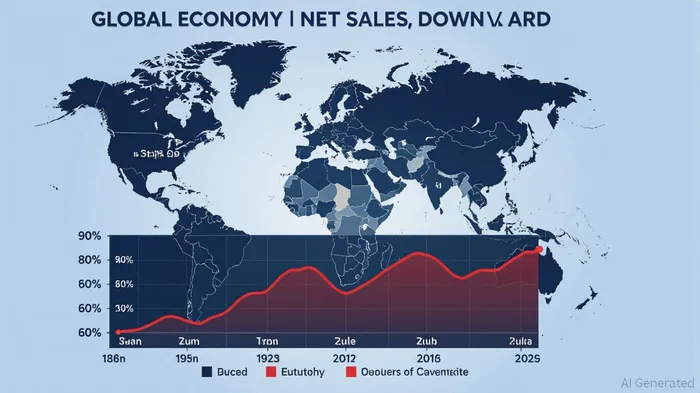
The premium spirits market has long been considered a safe haven during economic downturns, but 2025 is testing that assumption. Global economic growth is projected to slow to 2.3%[1], and rising living costs are tempering demand for discretionary luxuries. Diageo's 2024 net sales declined despite a significant increase in marketing spend[2], highlighting the limits of aggressive advertising in a saturated market.
Geopolitical instability further compounds these challenges. Trade tensions, including U.S. tariffs and the fallout from conflicts in Ukraine and Israel-Gaza, have fragmented global supply chains[1]. For a company like Diageo, which relies on international distribution, these disruptions are not just logistical hurdles—they are existential risks. The market's resilience is being overstated; what appears as a “luxury” category is increasingly vulnerable to macroeconomic headwinds.
Structural Headwinds: Beyond Diageo's Control
The premium spirits industry is facing a perfect storm of structural challenges. First, consumer preferences are shifting. While Diageo's Scotch whisky brands still dominate its revenue[2], the broader market is trending toward craft spirits, rum, and non-traditional categories. By divesting Cacique, Diageo is ceding ground in a segment that is gaining traction, particularly among younger consumers.
Second, competition is intensifying. Smaller, agile producers are capturing market share with niche products and direct-to-consumer strategies. Diageo's reliance on legacy brands makes it ill-equipped to compete in this fragmented landscape. The company's recent marketing spend[2]—a 10% year-over-year increase—has failed to offset declining sales, suggesting that even heavy advertising cannot reverse a brand's waning relevance.
Finally, sustainability pressures are reshaping the industry. While Diageo's Alabama facility touts eco-friendly technology[2], the company's overall carbon footprint remains a liability. Investors are increasingly prioritizing ESG metrics, and Diageo's incremental progress may not align with the aggressive decarbonization goals demanded by stakeholders.
Conclusion: A Cautionary Tale
Diageo's price drop is not a temporary blip but a reflection of systemic challenges. The company's strategic divestments, while framed as portfolio optimization, reveal a lack of confidence in its ability to adapt to a changing market. Meanwhile, the premium spirits industry is grappling with economic, geopolitical, and consumer-driven headwinds that no single company can overcome alone. For investors, the message is clear: this is not a buying opportunity—it is a red flag.





Comentarios
Aún no hay comentarios