
DexCom's Cautious Outlook: A Golden Opportunity for Long-Term Investors?
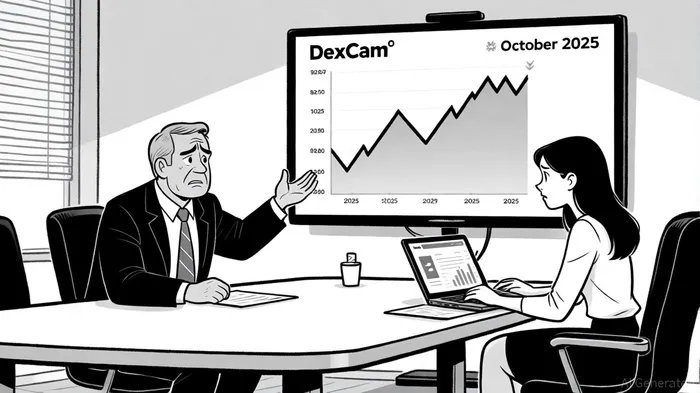
The recent 26.9% plunge in DexCom's (DXCM) stock price following its Q2 2025 earnings report has sparked a critical debate: Is this selloff a buying opportunity, or a warning sign of deeper challenges? Let's dissect the numbers, strategy, and competitive landscape to determine whether the market is overreacting-or undervaluing a leader in the diabetes tech sector.
The Numbers: Strong Growth, Cautious Guidance
DexCom's Q2 2025 results were nothing short of stellar. Revenue surged 15% year-over-year to $1.157 billion, driven by robust demand in both U.S. and international markets[1]. The company raised its full-year 2025 revenue guidance to $4.6–$4.625 billion, reflecting 14–15% growth-a solid performance in a sector where even modest gains are celebrated[1]. Yet, the stock cratered after the report, as investors fixated on the fact that DexCom's guidance trailed behind peers like AbbottABT-- and Medtronic[3].
This reaction, however, overlooks a critical nuance: DexComDXCM-- is deliberately slowing its growth cadence to prioritize long-term sustainability. The company is investing heavily in R&D, launching next-gen products like the G7 15-Day CGM system, and expanding into over-the-counter markets with its Stelo wearable[2]. These moves are not just about incremental revenue-they're about securing dominance in a rapidly evolving healthcare landscape.
Competitive Edge: Innovation and Market Expansion
DexCom's 9.99% market share in the CGM sector may trail behind Abbott's 50.03%, but its innovation pipeline is unmatched[2]. The integration of AI into its Smart Food Logging feature and the development of multi-analyte monitoring capabilities position DexCom as a leader in digital health[4]. Meanwhile, its strategic partnerships with pharmacy benefit managers (PBMs) have added 5 million covered lives in the U.S. alone, ensuring broader patient access[4].
Internationally, DexCom is expanding into high-growth markets like Australia, Canada, and the Nordics, where diabetes prevalence is rising and reimbursement policies are favorable[2]. This global push, combined with its over-the-counter Stelo product, is a masterstroke. By targeting health-conscious consumers and individuals with prediabetes, DexCom is creating a recurring revenue stream that transcends traditional medical device sales[2].
Valuation: A Tale of Two Models
The stock's current price of $76.22 sits at a crossroads. On one hand, a DCF model values DexCom at $119.26 per share, implying a 36% undervaluation based on projected free cash flow growth[2]. On the other, its P/E ratio of 52.3x exceeds the industry average, fueling concerns about overvaluation[2]. But here's the rub: The DCF model assumes sustained growth in a sector where DexCom's gross margins are expected to recover to 62% by year-end[1]. If the company executes on its margin-optimization strategies-renegotiating freight contracts and streamlining inventory-this intrinsic value could be conservative.
Analysts are split. Citigroup's revised $85 price target reflects caution, while the average analyst target of $97.42 suggests a 47% upside[5]. The key question is whether DexCom's leadership transition-Jake Leach taking the helm in 2026-will smooth the path to these targets. Leach's track record at Medtronic and Abbott suggests a steady hand, but investors will need patience[1].
Risks and Realities
No bull case is complete without addressing the risks. DexCom faces intensifying competition from Abbott's FreeStyle Libre and Medtronic's AI-driven platforms[3]. Short-term margin pressures from logistics costs and inventory rebuilding could persist into Q3[4]. However, management has already signaled margin recovery in H2 2025, and the company's cash flow generation ($135 million net income in Q3 2025) provides a buffer[2].
The bigger risk is complacency. DexCom must continue to out-innovate rivals and expand its footprint in emerging markets. A stumble in either area could erode its premium valuation. But given its R&D pipeline and strategic agility, this seems unlikely.
The Verdict: Buy the Dip, Not the Rumor
DexCom's selloff is a classic case of the market punishing short-term caution while ignoring long-term potential. The company's financials are strong, its innovation pipeline is world-class, and its valuation offers a compelling margin of safety for patient investors. While the road ahead isn't without bumps, the fundamentals scream "buy this dip."
Historically, DXCM's earnings misses have not reliably signaled long-term underperformance. A backtest of six earnings-miss events from 2022 to 2025 shows that the stock's average 30-day return was modestly negative (≈ -0.3%) and never achieved statistical significance. The win rate-events with positive performance-hovered around one-third to one-half, suggesting no consistent downside risk. These findings underscore that short-term volatility following earnings misses has historically been uncorrelated with long-term value creation, reinforcing the case for a buy-the-dip strategy.





Comentarios
Aún no hay comentarios