
Deutsche Telekom's Strong FY Outlook and Strategic Transformation: A Blueprint for Long-Term Value Creation in the European Telecom Sector
Financial Resilience and Strategic Reorientation
Deutsche Telekom's Q3 2025 results, marked by a 1.5% year-over-year revenue increase to €28.93 billion and a raised adjusted EBITDA AL guidance of €45.3 billion, reflect its ability to navigate macroeconomic headwinds. This financial stability is underpinned by a strategic pivot toward high-growth areas such as fixed-mobile convergence (FMC) and AI infrastructure. The company's €1 billion partnership with Nvidia to build an AI data center, announced ahead of its Q4 2025 launch, signals a bold bet on the next frontier of cloud computing and enterprise services. Such investments not only diversify revenue streams but also position Telekom to capitalize on the European Union's push for AI-driven industrial transformation.
Sustainability as a Strategic Pillar
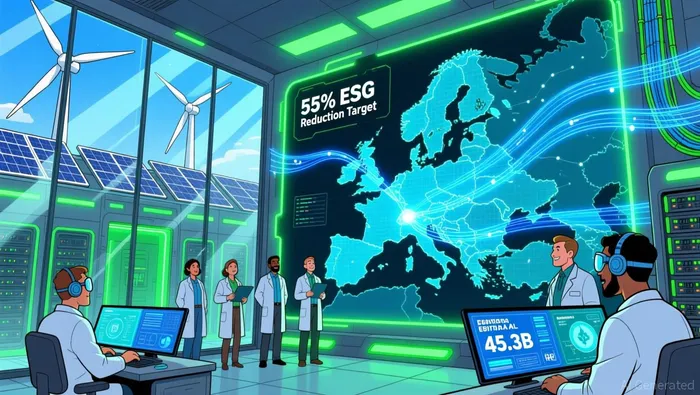
Deutsche Telekom's ESG strategy is no longer a peripheral initiative but a core component of its value proposition. By 2025, the company aims to achieve climate neutrality in its own operations, with Scope 1 and 2 emissions reduced by 90–95% compared to 2017 levels. This aligns with broader industry trends, as European telecom operators increasingly integrate sustainability into financial reporting and board accountability frameworks. Telekom's commitment to 100% renewable energy since 2021 and a 20% improvement in network energy efficiency further reinforce its leadership in decarbonization.
Beyond environmental goals, the company's social initiatives-such as subsidized digital access for vulnerable populations and the "No Hate Speech" campaign-demonstrate a nuanced understanding of stakeholder value. These efforts, which reached 6.7 million people in 2024, mitigate regulatory risks and enhance brand loyalty in a sector where public trust is increasingly tied to ethical practices.
Competitive Positioning and Industry Alignment
The European telecom sector is undergoing a structural shift, with 5G and fiber-optic expansion driving both competition and consolidation. Deutsche Telekom's 82.3% 5G population coverage in its European markets as of Q2 2025 positions it ahead of peers like Vodafone and Orange, which are still scaling their 5G footprints. Its FMC strategy, exemplified by the MagentaOne product, has attracted 8.5 million customers, reflecting a 3.8% annual growth rate. This customer-centric approach is critical in a market where churn rates are rising due to price sensitivity and regulatory pressures.
Telekom's alignment with EU policy priorities-such as the Corporate Sustainability Reporting Directive (CSRD) and the Digital Services Act-ensures regulatory compliance while opening avenues for public-private partnerships. For instance, its gigabit fiber network, which reached 10.7 million households by mid-2025, supports the EU's goal of universal high-speed connectivity by 2030. This strategic foresight not only secures market share but also locks in long-term government contracts and subsidies.
Risks and Opportunities
While Telekom's trajectory is promising, challenges remain. The €1 billion AI data center, though transformative, requires sustained capital allocation and technical expertise to deliver returns. Additionally, the company's 2040 net-zero target for its value chain hinges on the scalability of carbon offset mechanisms and supply chain collaboration. Regulatory shifts, such as stricter data privacy laws or spectrum licensing reforms, could also disrupt margins.
However, these risks are counterbalanced by opportunities in emerging markets. Telekom's strong performance in Poland and Hungary highlights its potential to replicate this success in other Central and Eastern European markets, where digital infrastructure gaps remain significant.
Conclusion
Deutsche Telekom's FY2025 results and strategic transformation illustrate a company adept at navigating the dual imperatives of profitability and sustainability. By embedding ESG goals into its operational DNA and investing in technologies that align with European policy agendas, Telekom is not merely adapting to change-it is shaping the future of the telecom sector. For investors, this represents a compelling case for long-term value creation, where financial metrics and sustainability outcomes are inextricably linked.







Comentarios
Aún no hay comentarios