
Deutsche Bank's Strategic Position in the German Defense and Infrastructure Boom
Strategic Reorientation: From Defense to Offense
Deutsche Bank's CEO, Christian Sewing, has spearheaded a strategic pivot from a defensive posture to an offensive one, aligning the bank with Germany's fiscal stimulus and rearmament priorities. This shift reflects the bank's recognition of the defense and infrastructure sectors as "growth engines" in an era of heightened geopolitical uncertainty. Sewing has emphasized Germany's ability to increase spending on these sectors without triggering market concerns, positioning the bank as a bridge between domestic and international capital. For instance, Deutsche Bank has actively connected Asian investors with German defense and infrastructure projects, leveraging its global network to unlock cross-border opportunities.
Fiscal Policy and Sectoral Tailwinds
Germany's €1 trillion investment plan, announced in 2025, includes a €500 billion infrastructure fund and open-ended borrowing for defense. This fiscal stimulus is expected to accelerate real GDP growth to 1.5% in 2026 and 2.0% in 2027. Deutsche Bank Research has highlighted the potential for defense contractors like Rheinmetall and Hensoldt to benefit from the transfer of automotive production capacity to defense, addressing overcapacity in the automotive sector. The bank's raised price target for Rheinmetall to €2,100 underscores its confidence in the sector's growth trajectory.
Partnerships and Capital Mobilization
A landmark partnership with the European Investment Bank (EIB) illustrates Deutsche Bank's proactive approach. The EIB provided a €500 million loan to Deutsche Bank, enabling €1 billion in financing for defense-related projects, including military infrastructure such as training facilities under the Pan-EU Security & Defence Lending scheme. This collaboration, the first under the Pan-EU Security & Defence Lending scheme, targets SMEs and Mid-Caps in the defense supply chain, addressing bottlenecks in innovation and supply chain resilience. Additionally, Deutsche Bank and the EIB launched a €400 million loan portfolio for renewable energy and energy efficiency projects, further diversifying its exposure to infrastructure.
Profitability Metrics and Strategic Targets
Deutsche Bank's 2028 roadmap includes a return on tangible equity exceeding 13% and a cost-to-income ratio below 60%. These metrics are critical for gauging the bank's ability to monetize its exposure to high-growth sectors. The bank's recent "Buy" rating for Nextracker, a solar tracking technology firm, reflects its broader strategy to support innovative infrastructure ventures as a best solar tracker player. Such moves signal a dual focus on profitability and alignment with Germany's green and security agendas.
Investment Implications
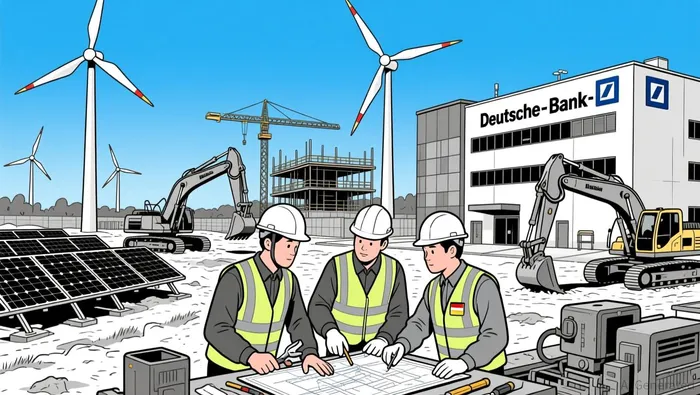 Deutsche Bank's strategic alignment with Germany's fiscal and geopolitical priorities presents compelling opportunities. However, risks include execution challenges in scaling partnerships and macroeconomic volatility. For investors, the bank's targeted cost savings of €2 billion and its role in facilitating cross-border capital flows (e.g., Asian investments in German defense) offer a balanced risk-reward profile. The defense sector's long-term growth potential, coupled with the bank's profitability targets, suggests a favorable outlook for those seeking exposure to Germany's structural transformation.







Comentarios
Aún no hay comentarios