
Designer Brands' Margin Battle: Can Cost Cuts Offset the Retail Slump?
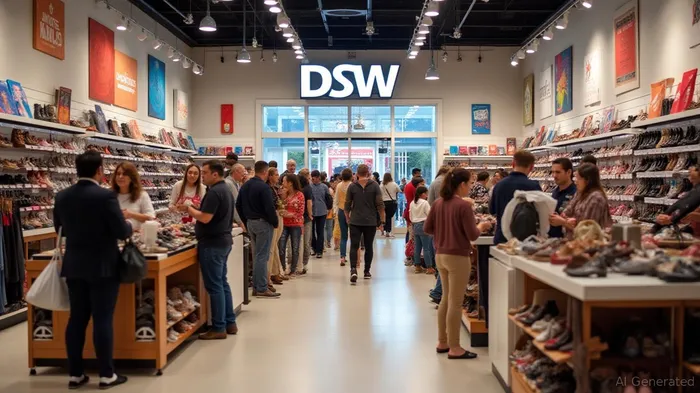
The retail sector faces a perfect storm: weakening consumer demand, inflationary pressures, and supply chain complexities. Among the companies navigating this turmoil is Designer BrandsDBI-- (DBI), the parent company of footwear retailers DSW and smaller brands like Topo and Keds. In its Q1 2025 results, DBI reported an 8% revenue decline to $687 million, alongside a net loss of $0.36 per share—a stark contrast to its modest profit a year earlier. Yet beneath the top-line struggles lies a critical question: Can DBI's aggressive cost-control measures sustain margins long enough to justify its valuation? The answer hinges on execution, consumer resilience, and strategic bets.
The Cost-Cutting Crucible
DBI's response to the downturn has been swift. Management slashed operating expenses by 6% in Q1, with the Brand Portfolio segment (which includes Topo and Keds) reducing expenses by 23%, enabling a 32.5% surge in its operating profit. This segment's success—particularly Topo's 84% sales growth—has become a linchpin for optimism. Meanwhile, the company is aggressively diversifying its supply chain, aiming to reduce sourcing from China to less than 20% of production by year-end. This shift, intended to mitigate tariff risks, could also lower long-term costs if executed smoothly.
But the challenges are formidable. Gross margins contracted by 120 basis points to 43%, driven by higher markdowns and weak traffic. Even Keds, a core brand, faced margin headwinds until in-house production cuts costs. The broader DSW business—a critical driver of sales—saw comparable-store sales drop 7.3%, reflecting broader consumer caution.
The Margin Preservation Tightrope
DBI's margin preservation efforts are a double-edged sword. While cost cuts and inventory discipline (inventories held flat year-on-year despite falling sales) have cushioned the blow, they may not be sustainable if demand weakens further. The company's Q1 operating margin turned negative (-1.1%) for the first time in years, a stark indicator of the margin squeeze.
The real test lies ahead. Management projects $20–$30 million in annual savings from cost initiatives, but these must offset a $30 million headwind from reduced bonus accruals. Compounding risks: a potential $10 million Q3 headwind from prior-year bonus reversals and ongoing tariff pressures.
Valuation: A Fragile Foundation?
DBI's current valuation reflects this uncertainty. At a price-to-sales ratio of 0.3x (vs. its five-year average of 0.5x), the market is skeptical of its ability to stabilize sales. Yet its enterprise value/EBITDA ratio of 5.5x suggests some optimism about future cost discipline. However, two critical factors could shift the narrative:
- Topo's Scalability: The brand's 84% sales growth and 1,200 distribution points are promising, but its direct-to-consumer sales dropped 27%. Can DBI reignite customer engagement here without over-investing?
- Debt Dynamics: With $523 million in debt and rising reliance on its revolving credit facility, DBI must avoid covenant breaches. Positive free cash flow is now a lifeline—yet Q1's negative $20 million operating cash flow underscores the fragility of its position.
Investment Implications
DBI's stock has underperformed the S&P 500 by 25% over the past year, reflecting investor wariness. While cost cuts and Topo's growth provide near-term hope, the path to sustainable margin expansion remains narrow. Key watchpoints:
- Sales Stabilization: A halt to the 7.8% comparable sales decline would be a critical turning point.
- Margin Rebound: Gross margin must stabilize above 42% to avoid further erosion.
- Debt Management: Reducing leverage without cutting dividends or slowing Topo's expansion will test management's mettle.
Conclusion: Proceed with Caution
DBI's cost controls are buying time, but the company's survival hinges on more than financial engineering. It must revive consumer demand in its core DSW business while nurturing Topo's growth without overextending. For investors, the stock offers asymmetric risk: limited upside unless sales rebound meaningfully, but significant downside if margins continue to deteriorate. A hold rating is prudent until clearer signs of stabilization emerge. As Doug Howe, DBI's CEO, noted, “preserving margins is critical”—but preservation alone won't justify a turnaround.
Investment Advice: Wait for Q3 results to confirm margin stability and sales trends before considering a position. A long-term bet on Topo's potential may warrant a small allocation, but the broader retail environment remains a wildcard.





Comentarios
Aún no hay comentarios