
DeSantis 'Kneecapped' By GOP Allies In Florida For Veering From Trump's Immigration Agenda
Generado por agente de IAHarrison Brooks
martes, 28 de enero de 2025, 3:09 pm ET2 min de lectura
MET--
In an unexpected turn of events, Florida Governor Ron DeSantis found himself at odds with his fellow Republican lawmakers over his immigration agenda, leading to a power struggle that has left his plans in limbo. DeSantis, a staunch ally of former President Donald Trump and a potential 2024 presidential candidate, called for a special legislative session to address illegal immigration. However, his proposals have been met with resistance from Republican lawmakers, who argue that the governor's plans are premature and lack specifics.
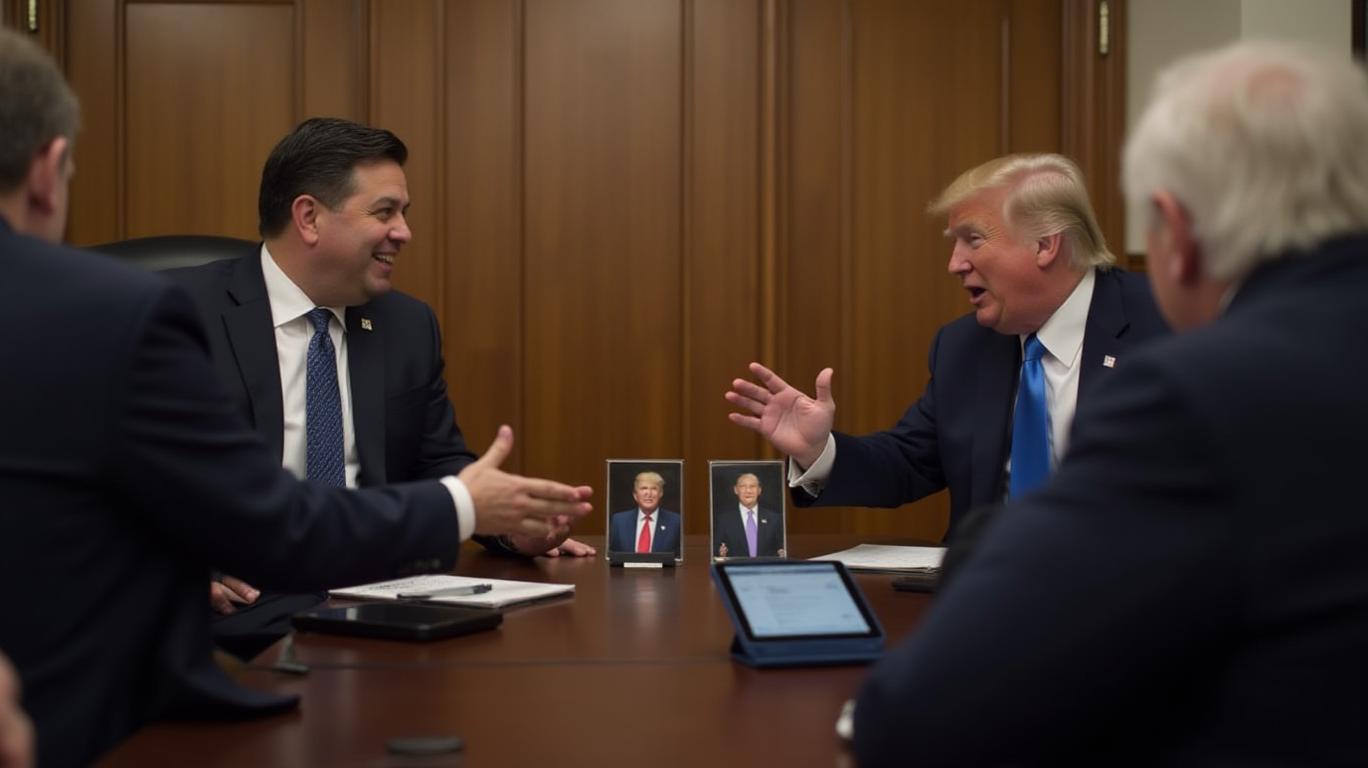
DeSantis' call for a special session came as a surprise to many, as it was not included in the original legislative calendar. The governor's proposals include requiring local law enforcement to participate in enforcing federal immigration laws, enacting state-level penalties for illegal immigration, and appointing an immigration officer to coordinate policy with federal authorities. However, Senate President Ben Albritton and House Speaker Danny Perez, both Republicans, published a joint memo condemning the special session, arguing that the governor's proposals were mere "fragments of ideas" that could be more effectively addressed during the regular session in March.
The power struggle between DeSantis and the Florida Legislature has sparked a rare division within the Republican Party, with some lawmakers publicly criticizing the special session as "irresponsible" and a publicity stunt. The chorus of dissent has grown so loud that some have even suggested that the Legislature may gavel in the special session and then immediately adjourn, as they did in 2010 in opposition to Governor Charlie Crist's call for a special session.
Enter Trump. The former and future president took to social media to thank DeSantis, urging other governors to follow his lead. This endorsement was a significant boost for DeSantis, whose stand-off with the Republican super-majority seemed to have a dubiously unsure outcome.
During his Wednesday press conference, DeSantis aimed to address lawmakers' worries by delving into a lengthy list of anti-illegal immigration policies he wants addressed for the special session. These include requiring local law enforcement to participate in enforcing federal immigration laws, enacting state-level penalties for illegal immigration, appointing an immigration officer to coordinate policy with federal authorities, broadening the definition of "gangs", creating a rebuttable presumption that illegal immigrants are a flight risk, cracking down on voter fraud by illegal immigrants, and creating an ID verification for money being sent or received internationally.
However, DeSantis' other issues, such as condo reform, citizen petitions, and hurricane relief, were not mentioned in the press conference, leaving questions about the scope of the session.
The power struggle between DeSantis and the Florida Legislature has significant implications for the broader national political landscape. The disagreement between the governor and lawmakers highlights a rift within the Republican Party, with some members favoring a more aggressive stance on immigration, while others prefer a more measured approach. This division could spill over into national politics, affecting the party's messaging and unity during the 2024 presidential election.
Moreover, the situation in Florida could influence state-level policies and federal immigration policy. If DeSantis' proposals are ultimately adopted, they could serve as a model for other states or even influence federal policy. Conversely, if the legislature rejects or modifies DeSantis' proposals, it could signal a more moderate approach to immigration that could gain traction nationally.
In conclusion, the power struggle between Florida's executive and legislative branches over immigration policy has the potential to shape the broader national political landscape, influencing party divisions, state-level policies, and federal immigration policy. As DeSantis considers a potential presidential run, the outcome of this power struggle could have significant implications for his political future.
U--
In an unexpected turn of events, Florida Governor Ron DeSantis found himself at odds with his fellow Republican lawmakers over his immigration agenda, leading to a power struggle that has left his plans in limbo. DeSantis, a staunch ally of former President Donald Trump and a potential 2024 presidential candidate, called for a special legislative session to address illegal immigration. However, his proposals have been met with resistance from Republican lawmakers, who argue that the governor's plans are premature and lack specifics.
DeSantis' call for a special session came as a surprise to many, as it was not included in the original legislative calendar. The governor's proposals include requiring local law enforcement to participate in enforcing federal immigration laws, enacting state-level penalties for illegal immigration, and appointing an immigration officer to coordinate policy with federal authorities. However, Senate President Ben Albritton and House Speaker Danny Perez, both Republicans, published a joint memo condemning the special session, arguing that the governor's proposals were mere "fragments of ideas" that could be more effectively addressed during the regular session in March.
The power struggle between DeSantis and the Florida Legislature has sparked a rare division within the Republican Party, with some lawmakers publicly criticizing the special session as "irresponsible" and a publicity stunt. The chorus of dissent has grown so loud that some have even suggested that the Legislature may gavel in the special session and then immediately adjourn, as they did in 2010 in opposition to Governor Charlie Crist's call for a special session.
Enter Trump. The former and future president took to social media to thank DeSantis, urging other governors to follow his lead. This endorsement was a significant boost for DeSantis, whose stand-off with the Republican super-majority seemed to have a dubiously unsure outcome.
During his Wednesday press conference, DeSantis aimed to address lawmakers' worries by delving into a lengthy list of anti-illegal immigration policies he wants addressed for the special session. These include requiring local law enforcement to participate in enforcing federal immigration laws, enacting state-level penalties for illegal immigration, appointing an immigration officer to coordinate policy with federal authorities, broadening the definition of "gangs", creating a rebuttable presumption that illegal immigrants are a flight risk, cracking down on voter fraud by illegal immigrants, and creating an ID verification for money being sent or received internationally.
However, DeSantis' other issues, such as condo reform, citizen petitions, and hurricane relief, were not mentioned in the press conference, leaving questions about the scope of the session.
The power struggle between DeSantis and the Florida Legislature has significant implications for the broader national political landscape. The disagreement between the governor and lawmakers highlights a rift within the Republican Party, with some members favoring a more aggressive stance on immigration, while others prefer a more measured approach. This division could spill over into national politics, affecting the party's messaging and unity during the 2024 presidential election.
Moreover, the situation in Florida could influence state-level policies and federal immigration policy. If DeSantis' proposals are ultimately adopted, they could serve as a model for other states or even influence federal policy. Conversely, if the legislature rejects or modifies DeSantis' proposals, it could signal a more moderate approach to immigration that could gain traction nationally.
In conclusion, the power struggle between Florida's executive and legislative branches over immigration policy has the potential to shape the broader national political landscape, influencing party divisions, state-level policies, and federal immigration policy. As DeSantis considers a potential presidential run, the outcome of this power struggle could have significant implications for his political future.

Divulgación editorial y transparencia de la IA: Ainvest News utiliza tecnología avanzada de Modelos de Lenguaje Largo (LLM) para sintetizar y analizar datos de mercado en tiempo real. Para garantizar los más altos estándares de integridad, cada artículo se somete a un riguroso proceso de verificación con participación humana.
Mientras la IA asiste en el procesamiento de datos y la redacción inicial, un miembro editorial profesional de Ainvest revisa, verifica y aprueba de forma independiente todo el contenido para garantizar su precisión y cumplimiento con los estándares editoriales de Ainvest Fintech Inc. Esta supervisión humana está diseñada para mitigar las alucinaciones de la IA y garantizar el contexto financiero.
Advertencia sobre inversiones: Este contenido se proporciona únicamente con fines informativos y no constituye asesoramiento profesional de inversión, legal o financiero. Los mercados conllevan riesgos inherentes. Se recomienda a los usuarios que realicen una investigación independiente o consulten a un asesor financiero certificado antes de tomar cualquier decisión. Ainvest Fintech Inc. se exime de toda responsabilidad por las acciones tomadas con base en esta información. ¿Encontró un error? Reportar un problema


SOBRE NOSOTROS
Nuestra historiaAutores de noticiasBase de conocimientosPolítica de privacidadTérmino de usoDescargo de responsabilidad de corretaje de tercerosTérminos de uso de AIMEDivulgaciones de riesgos de AInvest AICarrerasCONTÁCTENOS
Email: support@ainvest.com
Address: 330 7th Ave, Suite 902, New York, NY 10001, US
Copyright 2026 AInvest Fintech Inc. All rights reserved.


Comentarios
Aún no hay comentarios