
Depegged Stablecoin Arbitrage Risks and Opportunities in DeFi
The October 2025 Depegging: A Stress Test for Stablecoin Resilience
In October 2025, Ethena's yield-bearing stablecoin, USDe, briefly lost its dollar peg during a crypto market rout triggered by a proposed 100% tariff on Chinese imports by U.S. President Donald Trump, according to Bloomberg. The stablecoin fell as low as 65 cents on Binance before recovering, highlighting the fragility of non-fully collateralized models. USDe, with a $14 billion market cap, relies on a reserve of other stablecoins and yield-generating strategies, making it susceptible to liquidity shocks during market stress, according to Bloomberg.
This event underscored a broader trend: as stablecoins compete on distribution networks and compliance frameworks rather than just peg stability, according to Whale's Methodology, their redemption mechanisms face unprecedented scrutiny. For instance, during the depeg, traders rushed to convert USDe into USDTUSDC-- and USDCUSDC--, exacerbating selling pressure and testing the resilience of redemption protocols.
Whale Behavior and Regulatory Constraints
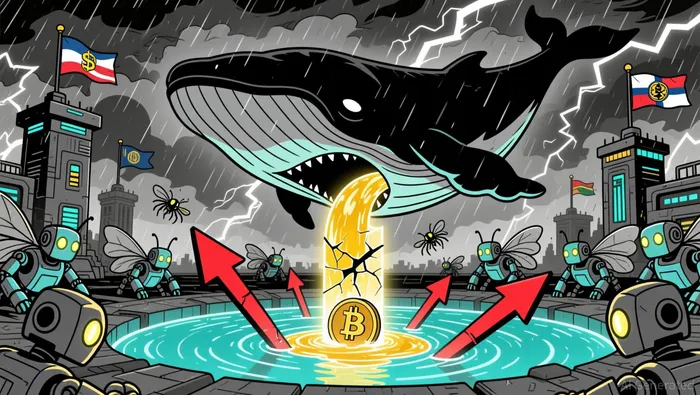
Whales-large investors or institutions-play a pivotal role in arbitrage during depegging events. However, their strategies are increasingly constrained by regulatory frameworks. The Bank of England's 2025 stablecoin regulations, including a £20,000 cap for individuals and £10 million for businesses, aim to limit large-scale arbitrage activity, according to Ratex. These rules align with the EU's MiCA framework, which enforces 1:1 reserve backing and liquidity controls, according to Ratex.
According to a report by Coinpaper, such regulations could force whales to adopt more cautious strategies, prioritizing compliance over speed, according to Ratex. For example, during the USDe depeg, arbitrageurs faced delays in redeeming stablecoins due to liquidity buffers mandated by regulators, according to Ratex. This created a feedback loop: as whales hesitated, market volatility persisted, further straining redemption mechanisms.
Systemic Risks from Whale Liquidations
The October 2025 liquidation event, which saw $20 billion in delta one contracts wiped out in 24 hours, revealed systemic risks in DeFi redemption mechanisms, according to Ratex. Altcoins, leveraged to their breaking point, collapsed first, triggering a cascade of stablecoin conversions. USDe, already under pressure from its yield model, became a collateral casualty as traders sought safer assets, according to Ratex.
This highlights a critical flaw: stablecoins with non-fully collateralized reserves are inherently vulnerable during liquidity crises. As stated by Blofin's analysis, the interconnectedness of crypto liquidity means that the collapse of one asset can destabilize entire redemption ecosystems, according to Ratex. For instance, the forced selling of USDe during the liquidation event created a self-fulfilling prophecy-loss of confidence led to further depegging, compounding the crisis, according to Ratex.
Opportunities and Risks for Investors
For investors, the depegging of USDe and the October 2025 liquidation event present both cautionary tales and opportunities. On one hand, stablecoins with robust collateralization and liquidity buffers (e.g., USDT and USDC) are likely to dominate in a post-crisis environment, according to Whale's Methodology. On the other, newer entrants like PYUSD and FDUSDFDUSD--, which leverage fintech networks for rapid adoption, could gain market share if they address redemption vulnerabilities, according to Whale's Methodology.
However, arbitrage opportunities remain fraught with risk. Regulatory thresholds, such as the Bank of England's holding caps, according to Ratex, and the volatility of yield-generating strategies, according to Bloomberg, mean that even sophisticated investors must balance speed with compliance.
Conclusion
The depegging of USDe and the systemic risks exposed in October 2025 underscore the need for a nuanced approach to stablecoin investing. While regulatory frameworks aim to mitigate arbitrage-driven instability, they also create new friction points in redemption mechanisms. Investors must weigh the resilience of collateralization models, the liquidity of underlying assets, and the evolving regulatory landscape to navigate this complex terrain.
As the stablecoin market matures, the focus will shift from peg stability to systemic robustness-a challenge that will define the next phase of DeFi's evolution.






Comentarios
Aún no hay comentarios