
The Department Store Reboot: Why Macy’s is Poised to Lead in a Post-Nordstrom World
The delisting of NordstromJWN-- on May 21, 2025, marked a seismic shift in the retail landscape. After 124 years as a public company, Nordstrom’s transition to private ownership underscores the existential challenges facing traditional department stores. Yet, amid this upheaval, a new narrative is emerging: sector consolidation and strategic adaptation are creating winners in the retail apocalypse. Among them, Macy’s (M) stands out as the clear leader in reinvention, while Dillard’s (DDS) lags behind in a digital race it cannot afford to lose. Here’s why investors should act now.
The Nordstrom Delisting: A Watershed Moment
Nordstrom’s exit from the public markets is not just a corporate milestone—it’s a verdict on the old guard of department stores. The company’s $24.25-per-share buyout by the Nordstrom family and Mexico’s Liverpool S.A.B. reflects a reality: physical retail’s survival hinges on private flexibility and omnichannel agility. For Macy’s and Dillard’s, the question is whether they can adapt quickly enough to avoid the same fate.
Macy’s: The Model for Retail Reinvention
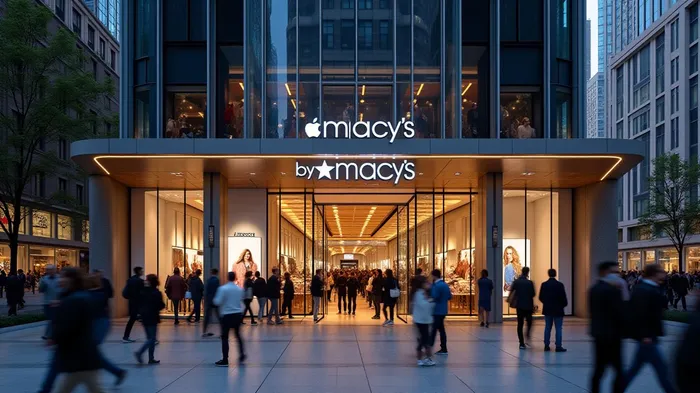
Macy’s has been methodically transforming itself into a hybrid retailer, blending physical and digital innovation. Its small-store strategy—think Market by Macy’s and Bloomie’s (the compact Bloomingdale’s)—is a masterstroke. These stores, averaging one-fifth the size of traditional locations, are strategically placed in high-traffic off-mall areas, catering to convenience-driven shoppers.
The Data Backs the Strategy:
- First 50 Stores: Macy’s upgraded 50 key locations with better staffing and merchandising. These stores delivered 1.2% same-store sales growth in Q4 2024, outperforming the broader portfolio’s 0.9% decline.
- Small-Format Success: Stores open for over a year report positive comparable sales growth, with minimal cannibalization of larger locations. By 2025, Macy’s aims to triple its small-store count, targeting 30 new openings annually.
- Balance Sheet Strength: A 5.5% dividend yield and $3.7B market cap (trading at a P/E of 6.4) make it a value play.
Dillard’s: Stuck in the Analog Age
Dillard’s, by contrast, is failing to keep pace. Despite a 9% net profit margin (vs. Macy’s 2.5%), its reliance on regional physical stores and weak e-commerce infrastructure leave it vulnerable.
The Red Flags:
- Declining Digital Relevance: UBS analysts noted low-double-digit drops in website visits year over year, while holiday search interest fell 11%.
- Margin Pressure: Retail gross margins contracted to 36.1% in Q4 2024, down from 37.7% a year earlier, signaling operational strain.
- No Digital Lifeline: While Macy’s ranks fourth in U.S. online fashion sales, Dillard’s e-commerce presence is negligible. Its "dillards.com" site remains a sideshow to its 272 physical stores—stores increasingly competing with discounters like TJ Maxx.
The Bottom Line: Buy Macy’s, Avoid Dillard’s
The department store sector is consolidating around two poles: agile omnichannel players (Macy’s) and private equity-backed bets (Nordstrom). Dillard’s lacks both the digital moat and the scale to thrive.
Why Macy’s Wins:
1. Scale & Brands: With Bloomingdale’s (luxury) and Bluemercury (beauty) as growth engines, Macy’s commands a portfolio Dillard’s can’t match.
2. Physical-Digital Synergy: Its 350 "go-forward" stores, paired with a top-tier e-commerce platform, create a flywheel effect.
3. Value Play: At a P/E of 6.4 and with $2.15 EPS projections, Macy’s offers a margin of safety.
Why Dillard’s Stumbles:
- Overexposure to declining mall traffic.
- No credible e-commerce strategy to offset store closures.
- Narrow regional footprint vs. Macy’s national reach.
Call to Action: Act Now on Macy’s (M)
The delisting of Nordstrom is a clarion call: retail’s future belongs to those who blend physical convenience with digital smarts. Macy’s has the strategy, the brands, and the financial flexibility to lead this transformation. Dillard’s, meanwhile, is a relic in a world demanding reinvention.
Investors should:
- Buy Macy’s stock now, targeting a price of $15–$18 (based on 2025 EPS estimates).
- Avoid Dillard’s until it proves it can adapt its e-commerce weaknesses.
The department store era isn’t over—it’s just being reborn. Macy’s is writing the blueprint.





Comentarios
Aún no hay comentarios