
Denny's “Good Fortune” Deal: A Strategic Catalyst for Brand Revitalization and Margin Expansion in Post-Pandemic Recovery
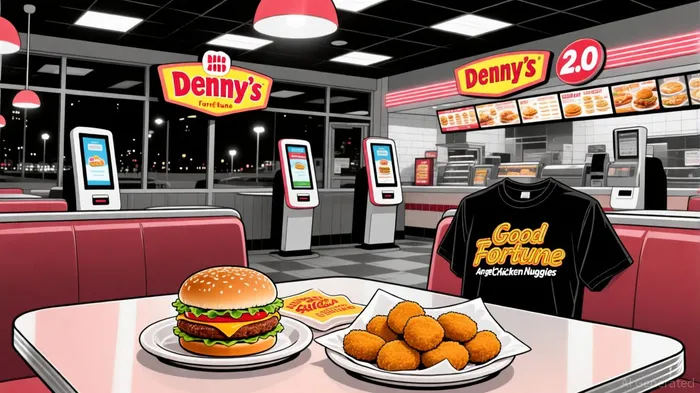
In the evolving landscape of post-pandemic consumer behavior, value-driven dining and late-night convenience have emerged as critical growth drivers for casual dining chains. Denny'sDENN-- recent “Good Fortune” late-night deal, launched in October 2025 as part of a collaboration with the film Good Fortune, represents a calculated effort to reinvigorate its brand while capitalizing on these trends. By offering a 50% discount on its signature Good Fortune Burger and Budget Angel Chicken Nuggies from 4 p.m. to 4 a.m., Denny's has not only reinforced its 24/7 positioning but also tapped into the growing demand for affordable, high-quality off-premise dining.
Strategic Alignment with Post-Pandemic Consumer Trends
The “Good Fortune” deal is a masterstroke in addressing post-pandemic consumer priorities. According to a report by Yelp's State of the Restaurant Industry 2025, searches for “cheap eats” and “meal deals” surged by 21% and 117%, respectively, in Q3 2025, underscoring a heightened focus on affordability[1]. Denny's 50% discount on its late-night menu items directly aligns with this demand, offering a value proposition that resonates with budget-conscious diners. Additionally, the promotion's emphasis on digital ordering—available exclusively via DennysDENN--.com—catered to the 40% of U.S. consumers who now rely on online food delivery services[2]. This digital-first approach not only reduces overhead costs but also enhances operational efficiency, a critical factor in an industry grappling with labor shortages and rising inflation.
The deal's integration with the Good Fortune movie further amplified its reach. By bundling the promotion with limited-edition merchandise and loyalty rewards for Denny's Rewards members, the company created a multi-channel engagement strategy. As stated by Denny's CEO in a February 2025 earnings report, such initiatives have historically driven incremental traffic and margin expansion, particularly during extended hours when competitors are less active[3].
Financial Performance and Strategic Context
While Q4 2025 financial data is not yet available, Denny's Q4 2024 results provide a benchmark for evaluating the potential impact of the “Good Fortune” deal. For Q4 2024, Denny's reported a 1.1% increase in domestic system-wide same-restaurant sales, outperforming the BBI Family Dining index, while its subsidiary Keke's achieved a stronger 3.0% growth[4]. These results were driven by strategic closures of 30 underperforming locations, 23 Diner 2.0 remodels, and the expansion of virtual brands like Banda Burrito, which generated minimal overlap with in-dining guests[5].
The “Good Fortune” deal builds on these successes by leveraging Denny's core strengths: late-night availability, value pricing, and digital innovation. Late-night dining remains a key differentiator for Denny's, with its 24/7 model contributing to a 7.5% traffic increase in Q2 2023 compared to the prior year[6]. By extending discounts during this high-margin daypart, Denny's is likely to see a compounding effect on sales and profitability, particularly as competitors scale back late-night operations.
Investment Implications
For investors, the “Good Fortune” deal signals Denny's commitment to adapting to macroeconomic headwinds while maintaining its value leadership. The company's 2025 guidance—projecting domestic same-restaurant sales growth between -2.0% and 1.0%—reflects cautious optimism amid inflationary pressures[7]. However, the success of promotions like “Good Fortune” could tilt this range toward the upper end, especially if they drive repeat visits and loyalty program engagement.
Moreover, Denny's strategic focus on virtual brands and digital transformation is a long-term tailwind. Virtual brands like Banda Burrito and Keke's have demonstrated the ability to generate incremental revenue without cannibalizing core sales, a critical factor in margin preservation[8]. The “Good Fortune” deal's integration of exclusive merchandise and social media giveaways further enhances customer lifetime value, a metric that has historically correlated with stock performance in the restaurant sector.
Conclusion
Denny's “Good Fortune” deal is more than a promotional stunt—it is a strategic lever to reposition the brand in a competitive, value-driven market. By aligning with post-pandemic consumer priorities, leveraging digital efficiency, and reinforcing its late-night dominance, Denny's is well-positioned to drive margin expansion and shareholder value. For investors, the key will be monitoring Q4 2025 results to assess the deal's direct impact, but the foundational strategies are already in place to support long-term growth.





Comentarios
Aún no hay comentarios