
Denison Mines' Strategic Uranium Expansion Through Skyharbour Joint Ventures
The uranium sector is undergoing a transformative phase, driven by global energy security concerns, the resurgence of nuclear power, and the growing demand for clean energy solutions. In this evolving landscape, Denison Mines Corp.DNN-- has emerged as a strategic actor, leveraging its deep expertise in the Athabasca Basin to forge high-impact partnerships. The company's recent joint ventures with Skyharbour Resources Ltd. represent a calculated move to consolidate its position in one of the world's most prospective uranium regions while aligning with macroeconomic tailwinds. This analysis evaluates the long-term value creation potential and uranium market positioning of Denison's new joint ventures, drawing on recent developments and industry trends.
Strategic Partnership and Joint Venture Structure
Denison's collaboration with Skyharbour centers on four joint ventures covering the Russell Lake Uranium Project, a high-potential area adjacent to Denison's flagship Wheeler River Project in Saskatchewan's Athabasca Basin. The joint ventures-Russell Lake (RL), Getty East, Wheeler North, and Wheeler River Inliers-are structured to balance operational control and financial discipline. DenisonDNN-- holds initial ownership stakes of 20% in RL, 30% in Getty East, 49% in Wheeler North, and 70% in Wheeler River Inliers, with earn-in options allowing it to increase its interests in Wheeler North and Getty East to 70%.
This structure reflects Denison's strategic intent to expand its footprint in the Athabasca Basin while mitigating upfront capital risk. By deferring payments tied to exploration milestones, Denison ensures that future expenditures are justified by tangible discoveries. For instance, the company has committed to a minimum of $4 million in exploration spending over the first two years for Wheeler North and Getty East, with total project consideration reaching up to CAD $61.5 million. This disciplined approach aligns with the company's broader strategy of prioritizing high-impact, low-cost uranium projects.
Uranium Market Positioning and Geopolitical Tailwinds
The global uranium market is being reshaped by geopolitical and technological forces. Nuclear energy is increasingly viewed as a critical component of decarbonization strategies, with the World Nuclear Association noting a surge in reactor construction projects worldwide. Simultaneously, the U.S. government has elevated uranium to a critical mineral, underscoring its role in national security and energy independence. These trends create a favorable backdrop for Denison's operations, particularly in the Athabasca Basin, which hosts some of the world's richest uranium deposits.
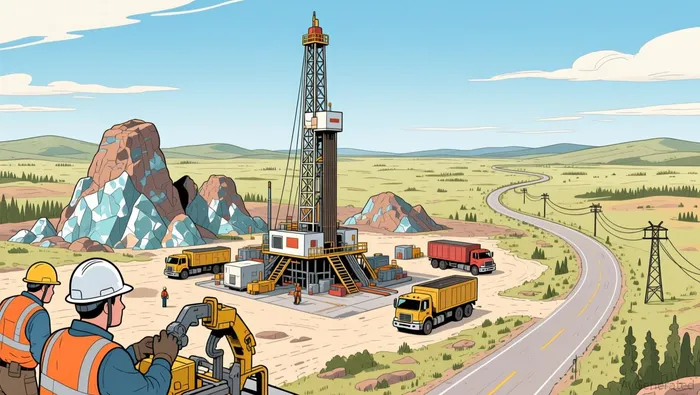 Denison's joint ventures with Skyharbour are strategically located to capitalize on these dynamics. The Russell Lake project, for example, is situated in the Eastern Athabasca Basin, a region with well-established infrastructure, including all-weather roads and powerlines. This proximity to existing infrastructure reduces development costs and accelerates timelines for potential discoveries. Furthermore, Denison's partnership with Skyharbour-alongside its engagement with local communities and the Métis Nation-highlights a commitment to sustainable development, a growing priority for investors and regulators alike.
Catalysts for Long-Term Value Creation
The most compelling catalyst for Denison's joint ventures lies in the Phoenix deposit, part of the Wheeler River Project. A recent feasibility study revealed robust economic potential, with 56.7 million pounds of U3O8 in proven and probable reserves and a 10-year mine life. The study also projected a pre-tax net present value of $2.34 billion and an internal rate of return (IRR) of 105.9%, underscoring the project's financial viability. These metrics position Denison as one of the lowest-cost uranium producers globally, a critical advantage in a market sensitive to price fluctuations.
Additionally, the joint ventures provide Denison with exploration upside. Skyharbour's Russell Lake project is described as hosting "widespread uranium mineralization," with drill intercepts indicating significant potential for new discoveries. By retaining operatorship of Wheeler North and Wheeler River Inliers, Denison can leverage its technical expertise to maximize exploration efficiency. The ability to increase ownership stakes in these projects further enhances value retention, as Denison can scale its interests in response to positive results.
Risks and Mitigation
While the joint ventures present strong upside, risks remain. Uranium prices are cyclical, and exploration projects often face delays or cost overruns. However, Denison's disciplined capital allocation-tying payments to exploration milestones-mitigates some of these risks. The company's strong balance sheet, with a market capitalization exceeding $3 billion, also provides financial flexibility to navigate volatility. Moreover, the U.S. government's strategic focus on uranium supply chains offers a degree of policy support, reducing the likelihood of regulatory headwinds.
Conclusion
Denison Mines' joint ventures with Skyharbour represent a strategic, well-structured expansion into one of the world's most prospective uranium regions. By combining Denison's operational expertise with Skyharbour's exploration potential, the partnership is poised to unlock value through disciplined exploration, low-cost production, and alignment with global energy trends. As uranium demand continues to rise, driven by decarbonization and geopolitical imperatives, Denison's position in the Athabasca Basin-bolstered by these joint ventures-positions it as a key player in the sector's next phase of growth.







Comentarios
Aún no hay comentarios