
Democratizing Alternative Asset Exposure: How Prediction Markets Enable Retail Investors to Hedge and Speculate on Collectibles Without Ownership
The Mechanics of Prediction Markets for Collectibles
Kalshi, the first CFTC-regulated prediction market platform, has partnered with StockX to introduce contracts based on measurable outcomes tied to collectible sales. These contracts allow traders to bet on whether a product will clear a specific resale price threshold or predict its average sales price over defined timeframes. For example, a trader might purchase a "yes" contract asserting that a limited-edition sneaker will average $500 on StockX during its first month post-release. If the outcome materializes, the contract pays out $1 per share; if not, it becomes worthless. Prices fluctuate in real time based on market sentiment, effectively transforming collectibles into tradable derivatives according to reports.
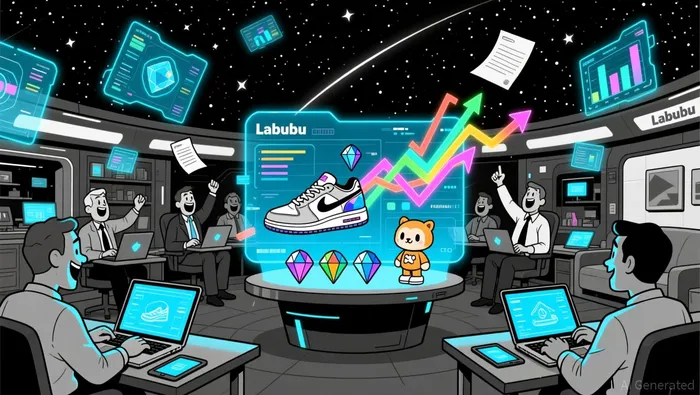 This model mirrors traditional futures markets but applies to culturally driven assets. StockX's anonymized data-covering top-traded brands, upcoming releases, and monthly sales trends-provides the empirical foundation for these contracts. By quantifying subjective factors like hype cycles and brand loyalty, the partnership turns speculative bets into structured financial instruments.
Retail Investors: Hedging and Speculating Without Ownership
For retail investors, the implications are profound. Historically, collectibles markets have been illiquid and exclusive, requiring physical ownership or deep expertise. Prediction markets eliminate these barriers. A trader can now hedge against potential price declines in a coveted sneaker drop without purchasing the item, or speculate on the next "hot" collectible by trading contracts. This mirrors how investors use options to manage equity risks but applies to a sector previously deemed too volatile or opaque for mainstream participation.
The utility extends beyond pure speculation. For instance, a collector holding Labubu figurines could use Kalshi contracts to lock in a minimum resale price, mitigating the risk of a market correction. Conversely, a trader anticipating a surge in demand for a new product line could buy "yes" contracts to profit from rising prices. These mechanisms democratize risk management tools once reserved for institutional players.
Regulatory Ambiguity and Market Expansion
Despite its promise, the model operates in a regulatory gray area. While Kalshi's CFTC compliance provides a degree of legitimacy, other platforms face legal challenges in states like New York and Washington, where prediction markets are classified as gambling according to reports. This tension highlights the broader debate over how to categorize these instruments: Are they speculative bets or financial derivatives? The answer will shape their scalability.
Meanwhile, the partnership's success has spurred competition. Coinbase, for example, is developing its own prediction market platform, leveraging Kalshi's infrastructure to offer contracts on economic, political, and technological events. Similarly, DraftKings and FanDuel are repositioning themselves as prediction market pioneers, signaling a shift in how traditional sports betting firms compete in a fragmented regulatory landscape.
The Future of Alternative Asset Exposure
The StockX-Kalshi collaboration is more than a niche experiment-it's a blueprint for integrating alternative assets into mainstream finance. By translating cultural moments into tradable outcomes, the partnership bridges the gap between speculative markets and structured investing. For retail investors, this means unprecedented access to assets that were once the domain of collectors and speculators.
However, risks remain. The collectibles market's inherent volatility-driven by trends, influencer culture, and supply shocks-could amplify losses for inexperienced traders. Additionally, regulatory uncertainty may stifle innovation in certain jurisdictions. Yet, as platforms like Kalshi and Coinbase refine their offerings, the balance between accessibility and oversight will likely evolve.
Conclusion
Prediction markets are redefining how investors engage with alternative assets. Through partnerships like StockX and Kalshi, collectibles are no longer confined to physical ownership or elite circles. Instead, they've become liquid, tradable instruments accessible to anyone with an internet connection. For retail investors, this represents a paradigm shift: the ability to hedge, speculate, and diversify portfolios in markets once deemed too opaque or risky. As the sector matures, the true test will be whether regulators and market participants can align to sustain this democratization without compromising stability.







Comentarios
Aún no hay comentarios