
Delta's 787-10 Order: A Dual Growth Play on Widebody Market Expansion
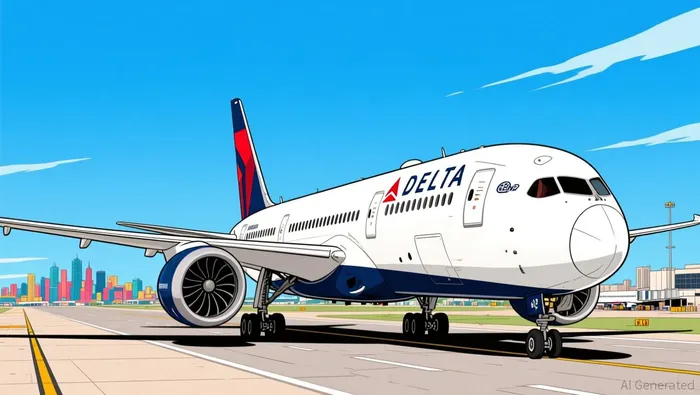
Delta's order for 30 new 787-10s is a clear bet on its international future. The aircraft, with options for 30 more, will refresh and streamline its fleet, directly supporting growth targets on high-margin Transatlantic and South American routes. The 787-10 offers a 25% improvement in fuel efficiency per seat over the planes it replaces, a critical advantage for long-haul economics. More importantly, it provides the capacity and premium cabin space needed to meet rising global demand, complementing Delta's existing 737-10 MAX order for domestic expansion.
The strategic depth of the deal lies in its engine component. DeltaDAL-- has selected GEGE-- Aerospace's GEnx engines, a choice that secures a dominant position for GE in the widebody market. The GEnx family already powers about two-thirds of all 787 aircraft in operation, creating a massive installed base and ecosystem. The agreement includes long-term services support, which locks in a recurring revenue stream for GE beyond the initial sale. This is a dual growth catalyst: Delta gains a fuel-efficient platform to expand its international schedule, while GE secures a long-term service contract on a key engine family, funding its own growth.
This partnership is built on a foundation of technological leadership. The GEnx was developed alongside the 787 Dreamliner to meet the industry's demand for better fuel efficiency and reliability. Its advanced carbon-fiber fan blades and design have made it the fastest-selling high-thrust engine in GE's history. For Delta, choosing the GEnx means betting on proven technology that supports its operational goals. For GE, it means deepening its lock-in with a major customer, ensuring service revenue for years to come as the 787-10 fleet ramps up from 2031.
Market Context: The Expanding TAM for Widebody Aircraft
The demand tailwinds for widebody aircraft are powerful and secular, creating a vast opportunity for both airlines and their suppliers. Boeing's 787 Dreamliner backlog is a clear indicator of this strength. In 2025, the company received orders for 321 Dreamliners, marking its second-best year ever and a significant rebound from pandemic lows. This surge in orders, however, is hitting a hard production constraint. The current delivery rate is far below the backlog, with production slots sold out to about 2030. This supply shortage is a fundamental driver of future growth, as it means airlines like Delta will face multi-year waits for new aircraft, locking in demand for years to come.
Boeing is actively working to expand its capacity to meet this demand. A key part of that plan is a $1 billion plant upgrade in South Carolina, aimed at significantly boosting output. The company is even studying a record production rate of 16 aircraft per month at that facility. While the immediate delivery schedule for Delta's new 787-10s is set to begin in 2031, this long-term capacity build-out is critical. It signals Boeing's confidence in the program's future and directly supports the scalability of engine demand for the GEnx family.
The 787-10 variant itself is a major catalyst for expanding the total addressable market. Its 25% better fuel efficiency per seat is a decisive economic advantage in the long-haul market, where fuel costs are a primary expense. This efficiency, combined with its larger capacity and premium cabin space, makes it the preferred choice for airlines looking to grow on high-margin international routes. The result is a growing TAM for efficient widebodies, with the 787-10 representing a premium segment within that market. For GE AerospaceGE--, this means a larger pool of potential engine sales over the coming decade, as the backlog for the 787-10 alone is substantial. The company's long-term service agreement with Delta ensures it captures a share of that growing market, not just from the initial sale but from recurring revenue as the fleet ages.
Financial Capacity and Growth Trajectory: Delta's Engine for Expansion
Delta's order for 30 new 787-10s is a multi-year capital commitment, but the airline's financial strength provides the clear capacity to fund it. In its Centennial year, Delta delivered a powerful performance, generating record free cash flow of $4.6 billion. That robust cash generation, coupled with a pre-tax profit of $6.2 billion for the full year, creates a durable financial engine. This isn't just about having the money; it's about having the operational and balance sheet flexibility to invest in growth while maintaining a strong capital position, with total debt at $14.1 billion at year-end.
The financial outlook confirms this growth trajectory is accelerating. Delta expects to deliver earnings growth of 20% year-over-year in 2026. This forward guidance signals that the company's core business momentum is building, driven by strong consumer and corporate demand. For an investor focused on scalability, this is a critical signal: the airline is not just spending capital, it is deploying it into a business that is itself growing at a double-digit rate. The fleet investment is being funded by a cash flow engine that is expanding, not contracting.
This financial setup also creates a powerful, recurring revenue stream for GE Aerospace. The GEnx engine, which powers the new 787-10s, is GE's fastest-selling high-thrust engine to date. Its success is measured in scale, with nearly 4,400 engines in service or in the company's production backlog. This massive installed base is the foundation for the long-term service agreement Delta secured. As the new 787-10 fleet ramps up from 2031, GE will transition from a capital sale to a predictable, high-margin service business. For Delta, this is a strategic lock-in that ensures long-term engine support and costs. For GE, it's a direct path to scaling its service revenue alongside the growth of the 787 program itself.
The bottom line is a virtuous cycle. Delta's strong financials allow it to execute its international expansion plan. That expansion, in turn, drives the airline's earnings growth and cash flow, which can then be reinvested. Simultaneously, the deal secures a massive, long-term service revenue stream for GE. This isn't a one-off transaction; it's a partnership built on the scalable economics of a proven, high-efficiency engine family.
Catalysts, Risks, and What to Watch
The path to realizing the growth potential in this deal hinges on a few critical forward-looking events and the management of key risks. For both Delta and GE Aerospace, the timeline is long, but the milestones are clear.
The primary catalyst is Boeing's successful execution on its production expansion. The company has announced a $1 billion plant upgrade in South Carolina and is studying a record production rate of 16 aircraft per month. This capacity build-out is essential to meet the soaring demand reflected in the backlog, which includes Delta's 30 new 787-10s. If BoeingBA-- can ramp production as planned, it will ensure the deliveries begin in 2031 as scheduled. This on-time delivery is the linchpin for Delta's international expansion and, more importantly, for GE Aerospace's long-term service revenue stream, which starts when the engines enter service.
The main risk is any delay in the 787-10's certification or production ramp. The aircraft is a new variant, and its entry into service depends on regulatory approval and a smooth build process. Any setback would push back the timeline for engine deliveries and, consequently, the start of the service agreement. This would compress the period of high-margin service revenue for GE and delay the return on Delta's capital investment. The risk is compounded by the fact that production slots are already sold out to about 2030, meaning the entire 787 program is under intense pressure to deliver.
For investors, a key watchpoint is GE Aerospace's ability to maintain its financial discipline. The company has raised its long-term outlook, targeting ~$8.5 billion of free cash flow in 2028 and committing to return at least 70% of that cash to shareholders. This sustainability target depends heavily on strong, recurring revenue from commercial services and engine sales. The Delta deal is a major part of that equation. Monitoring GE's progress toward its free cash flow goals will be a direct read on how well it is scaling its service business alongside the growth of the 787 program. Any deviation from that path would signal operational or market challenges that could impact the dual growth thesis.





Comentarios
Aún no hay comentarios