
Delfin LNG's Offshore Gambit: A Strategic Bet on Energy Infrastructure and Capital Reallocation in the LNG Sector
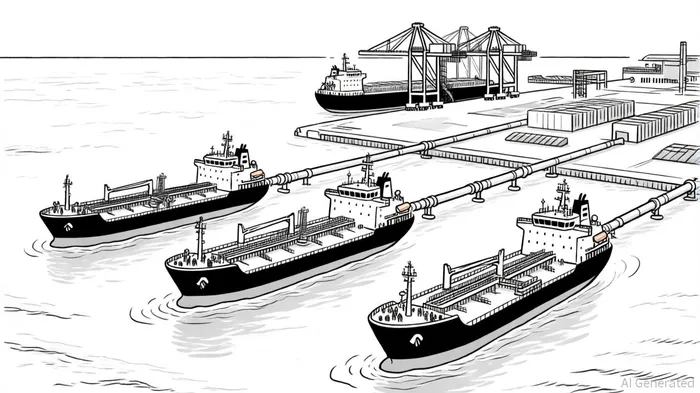
In the ever-shifting landscape of global energy markets, the United States has emerged as a pivotal player in the liquefied natural gas (LNG) sector, driven by surging demand for electricity and the need to decarbonize industrial and power generation systems. At the forefront of this transformation is Delfin LNG, a company poised to redefine U.S. energy infrastructure with its floating LNG (FLNG) project in the Gulf of Mexico. With a final investment decision (FID) expected by late 2025, Delfin's initiative represents not just a technical innovation but a strategic alignment with the broader trends of capital reallocation and near-term energy security.
A Project Anchored in Regulatory and Technological Momentum
Delfin LNG's FLNG project has cleared critical regulatory hurdles, including a deepwater port license from the U.S. Maritime Administration (MARAD) and an extended LNG export permit from the Department of Energy[1]. These approvals, secured under the Deepwater Port Act of 1974, position Delfin as the first entity to develop an offshore LNG export facility in U.S. history[2]. The project leverages low-cost FLNG technology, which minimizes onshore infrastructure requirements and supports up to 13.2 million tonnes per annum (MTPA) of LNG exports via three floating vessels[3]. This approach not only reduces capital intensity but also mitigates environmental risks associated with traditional onshore facilities.
The company's partnerships with Siemens Energy, Samsung Heavy Industries, and Black & Veatch further de-risk execution, with early works programs already underway to finalize vessel designs[4]. These collaborations underscore Delfin's ability to secure critical components and expertise, ensuring alignment with the project's 2029 delivery timeline for the first FLNG vessel[5].
Capital Allocation in a Booming LNG Sector
The U.S. LNG sector is experiencing a surge in investment, with global infrastructure spending projected to grow by 40% in 2024–2025[6]. This momentum is fueled by the need to meet rising electricity demand—driven by AI, data centers, and cryptocurrency mining—which is expected to add over 1,000 terawatt-hours to U.S. consumption by 2030[7]. Natural gas, with its role in power generation and industrial activity, is central to this growth, with production anticipated to rise from 103 billion cubic feet per day (bcf/d) in 2024 to 130–133 bcf/d by 2030[8].
Delfin's project aligns with this trajectory. By leveraging existing brownfield assets and minimizing new infrastructure, the company's FLNG model offers a scalable solution to meet export demand without the lengthy permitting cycles typical of onshore projects. This efficiency is critical in a sector where capital discipline and rapid deployment are paramount.
ESG Considerations and Decarbonization Pathways
While Delfin's sustainability initiatives remain less explicitly detailed, the project's design inherently supports environmental goals. The use of FLNG technology reduces land use and potential ecological disruption compared to traditional terminals[9]. Additionally, the company's ownership of the UTOS pipeline in the Gulf of Mexico enhances the efficiency of natural gas transportation, further contributing to its sustainability profile[10].
Globally, the LNG industry is adopting decarbonization strategies such as carbon capture, utilization, and storage (CCUS) and energy-efficient liquefaction processes. For instance, advanced mixed refrigerant cycles like the propane precooled mixed refrigerant (C3MR) can reduce emissions by up to 20% compared to conventional methods[11]. While Delfin has not yet disclosed specific technologies, the industry-wide shift toward cleaner production suggests that such innovations will likely be integrated into its long-term strategy.
However, the project faces scrutiny. Environmental groups have challenged its federal approvals, citing inadequate analysis of climate impacts[12]. This legal risk highlights the growing importance of ESG-linked capital allocation, where investors increasingly demand transparency and alignment with decarbonization goals.
Strategic Implications for Investors
Delfin's FLNG project is a microcosm of the broader energy transition. It balances the immediate need for energy security with the long-term imperative of decarbonization. For investors, the project's regulatory clarity, technological innovation, and alignment with U.S. energy policy make it an attractive proposition. The recent extension of its export permit by the Department of Energy—granted under Secretary Chris Wright's “energy addition” strategy—further signals political support[13].
Yet, the project's success hinges on navigating ESG-related challenges. As ESG-linked financing becomes standard in the LNG sector, Delfin must articulate a clear decarbonization roadmap to secure capital. This includes not only adopting cleaner technologies but also engaging stakeholders to address environmental concerns.
Conclusion
Delfin LNG's offshore FLNG project is more than a technical feat—it is a strategic investment in the future of U.S. energy infrastructure. By capitalizing on regulatory momentum, technological efficiency, and the global LNG demand surge, the company is positioning itself at the intersection of energy security and capital reallocation. For investors, the project embodies the dual imperatives of the energy transition: meeting near-term demand while laying the groundwork for a decarbonized future. As the FID deadline approaches, Delfin's ability to navigate ESG challenges and deliver on its promises will be critical to its—and the sector's—long-term success.







Comentarios
Aún no hay comentarios