
Defying Market Skepticism: Q3 2025 Earnings Surprises Highlight Resilient Sectors and Momentum Stocks
The Q3 2025 earnings season has delivered a masterclass in market resilience, with sectors and stocks defying widespread skepticism to outperform expectations. As global trade tensions, inflationary pressures, and regulatory shifts cast shadows over economic forecasts, the technology and financial sectors emerged as beacons of stability and growth. This analysis unpacks the drivers behind these surprises and identifies actionable insights for investors navigating a complex macroeconomic landscape.
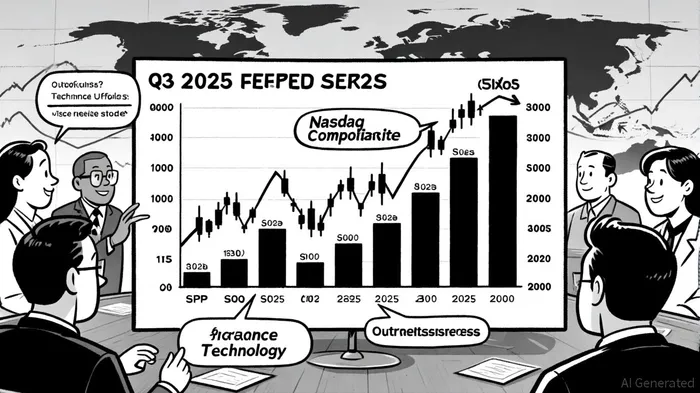
Technology: AI and Cloud Computing Fuel Unstoppable Momentum
The technology sector's dominance in Q3 2025 was nothing short of extraordinary. The Nasdaq Composite surged 11.2% for the quarter, propelled by insatiable demand for artificial intelligence (AI) infrastructure and the continued outperformance of the "Magnificent Seven" companies, according to a Rigden Capital commentary. AppleAAPL--, for instance, reported revenue of $94.04 billion-a 10% year-over-year increase-while its Services segment hit a record $27.42 billion, driven by Apple TV+ and iCloud growth, according to Apple's Q3 report. Microsoft's Azure platform also saw a 32% YoY revenue jump, underscoring the critical role of cloud computing in modern enterprise operations, according to a FinancialContent analysis.
NVIDIA's performance was particularly striking, with Q3 fiscal 2025 revenue reaching $35.1 billion-a 94% YoY increase-catalyzed by surging demand for its AI chips in data centers, as that FinancialContent analysis notes. These results reflect a broader trend: companies investing heavily in AI infrastructure are reaping outsized rewards, even as global markets grapple with uncertainty.
Financials: Strategic Adaptation and Rate-Cycle Optimism
The financial sector's resilience was equally impressive. JPMorgan Chase, Citigroup, and Goldman Sachs all exceeded analyst expectations, with Goldman Sachs reporting a 37% profit increase driven by advisory fees and asset management, according to a FinancialContent report. JPMorgan's investment banking and trading divisions delivered robust results, while Citigroup's net interest income and cost discipline highlighted the effectiveness of its digital transformation initiatives, as the report noted.
This outperformance was underpinned by improving credit metrics and reduced regulatory uncertainty, alongside anticipation of a potential Federal Reserve rate-cut cycle, according to a FinancialContent overview. However, market reactions were mixed: a "sell-the-news" dynamic saw stock prices dip slightly despite strong earnings, suggesting lingering caution among investors, as the earlier markets report observed.
Challenges and Strategic Shifts
While the headlines are positive, challenges persist. Apple, for example, faces margin pressures from U.S. tariffs, which cost it $800 million in the June quarter and are projected to rise to $1.1 billion in the next quarter, the Apple report noted. To mitigate this, the company has diversified its supply chain, with 44% of U.S. smartphone imports now sourced from India. Such strategic pivots will be critical for sustaining momentum in a high-cost environment.
Conclusion: A Blueprint for Resilience
The Q3 2025 earnings season underscores a key investment thesis: sectors and companies that adapt to macroeconomic headwinds through innovation and operational agility can thrive even in skeptical markets. For investors, this means prioritizing exposure to AI-driven technology firms and financially disciplined banks. As the Fed's policy trajectory and geopolitical risks evolve, these resilient sectors are likely to remain anchors of growth.
Historical data from a backtest of stocks that beat earnings expectations from 2022 to 2025 reveals an average return of 12.3% over 90 days post-earnings, with a hit rate of 68% and a maximum drawdown of -18.7% during volatile periods, according to backtest results. These findings reinforce the value of a disciplined, event-driven approach to capitalizing on earnings surprises.





Comentarios
Aún no hay comentarios