
DeFi Security Risks and Financial Impact: Evaluating the Long-Term Resilience of Yield-Generating Protocols
The decentralized finance (DeFi) ecosystem has evolved rapidly, but so have its vulnerabilities. Between 2023 and 2025, DeFi security breaches have cost over $3.1 billion in losses, with October 2025 alone witnessing incidents like the Garden Finance hack ($11 million) and the Typus Finance oracle manipulation attack ($3.4 million). These events underscore a critical question for investors: How can yield-generating protocols balance innovation with security to ensure long-term resilience?
The Financial Toll of DeFi Breaches
The cumulative losses from DeFi-related hacks between 2022 and mid-2025 reached $22.7 billion, with 2024 alone accounting for $2.2 billion in stolen funds. While exploit losses declined by 90% from 2020 to 2024 due to improved smart contract audits and formal verification, new threats-such as private key compromises and operational security flaws-have emerged as attackers pivot strategies. For instance, the February 2025 Bybit hack drained $1.5 billion, highlighting the systemic risks of centralized custody models.
Yield-generating protocols, in particular, face unique challenges. The 2023 Yearn Finance hack exploited a misconfigured smart contract to steal $10 million by manipulating pool ratio calculations. Similarly, the September 2025 SwissBorg supply chain attack ($41.5 million) and UXLINK hack ($41 million) revealed vulnerabilities in private key management and multi-sig wallets. These incidents demonstrate that even minor flaws in economic design or operational workflows can lead to catastrophic losses.
Advancements in Protocol Resilience
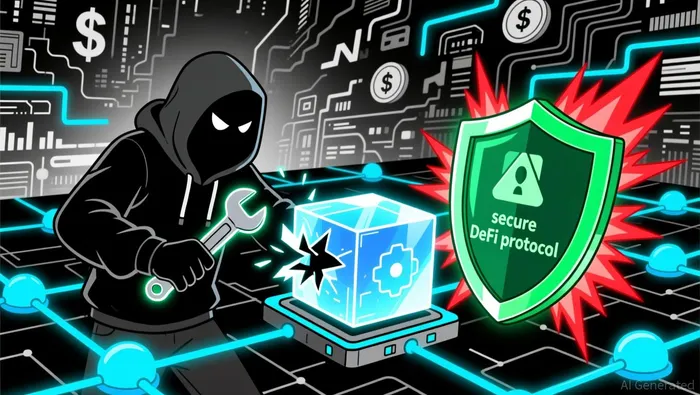
Despite these risks, DeFi protocols have made strides in enhancing security. Platforms like Aave and Compound have refined lending mechanisms through algorithmic interest rate adjustments and overcollateralization, reducing exposure to liquidity shocks. The integration of quantum-resistant cryptographic standards is another emerging trend, preparing for potential threats from future quantum computing capabilities.
DeFi 3.0 protocols, such as Maple Finance, have introduced institutional-grade over-collateralized lending, targeting net yields of 9-12% while prioritizing asset-backed risk mitigation. Meanwhile, EigenLayer's staking and restaking mechanisms have improved capital efficiency and network security by enabling validators to leverage their assets across multiple protocols.
Case Studies: Lessons in Recovery and Resilience
The Balancer hack in 2025, which exploited rounding errors and batch swap features to drain $120 million, saw partial recovery through collaboration with researchers and exchanges. In contrast, the Cetus DEX hack on Sui in May 2025 resulted in a $220 million loss with no recovery, underscoring the irreversibility of on-chain transactions.
Long-term resilience strategies now emphasize proactive incident response frameworks. Protocols are adopting real-time blockchain analytics, cross-ecosystem coordination with law enforcement, and pre-approved response protocols to trace and mitigate threats. For example, the UXLINK hack highlighted the need for robust custody solutions, while the Cetus incident reinforced the importance of rigorous economic design audits.
Investment Considerations for Yield-Generating Protocols
For investors, evaluating a protocol's resilience requires scrutiny of its security infrastructure and governance practices. Key factors include:
1. Automated Strategy Optimization: Platforms like Yearn Finance use automated yield aggregation to reduce manual oversight risks while compounding returns.
2. Smart Contract Audits and Continuous Monitoring: Protocols must prioritize dynamic risk-adaptive systems, moving beyond static audits to AI-driven threat detection.
3. Asset Diversification: Liquidity providers should avoid overexposure to volatile tokens by distributing assets across multiple pools.
4. Transparent Tokenomics: High-yield incentives often mask risks like impermanent loss or token devaluation, necessitating clear communication with users.
The Road Ahead
While DeFi's innovation potential remains strong, its security challenges demand vigilance. As attackers shift focus to operational security and quantum threats, protocols must adapt with quantum-safe cryptography, decentralized custody solutions, and multi-layered governance frameworks. For investors, the key lies in supporting protocols that prioritize resilience as much as yield, ensuring long-term sustainability in an increasingly complex ecosystem.







Comentarios
Aún no hay comentarios