
DeFi Security Risks on BNB Chain: Assessing Long-Term Investment Resilience in a Post-Hack Era
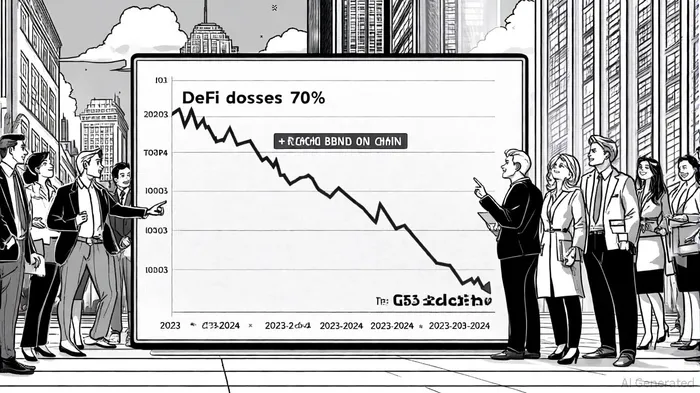
The decentralized finance (DeFi) landscape on BNBBNB-- Chain has faced a paradox in 2025: explosive growth in total value locked (TVL) and user adoption, juxtaposed with a surge in high-profile security breaches. While the network's TVL surpassed $10 billion in Q2 2025[1], the same period saw four major hacks on BNB Chain protocols, contributing to a $92.5 million loss across DeFi platforms in April alone[2]. These incidents, including the $2.15 million Mobius DeFi exploit[1], underscore systemic vulnerabilities in smart contract execution and access control mechanisms. Yet, they also reveal a maturing ecosystem—where recovery efforts, technological upgrades, and collaborative security initiatives are reshaping the long-term investment calculus for DeFi on BNB Chain.
Systemic Vulnerabilities: The Cost of Rapid Innovation
The Mobius hack exemplifies the risks inherent in DeFi's race to scale. Attackers exploited a flaw in the Mobius TokenAUCTION-- (MBU) minting mechanism, using just 0.001 BNB to generate 9.73 quadrillion MBU tokens, which were swiftly converted into stablecoins and anonymized via Tornado Cash[1]. This incident highlights a broader trend: 69% of DeFi losses in 2024 stemmed from access control exploits[3], with rug pulls and contract vulnerabilities compounding the risk.
Such breaches are not isolated. In April 2025, BNB Chain accounted for 26.7% of all DeFi attacks, with protocols like UPCX ($70 million loss) and KiloEx ($7.5 million) falling victim to malicious smart contract upgrades and oracleORCL-- manipulation[2]. These attacks expose a critical tension: as DeFi platforms prioritize liquidity and user growth, they often underinvest in rigorous audits and real-time threat monitoring.
Post-Hack Recovery: Collaboration Over Chaos
The response to these breaches, however, has been equally instructive. Binance and BNB Chain partners demonstrated a new paradigm in incident response. For instance, 90% of stolen funds from a recent exploit were recovered, with the remaining 10% allocated as a bounty to incentivize further cooperation[2]. Similarly, $6.1 million was retrieved in the KiloEx incident through cross-chain collaboration[3]. These efforts reflect a shift toward proactive recovery, leveraging tools like Immunefi's Magnus and AI-driven anomaly detection[4].
The CetusCETUS-- DEX exploit on Sui Network further illustrates this trend: 70% of $157 million in stolen assets were frozen or recovered[3]. While Sui is a separate chain, the methodology—swift asset freezing, inter-platform coordination, and bounty programs—has become a blueprint for BNB Chain's ecosystem. This collaborative approach mitigates short-term losses and signals a growing institutionalization of DeFi security protocols.
BNB Chain's Security Roadmap: From Reaction to Resilience
BNB Chain's 2025–2026 roadmap prioritizes systemic resilience over reactive fixes. Key initiatives include:
1. AI-Driven Security: Integration of AI tools like AvengerDAO and Red Alarm to scan 1 million smart contracts monthly, flagging 35,000 high-risk projects[3].
2. MEV Mitigation: Three MEV protection solutions deployed in 2025, reducing malicious attacks by 95% through Lorentz and Maxwell hardforks[5].
3. Privacy and Scalability: A next-generation blockchain with sub-150ms finality, privacy features for token transfers, and throughput enhancements to 100 million daily transactions[5].
These upgrades are already bearing fruit. By Q2 2024, BNB Chain reported an 83.3% reduction in financial losses compared to 2023[3], a trend that continued into 2025. The chain's partnership with Hacken has also produced a security report identifying key threats while showcasing progress in reducing rug pulls and access control exploits[3].
Long-Term Investment Resilience: Balancing Risks and Rewards
For investors, the question remains: Can BNB Chain's DeFi ecosystem sustain growth amid persistent security challenges? The answer lies in its ability to align innovation with risk management.
Fundamental Strengths:
- Ecosystem Scale: Over 5,686 DApps and third-highest DeFi TVL ($5.8 billion) position BNB Chain as a critical hub for decentralized finance[5].
- Tokenomics: Quarterly BNB burns and utility in staking, DeFi protocols, and NFTs reinforce scarcity and demand[5].
- Developer Tools: AI-powered resources like the BNB Chain AI Code Copilot streamline development, fostering innovation while reducing human error[5].
Persistent Risks:
- Smart Contract Vulnerabilities: Despite audits, exploits like the Mobius hack demonstrate that even minor code flaws can have massive financial impacts.
- Regulatory Uncertainty: Privacy features and cross-chain bridges may attract scrutiny, particularly in jurisdictions with strict anti-money laundering (AML) laws.
Yet, BNB Chain's proactive approach—combining AI, collaborative recovery, and infrastructure upgrades—suggests a long-term strategy to mitigate these risks. The chain's 2025 roadmap, for instance, includes protocol-level privacy features that balance user confidentiality with compliance-friendly transparency[5]. This dual focus on innovation and regulation is critical for institutional adoption.
Conclusion: A Calculated Bet on Resilience
DeFi on BNB Chain is at a crossroads. The recent wave of hacks has exposed vulnerabilities, but the ecosystem's response—swift recovery, AI-driven security, and strategic upgrades—demonstrates a commitment to long-term resilience. For investors, the key is to weigh these proactive measures against the inherent risks of a rapidly evolving sector.
While no blockchain is immune to attacks, BNB Chain's ability to learn from breaches, collaborate across platforms, and integrate cutting-edge security tools positions it as a leader in the post-hack era. As the chain continues to refine its MEV protections, privacy features, and developer ecosystems, it may well emerge as a cornerstone of the next phase in DeFi's evolution.






Comentarios
Aún no hay comentarios