
DeFi Data Integrity and Token Valuation: The Trust Metrics Dilemma
The Trust-Valuation Nexus in DeFi
Decentralized Finance (DeFi) has emerged as a transformative force in global finance, yet its valuation dynamics remain shrouded in complexity. At the heart of this ecosystem lies trust, a nebulous yet quantifiable concept that directly influences token valuations. Academic studies from 2022 to 2025 underscore the centrality of Total Value Locked (TVL) as a proxy for investor confidence, with TVL/MCAP bands serving as predictive tools for price movements, as noted in the ScienceDirect study. However, the reliability of these metrics is increasingly challenged by systemic data integrity risks, including smart contract exploits and oracleADA-- manipulation.
Trust Metrics: Beyond TVL
While TVL remains the gold standard, researchers emphasize the need for a multi-metric approach. Gross Merchandise Volume (GMV) and protocol revenue are gaining traction as complementary indicators, offering insights into usage patterns and economic sustainability, according to a security review. For instance, lending protocols and decentralized exchanges (DEXs) exhibit distinct valuation drivers: TVL reflects liquidity depth, while GMV captures transactional activity. This diversification is critical, as TVL is inherently prone to manipulation through temporary capital inflows or token-locking strategies, a point explored in a LinkedIn article.
The Data Integrity Crisis
From 2020 to 2025, DeFi has witnessed over $77.1 billion in cumulative losses from smart contract exploits, with oracle manipulation and flash loan attacks accounting for a significant share, as detailed in the security review. For example, the 2022 Mango Markets exploit leveraged price oracle vulnerabilities to siphon $117 million by artificially inflating MNGO token values, according to a Certik analysis. Similarly, in April 2025, KiloEx lost $7 million to a similar oracle-based attack (the Certik analysis documents this as well). These incidents not only erode TVL but also trigger cascading token price collapses, as seen in the case of Abracadabra, which lost $21 million across three exploits between 2024 and 2025, as reported by the ScienceDirect study.
Human governance errors further compound risks. A 2025 governance vote in a top-20 DeFi lending protocol inadvertently altered liquidation parameters, triggering $62 million in forced liquidations within 48 hours, according to a TradersUnion analysis. Such events highlight the fragility of trust in protocols reliant on decentralized decision-making.
Implications for Token Valuation
The interplay between data integrity and token valuation is stark. Post-exploit, TVL often plummets as users withdraw funds, while token prices experience sharp volatility. For example, the bZx protocol lost $8 million in 2020 due to logic flaws, causing its token price to drop by over 60% within days, as noted in the TradersUnion analysis. Conversely, protocols with robust security frameworks, such as those employing DeFiScope-a tool leveraging large language models to detect price manipulations-have shown resilience in maintaining TVL and stabilizing token prices, a finding referenced in the ScienceDirect study.
Mitigating the Trust Gap
Experts advocate for a multi-pronged approach to bolster data integrity:
1. Real-time monitoring of oracles and cross-chain bridges to detect anomalies.
2. Rigorous audits and post-upgrade re-evaluations, as 40% of smart contract failures stem from insufficient testing (the TradersUnion analysis highlights this).
3. Diversified data sources for price oracles to mitigate manipulation risks (the Certik analysis recommends this).
4. Governance safeguards, such as timelocks and multi-signature approvals, to prevent human error (the TradersUnion analysis suggests these measures).
Conclusion: A Call for Prudent Investment
As DeFi matures, investors must scrutinize trust metrics with a critical eye. While TVL and GMV provide valuable insights, they are not infallible. The rise of sophisticated exploits underscores the need for protocols to prioritize security innovation. For investors, due diligence should extend beyond tokenomics to include assessments of governance robustness, audit transparency, and real-time risk mitigation strategies.
In this evolving landscape, the mantra "trust but verify" holds more weight than ever.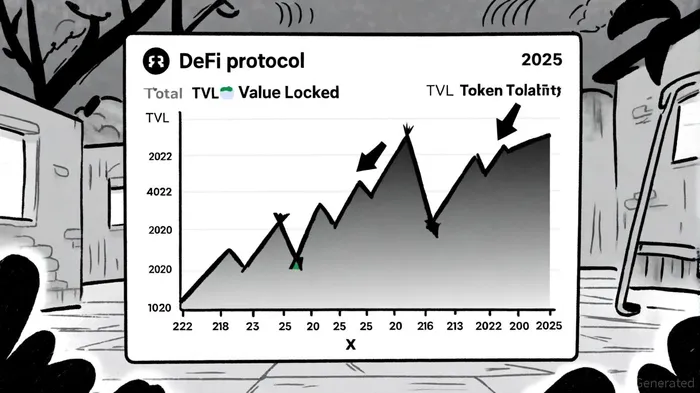







Comentarios
Aún no hay comentarios