
Why DeFi Buybacks May Be Too Late to Save Struggling Altcoins
The DeFi sector has witnessed a surge in token buybacks over the past three years, with projects like UniswapUNI--, Hyperliquid, and dYdXDYDX-- allocating hundreds of millions to repurchase and burn their own tokens. These efforts, often framed as a way to align token value with protocol performance, have shown mixed results. While some projects have seen price appreciation, broader market trends suggest that structural tokenomic improvements may no longer be sufficient to counteract the growing apathy toward altcoins.
The Rise of DeFi Buybacks: A Double-Edged Sword
DeFi protocols have increasingly turned to buybacks as a tool to signal long-term commitment and instill investor trust. For instance, Uniswap's 2025 initiative to repurchase 100 million UNI tokens reduced its supply by 10% and coincided with a 50% price increase. Similarly, Hyperliquid's $640 million buyback program burned 21.36 million HYPE tokens, while Pump.fun's $130 million effort reduced its supply by 8%. These cases highlight the potential of buybacks to create short-term price momentum.
However, critics argue that such strategies are often poorly timed and inefficient. Keyrock, a crypto market maker, noted that many projects overspend when prices are high and underspend during downturns, undermining their effectiveness. For example, while Aave's structured buyback led to a 40% monthly price gain, projects like WLFIWLFI-- struggled to stabilize prices despite aggressive token burns according to data. This inconsistency underscores the challenge of balancing buyback allocations with broader growth initiatives.
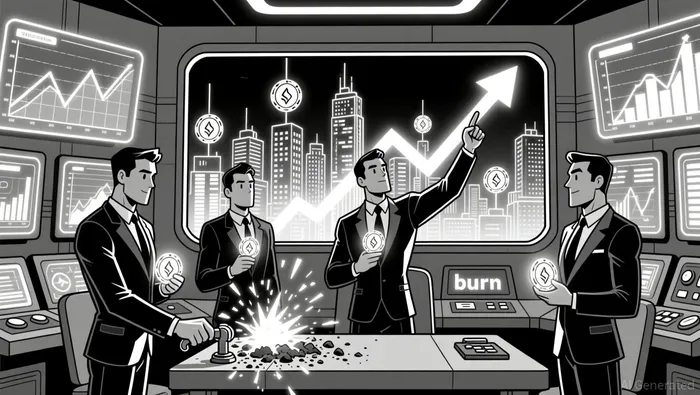
Deflationary Mechanisms vs. Market Demand
Deflationary token burning-where tokens are systematically removed from circulation-differs from buybacks in execution and impact. Unlike buybacks, which rely on protocol revenue, deflationary models often operate automatically via smart contracts, ensuring transparency and continuous supply reduction. Projects like ArbitrumARB-- (ARB) and OKX's OKB token have leveraged these mechanisms to align scarcity with Bitcoin's model, with OKB's 2025 burn of 65.26 million tokens boosting institutional confidence.
Yet, even deflationary strategies face limitations. CelestiaTIA-- (TIA) and Optimism (OP), for instance, saw 90% and 84.5% declines year-to-date in Q3 2025, respectively, despite buyback efforts. Persistent token unlocks and weak demand eroded investor confidence, illustrating that tokenomics alone cannot offset fundamental weaknesses.
The Altcoin Apathy Conundrum
The broader market context reveals a structural shift in investor behavior. Retail participation in altcoins has plummeted, particularly in South Korea, where traders have redirected $800 billion in capital toward crypto-related equities and leveraged ETFs. This trend, exacerbated by regulatory actions like the suspension of crypto lending services, has widened the gap between BitcoinBTC-- and altcoins. Meanwhile, institutional demand has concentrated on Bitcoin, further marginalizing altcoins.
Tokenomic reforms, while innovative, struggle to reverse these dynamics. For example, Synthetix (SNX) and Audiera's deflationary models have shown promise, but their success hinges on real-world utility and adoption. Without addressing the root causes of declining demand-such as macroeconomic risks and regulatory uncertainty-buybacks and burns risk becoming symbolic gestures.
Conclusion: A Race Against Time
DeFi buybacks and deflationary mechanisms have undeniably added value to tokenomics, but their efficacy is increasingly constrained by market realities. While projects like Arbitrum and OKB demonstrate that tokenomic innovation can sustain investor interest, the broader altcoin market faces a perfect storm of apathy, regulatory headwinds, and macroeconomic pressures. For struggling altcoins, buybacks may arrive too late to reverse the tide.
As the crypto landscape evolves, the focus must shift from token-centric strategies to addressing the structural factors driving capital away from altcoins. Until then, even the most well-designed buybacks may prove insufficient to rekindle the market's lost faith.






Comentarios
Aún no hay comentarios