
DeFi 2.0: The New Frontier of Yield and Governance in 2026
The evolution of decentralized finance (DeFi) has reached a pivotal inflection point. By 2026, DeFi 2.0 protocols are no longer speculative experiments but foundational infrastructure for institutional-grade yield generation and governance. These protocols, including AaveAAVE--, CompoundCOMP--, and emerging players like MorphoMORPHO-- and Maple, are redefining how capital is allocated, managed, and protected in a digital-first financial ecosystem. For investors, the question is no longer whether DeFi can compete with traditional finance but how it can outperform it in terms of risk-adjusted returns and capital efficiency.
Yield Generation: From Hype to Hierarchy
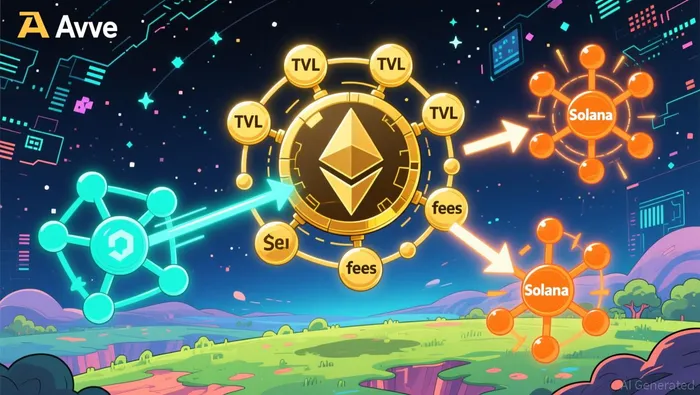
DeFi 2.0 protocols have moved beyond the "race to zero" for user acquisition and now prioritize sustainable yield generation. Aave, for instance, has captured $42.47 billion in Total Value Locked (TVL) and generated $96 million in fees over 30 days, demonstrating its ability to retain liquidity without relying on aggressive incentives. Its multi-chain strategy-deploying across EthereumETH--, Polygon, and Solana-has further diversified risk and expanded access to global liquidity pools according to research.
Institutional adoption is accelerating this shift. Protocols like Aave now serve as benchmarks for overnight rates, with CoinDesk Overnight Rates (CDOR) drawing from its USDC and USDT lending pools. Meanwhile, tokenized real-world assets (RWAs) are being integrated into DeFi vaults, enabling institutions to compound yields while maintaining regulatory compliance. These innovations position DeFi 2.0 to outperform traditional money-market funds (MMFs), which typically offer yields of 4-5% APY according to analysis, while DeFi protocols like Aave and Compound deliver 5-8% APY on stablecoin deposits according to data.
Governance: Decentralized but Professionalized
Governance in DeFi 2.0 has matured into a structured, institutional-grade framework. Aave's token holders, for example, vote on protocol upgrades, fee structures, and collateral parameters, ensuring community-driven decision-making. The trend toward slower proposal cadence and greater delegation reflects a prioritization of long-term stability over rapid, speculative growth.
This professionalization is critical for institutional trust. Protocols are now embedding risk management tools like isolation mode (to prevent contagion from volatile assets) and efficiency mode (to optimize capital for correlated assets) according to technical research. These features reduce systemic risk and align DeFi governance with traditional finance's emphasis on transparency and accountability.
Risk-Adjusted Returns: Sharpe vs. Sortino
While DeFi 2.0's yield potential is compelling, its risk profile remains a key consideration. Traditional metrics like the Sharpe ratio, which measures returns relative to total volatility, are less suited to DeFi's high-volatility environment. Instead, the Sortino ratio-focusing on downside risk-provides a more nuanced view. In 2025, Bitcoin's Sharpe ratio reached 2.42, while XBTO Trend achieved a Sortino ratio of 3.83 according to market analysis, underscoring the importance of downside protection in volatile markets.
DeFi 2.0 protocols are addressing this through innovations like over-collateralized vaults and real-time analytics according to industry reports. For example, Aave's Safety Module acts as a backstop, distributing rewards to stakers while mitigating default risks. By 2026, these tools are expected to improve Sortino ratios for DeFi protocols, making them more attractive to risk-averse institutions compared to traditional repos, which offer lower yields but lack programmable flexibility according to market projections.
Capital Efficiency: The New Benchmark
Capital efficiency-the ability to deploy assets with minimal idle liquidity-is where DeFi 2.0 shines. Protocols like JupiterJUP-- Lend achieved $1.65 billion in TVL within months of launch, showcasing rapid liquidity generation. Dynamic interest rate models and optimized collateralization ratios further enhance efficiency, allowing borrowers to access capital while lenders maximize returns according to industry analysis.
In contrast, traditional repos and MMFs are constrained by operational overhead and limited collateral diversity. DeFi's cross-chain liquidity solutions and on-chain insurance protocols reduce fragmentation risks, making it easier for institutions to deploy capital across multiple markets. This efficiency is particularly valuable in a low-interest-rate environment, where every basis point of yield matters.
The Road Ahead: Hybrid Models and Regulatory Clarity
The future of DeFi 2.0 lies in hybrid models that combine its programmable infrastructure with traditional finance's regulatory clarity. KYC-enabled, permissioned liquidity pools are bridging the compliance gap, allowing institutions to access DeFi while meeting AML and KYC standards. Meanwhile, tokenized RWAs are expanding the scope of yield generation, with the market projected to surpass $10 trillion by mid-2026.
For investors, the key takeaway is clear: DeFi 2.0 protocols are not just competing with traditional finance-they are redefining it. By prioritizing risk-adjusted returns, capital efficiency, and institutional-grade governance, these protocols offer a compelling alternative to legacy systems. As the line between DeFi and traditional finance blurs, the winners will be those who embrace the hybrid model, leveraging the best of both worlds to optimize yield and mitigate risk.






Comentarios
Aún no hay comentarios