
Defensive Investing in a Fractured World: Navigating U.S.-China Trade Tensions Through Resilient Sectors
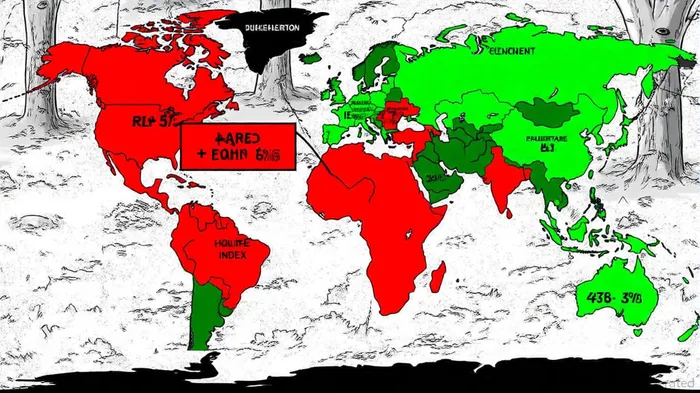
The U.S.-China trade war of 2025 has reshaped global equity markets, exposing stark sectoral vulnerabilities while highlighting the enduring appeal of defensive strategies. As tariffs escalated to over 125% in early 2025, equity indices across energy, basic materials, and technology sectors plummeted by 7–9% within days, reflecting the acute sensitivity of globalized supply chains to protectionist shocks, according to a Journal of International Economics study. Yet, amid the turmoil, sectors like utilities and healthcare demonstrated remarkable stability, underscoring the value of strategic positioning in uncertain times.
The Anatomy of Vulnerability
The initial phase of the 2025 trade tensions revealed a clear pattern: sectors reliant on cross-border trade and capital-intensive production faced the steepest declines. Energy firms, for instance, saw prices depressed by disrupted supply chains and reduced demand from manufacturing sectors hit by tariffs, the study found. Similarly, technology stocks-dependent on Chinese components and U.S. market access-faced dual headwinds from export controls and retaliatory measures, according to a Vantage Markets analysis. According to a report by the European Institute of the Americas, countries with larger, more integrated economies experienced sharper equity declines, as investors anticipated recurring protectionist threats (European Institute of the Americas report).
The May 2025 tariff truce-reducing U.S. tariffs on Chinese goods to 30% and China's to 10%-provided temporary relief but left critical sectors like semiconductors and rare earths in limbo. Strategic carve-outs, such as maintained U.S. tariffs on pharmaceuticals and automobiles, signal that geopolitical competition will continue to shape sectoral risks, as noted in BankChampaign's analysis.
Resilient Sectors: The New Safe Havens
Defensive sectors have emerged as bulwarks against volatility. Healthcare and utilities, for example, saw minimal drawdowns during the 2025 sell-off, driven by inelastic demand and regulatory tailwinds. A study published in Journal of International Economics notes that defensive stocks in these sectors exhibited 40% lower volatility compared to cyclical peers during the trade war's peak (the Journal of International Economics study cited above).
Investors are increasingly favoring domestic-focused companies. In the U.S., firms like Greggs (UK-based bakery) and Red Eléctrica (Spanish utility) exemplify the "fortress portfolio" strategy, prioritizing local demand and stable cash flows, according to the study. Meanwhile, China's Tong Ren Tang-a traditional pharmaceutical company-has thrived by avoiding export exposure, illustrating how regional specialization can mitigate trade risks (the Journal of International Economics study cited above).
Strategic Portfolios: Balancing Defense and Growth
Defensive investing in 2025 extends beyond sector selection. Precious metals, particularly gold and silver, have surged as safe-haven assets, with gold breaching $3,300 per ounce amid dollar weakness and inflationary pressures (coverage of commodity moves and market context). Silver's dual role in industrial growth (e.g., solar panels) and inflation hedging makes it a compelling addition to diversified portfolios. For tactical exposure, ETFs like the Utilities Select Sector SPDR Fund (XLU) and Health Care Select Sector SPDR Fund (XLV) offer broad access to resilient sectors, highlighted in an ETF.com roundup. Ultra-short-term bond ETFs such as SGOV and BIL provide yield stability, while inflation-protected bonds via VTIP and TIP safeguard purchasing power. International diversification through Europe-focused ETFs like EFA and EUAD further insulates portfolios from U.S.-centric risks (ETF.com coverage cited above).
Historical backtesting from 2022 to 2025 shows that a simple buy-and-hold strategy triggered by RSI oversold conditions in XLU yielded a ~50% cumulative gain with a Sharpe ratio near 1, while the same approach for XLV delivered slightly negative returns despite similar drawdowns; see the backtest results. This highlights the importance of sector-specific dynamics: utilities tend to exhibit slower mean-reverting swings, allowing RSI-triggered rebounds to play out, whereas healthcare's structural trend persistence often traps oversold signals in mid-downlegs.
Sector Rotation: Adapting to a Shifting Landscape
Dynamic sector rotation has become a cornerstone of 2025 investing. Economic cycle-based strategies favor healthcare and utilities during uncertainty, while momentum-driven approaches target sectors like energy as winter demand looms (ETF.com analysis referenced above). AI-powered platforms now enable real-time adjustments, using metrics like RSI and MACD to identify emerging opportunities (insights supported by the Journal of International Economics study referenced earlier).
Thematic investing in AI, renewable energy, and cybersecurity also offers long-term resilience. These sectors benefit from structural trends-such as decarbonization and digital transformation-that transcend short-term trade cycles (the European Institute of the Americas report cited above). For instance, energy stocks historically outperform in October, a pattern reinforced by 2025's trade-driven volatility (ETF.com analysis cited above).
The Path Forward: Caution and Opportunity
While the 90-day tariff truce offers a reprieve, unresolved issues like rare earth exports and AI chip restrictions remain flashpoints. Investors must balance caution with agility, leveraging defensive positions while monitoring for tactical rotations. Markets have historically rebounded as trade tensions stabilize, but the path to recovery will require patience and disciplined risk management, as discussed in BankChampaign's analysis (link cited above).







Comentarios
Aún no hay comentarios