
Defense Tech Innovation: Strategic Alignment with DoD R&D and Capitalization Opportunities
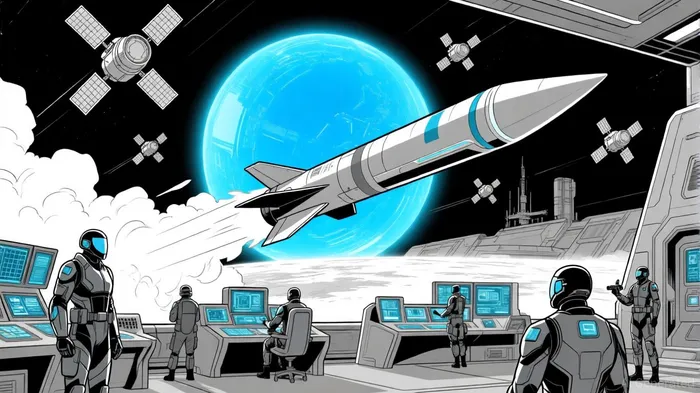
In an era defined by geopolitical volatility and technological arms races, the U.S. Department of Defense (DoD) has emerged as a cornerstone of innovation, allocating unprecedented resources to research, development, test, and evaluation (RDT&E) programs. For investors and defense tech firms, the FY2025 DoD budget—spanning $141.2 billion in RDT&E funding—represents not just a fiscal commitment but a strategic roadmap for capitalizing on high-priority technologies such as artificial intelligence (AI), hypersonics, and the Combined Joint All-Domain Command and Control (CJADC2) initiative. This analysis explores how firms can align with these priorities to secure long-term contracts and capitalize on the DoD's modernization push.
The FY2025 DoD RDT&E Budget: A Strategic Allocation
The DoD's FY2025 RDT&E budget is a masterclass in prioritization, with $141.2 billion distributed across military departments and defense-wide initiatives. The Air Force leads with $46.8 billion, followed by the Army ($14.3 billion) and the Space Force ($18.5 billion), while defense-wide programs account for $35.2 billion [1]. These allocations emphasize technologies critical to maintaining U.S. military overmatch:
- Artificial Intelligence (AI): $1.8 billion for autonomy, machine learning, and decision-making tools [2].
- Hypersonics: Multi-billion-dollar investments in offensive and defensive systems, including $1.4 billion for the Glide Phase Interceptor (GPI) [3].
- CJADC2: $1.4 billion to enhance cross-domain interoperability and real-time command systems [4].
The budget also grants the DoD flexibility to reprogram up to $8 billion across accounts without congressional approval, enabling rapid pivots toward emerging threats and technologies [1]. This agility underscores the importance of firms that can deliver scalable, adaptable solutions.
Case Studies: Aligning with DoD Priorities
1. Northrop Grumman and Hypersonic Innovation
Northrop Grumman has become a linchpin in the DoD's hypersonic ambitions. In 2023, it secured a $9.4 million contract to expand production of ultra-high-temperature composites for hypersonic systems, later followed by a $1.45 billion MACH-TB 2.0 contract to develop a low-cost hypersonic testbed [3]. These contracts highlight the DoD's focus on both offensive hypersonic weapons and defensive systems like the GPI, which Northrop GrummanNOC-- co-develops with Raytheon. The company's Elkton, Maryland, Hypersonics Center of Excellence further solidifies its role in rapid prototyping and additive manufacturing, aligning with the DoD's push for domestic industrial base resilience [3].
2. Booz Allen Hamilton and AI-Driven Cybersecurity
Booz Allen Hamilton exemplifies how firms can leverage AI and cybersecurity to meet CJADC2 and modernization goals. Its $1.86 billion "Thunderdome" contract with the Defense Information Systems Agency (DISA) aims to implement a zero-trust architecture for the DoD, a critical component of secure, interoperable command systems [5]. Additionally, the firm deployed a generative AI model on the International Space Station, demonstrating its ability to operationalize AI in extreme environments—a skillset directly applicable to CJADC2's data-centric requirements [5].
Contract Structures and Renewal Terms: Long-Term Visibility
Multi-year contracts are the lifeblood of defense tech firms, offering stability in an otherwise volatile sector. The Federal Acquisition Regulation (FAR) allows contracts up to five years, with total renewal terms capped at seven years [6]. For example, Kratos' $1.45 billion MACH-TB 2.0 contract spans five years, while Northrop Grumman's CJADC2 support contract includes phased renewals tied to performance metrics [7].
However, firms must navigate risks. The DoD retains the right to terminate contracts for convenience (per FAR 52.249-2), as seen in recent DOGE-driven evaluations of programs like the F-35. Contractors should prioritize flexibility, ensuring they can pivot to high-priority areas like AI or quantum computing if funding shifts [6].
Recent Awards and Capitalization Opportunities
The FY2025 budget has already catalyzed significant awards:
- AI: Anthropic, Google, OpenAI, and xAI each received up to $200 million to develop agentic AI workflows for warfighting and intelligence analysis [8].
- CJADC2: Northrop Grumman's $99.5 million contract to integrate resilient command systems underscores the DoD's urgency in achieving cross-domain interoperability [9].
- Hypersonics: Kratos' $1.45 billion testbed contract highlights the DoD's commitment to accelerating hypersonic development through commercial partnerships [3].
These awards signal a shift toward commercial-grade technology adoption, offering opportunities for firms with expertise in AI, cloud infrastructure, and advanced materials.
Conclusion: Strategic Alignment as a Competitive Edge
For defense tech firms, alignment with DoD R&D priorities is no longer optional—it is existential. The FY2025 budget's emphasis on AI, hypersonics, and CJADC2 creates a clear pathway for firms that can deliver cutting-edge solutions with rapid scalability. By securing multi-year contracts and leveraging the DoD's reprogramming flexibility, companies like Northrop Grumman and Booz Allen HamiltonBAH-- demonstrate how strategic alignment translates to long-term capitalization. Investors, meanwhile, should focus on firms with proven capabilities in these domains, as the next decade of defense innovation will be defined by those who can outpace adversaries through technological agility.







Comentarios
Aún no hay comentarios