
Defense Infrastructure Modernization and Military-Driven Economic Sectors: Strategic Investment Opportunities in a Shifting Security Landscape
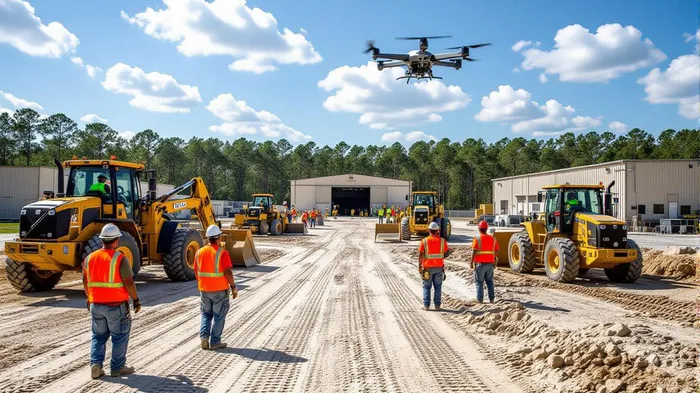
The Pentagon's evolving role in national security has never been more critical. In an era defined by great power competition and asymmetric threats, modernization efforts are no longer optional—they are existential. Defense Secretary Pete Hegseth's recent emphasis on restoring the “warrior ethos,” enhancing readiness, and achieving a clean audit of Pentagon operations[1] underscores a strategic pivot toward accountability and efficiency. This shift aligns with long-term demand for military logistics, force protection, and government facility management, creating fertile ground for strategic investments in defense contractors and security-focused real estate.
Pentagon Priorities and the Infrastructure Imperative
Post-9/11 modernization efforts have prioritized technological superiority and operational resilience. The Pentagon's recent push to increase low-cost drone production[3], streamline certification processes, and invest in logistics infrastructure reflects a broader commitment to maintaining battlefield dominance. These initiatives are not abstract; they require tangible infrastructure upgrades, from secure manufacturing facilities to advanced training grounds. Louisiana, with its strategic Gulf Coast location and existing military footprint, is emerging as a key node in this network.
A case in point is the $7.7 million contract awarded to Great Lakes DredgeGLDD-- & Dock Co LLC in Venice, Louisiana, to support U.S. Army Corps of Engineers operations[3]. While this project focuses on civil works, its implications for Pentagon modernization are clear: robust infrastructure underpins military readiness. As the Department of Defense (DoD) ramps up investments in logistics and force protection, similar contracts will proliferate, creating opportunities for companies specializing in construction, dredging, and secure facility management.
Louisiana as a Strategic Investment Hub
Louisiana's military significance is amplified by its role in coastal defense and energy infrastructure. The state hosts critical installations such as Joint Base San Antonio and Naval Air Station Joint Reserve Base New Orleans, which serve as logistical hubs for regional and global operations. While specific defense infrastructure projects in Louisiana remain underreported, the state's alignment with Pentagon priorities—particularly in logistics and force protection—positions it as a high-potential market for investors.
Security-focused real estate, including industrial properties near military bases and facilities equipped for high-security operations, is poised for growth. For instance, companies that develop blast-resistant structures, cybersecurity systems, or energy-efficient military housing could capitalize on DoD mandates for resilient infrastructure[2]. Additionally, Louisiana's existing industrial clusters, such as those in New Orleans and Baton Rouge, offer scalable platforms for defense contractors seeking to expand production capacity.
The Long-Term Investment Case
The DoD's 2025 budget and modernization roadmap highlight sustained demand for infrastructure and logistics solutions. With Hegseth's emphasis on accountability[1], investors can expect increased transparency in contract awards, reducing risks associated with opaque procurement processes. This environment favors companies with proven track records in defense infrastructure, such as Great Lakes Dredge & Dock[3], as well as emerging firms leveraging digital public infrastructure to optimize project management[3].
Moreover, the intersection of national security and climate resilience presents a dual opportunity. As highlighted by the World Economic Forum, sustainable infrastructure is no longer a niche concern but a financial imperative[2]. Defense contractors integrating green technologies—such as solar-powered bases or flood-resistant construction—will align with both Pentagon priorities and global sustainability trends.
Conclusion: Seizing the Moment
The convergence of geopolitical tensions, technological innovation, and strategic infrastructure gaps creates a compelling case for immediate investment. While Louisiana's military-driven economy may lack high-profile projects, its alignment with Pentagon priorities—coupled with Hegseth's focus on readiness and accountability—positions it as a sleeper opportunity. Investors who target defense contractors with logistics expertise, security-focused real estate near military hubs, and companies addressing climate resilience will be well-placed to capitalize on the DoD's $1.7 trillion modernization agenda[1].
In an era where national security and economic growth are inextricably linked, the time to act is now.





Comentarios
Aún no hay comentarios