
Defense and Cybersecurity: The New Frontline in the Age of Geopolitical Turbulence
The escalating security crises in Somalia and the broader Middle East are not just headlines—they are a clarion call for investors. From sophisticated suicide bombings targeting military recruitment centers to state-sponsored cyberattacks on defense infrastructure, the region’s instability is fueling a surge in demand for defense contractors, cybersecurity firms, and logistics providers. This is a high-growth, high-conviction sector where urgency meets opportunity. Here’s why you should act now.
The Ground Zero of Geopolitical Risk: Somalia and Beyond
Somalia has become a microcosm of modern conflict, where Islamic State Somalia (ISS) and Al-Shabaab wage relentless attacks on military infrastructure. Take the December 2024 ISS suicide bombing in Puntland, which deployed armored vehicle-borne IEDs (SVBIEDs) and foreign fighters to disrupt a planned government offensive. This attack, the most complex by ISS in years, underscores a structural escalation in both tactics and transnational coordination among extremist groups.
Meanwhile, Iranian-backed hackers have weaponized recruitment platforms like LinkedIn to infiltrate defense industries in Israel, the UAE, and Turkey, stealing sensitive data to destabilize military preparedness. The message is clear: geopolitical instability is not just a regional issue—it’s a systemic risk demanding global solutions.
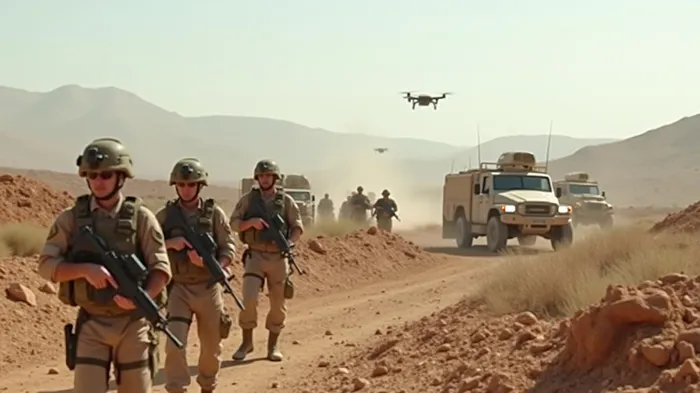
Defense Sector: The First Line of Defense
The rise of hybrid threats—from IEDs to cyber intrusions—has created a golden age for defense technology. Governments and multinational entities are racing to upgrade their arsenals:
Counter-IED Systems: Companies like Raytheon (RTX) and Boeing (BA) are leading the charge in developing advanced detection and neutralization technologies. Their systems are critical in regions like Somalia, where IEDs caused over 75% of casualties in recent attacks.
Secure Communication Tech: In a world where state-sponsored hackers target defense networks, firms like L3Harris (LHX) and Honeywell (HON) are securing battlefield communications. Their encryption and anti-jamming solutions are now non-negotiable for militaries operating in contested zones.
Private Security Logistics: The African Union’s struggling AUSSOM mission highlights the gap in regional stability. Investors should target firms like CACI International (CACI), which provides logistics and intelligence support to coalition forces in volatile regions.
Cybersecurity: The Invisible War
Cyberattacks are the new IEDs of the digital age. Iran’s 2024 campaign targeting defense industries in the Middle East—using fake job offers to infiltrate supply chains—reveals how critical cybersecurity has become. Key plays here include:
CrowdStrike (CRWD): A leader in endpoint detection and response (EDR), essential for protecting defense contractors from state-sponsored malware.
Palantir (PLTR): Its AI-driven threat intelligence platforms are being deployed by U.S. and allied militaries to preempt attacks.
Cyberark (CYBR): Specializing in privileged access management, it secures the “crown jewels” of defense networks—systems controlling sensitive data and infrastructure.
The Logistics Play: Infrastructure in Conflict Zones
Conflict zones require more than weapons—they need secure supply chains. Firms like Fluor (FLR) and AECOM (ACM) are building fortified bases and communication hubs in regions like Puntland, where the U.S. and AU rely on physical infrastructure to project power.
Why Act Now?
- U.S. Military Commitments: The Pentagon’s 2025 budget allocates $22B to counterterrorism and cyber defense—up 18% from 2024.
- Regional Tensions: Egypt’s planned troop deployment to Somalia and Ethiopia’s counter-claims over the Grand Ethiopian Renaissance Dam threaten to destabilize the Horn of Africa further.
- Transnational Threats: ISS’s foreign fighter networks and Iran’s cyber campaigns mean risks are spreading beyond borders—creating a global market for defensive tech.
The Bottom Line: Invest in the Unavoidable
The security threats in Somalia and the Middle East are not transient—they are systemic, structural, and self-reinforcing. For investors, this is a once-in-a-generation opportunity to profit from a sector that’s mission-critical in an era of perpetual instability.
Action Items:
- Buy the Leaders: RTX, BA, CRWD, and PLTR are the blue-chip plays.
- Target Logistics: CACI and FLR for infrastructure plays.
- Diversify with ETFs: The SPDR S&P Defense ETF (XARV) offers broad exposure.
The window for low-cost entry is closing. As geopolitical tensions rise, so will the price of preparedness. Don’t wait—act before the next attack makes these stocks irrationally exuberant.
Investments carry risks. Past performance does not guarantee future results.







Comentarios
Aún no hay comentarios