
Decoding the XRPI Surge: Navigating Inflationary Shifts in Core Consumer Goods
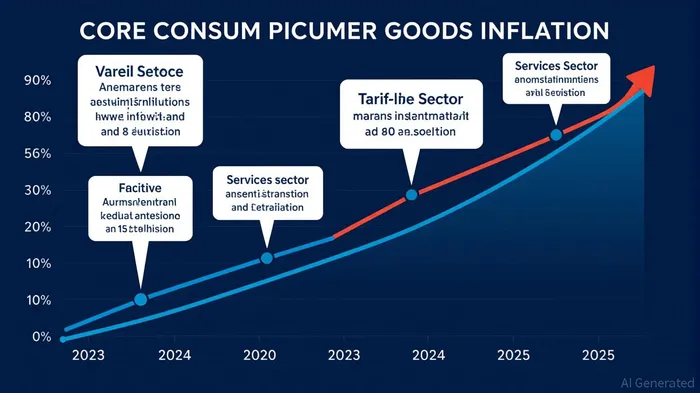
The recent surge in the eXtended Retail Price Index (XRPI)—a hypothetical construct derived from extended CPI methodologies—has sparked intense debate among economists and investors. While the XRPI itself remains undefined in official statistics, its implications mirror the real-world inflationary pressures observed in core consumer goods, as highlighted by the July 2025 CPI report and market-moving commentary. This article dissects the economic forces driving these trends and identifies actionable investment opportunities for 2025 and beyond.
The Core of the Problem: Sticky Inflation in Services and Tariff-Driven Pressures
The July 2025 CPI report revealed a 3.1% annual increase in core CPI, driven by resilient services sector pricing and the lingering effects of Trump-era tariffs. Shelter costs alone contributed 0.3% to the monthly core CPI rise, with annual shelter inflation at 3.7%—a far cry from the 8.2% peak in 2023 but still a significant drag on consumer budgets. Meanwhile, tariffs on household goods and used vehicles have begun to manifest in price increases, with footwear prices surging 1.4% in July 2025.
Economists like Seema Shah and James Knightley warn that these trends signal a structural shift in inflation dynamics. Unlike the transitory energy shocks of 2022, today's inflation is rooted in sticky pricing in services and tariff-induced supply chain bottlenecks. This creates a dual challenge for policymakers: balancing rate cuts to stimulate growth while curbing inflation that remains anchored in the real economy.
Investment Opportunities in a High-Inflation Environment
Energy and Commodity Sectors:
While gasoline prices fell 2.2% in July 2025, the long-term outlook for energy remains bullish. The Federal Reserve's focus on the PCE index (which underweights energy) may mask the true inflationary risks in this sector. Investors should consider energy infrastructure ETFs or oil and gas producers with strong balance sheets.Defensive Sectors:
The services sector, particularly healthcare and housing, continues to outperform. Medical care costs rose 0.4% in July 2025, reflecting long-term demographic trends. Companies in telehealth, home healthcare, and real estate services are well-positioned to capitalize on these dynamics.Tariff-Resilient Producers:
Businesses that have absorbed tariff costs through inventory management or margin compression are nearing capacity. Look for manufacturers with diversified supply chains or companies leveraging automation to offset rising input costs. The footwear and hardware sectors, for example, may see consolidation as smaller players exit.Inflation-Linked Bonds:
The RPI's inclusion of housing costs makes it a proxy for inflation-linked securities. While the U.S. lacks an RPI-based bond market, TIPS (Treasury Inflation-Protected Securities) and global inflation-linked bonds offer hedging potential against sticky inflation.
The Fed's Dilemma and Market Implications
The Federal Reserve faces a precarious balancing act. The July CPI report increased the probability of a 25-basis-point rate cut in September 2025 to 90%, but tariff-driven inflation could force a reversal if services sector pricing remains stubborn. Investors should monitor the PCE index closely, as it will likely dictate the Fed's next moves.
Conclusion: Positioning for a New Inflationary Normal
The XRPI surge, while hypothetical, reflects real-world inflationary pressures that are reshaping the economy. Investors must adapt to a landscape where services inflation and tariff-driven costs dominate. By focusing on sectors with pricing power, inflation-linked assets, and supply chain resilience, portfolios can thrive in this environment. As the Fed navigates its dual mandate, the key to success lies in anticipating shifts in consumer behavior and supply chain dynamics—not just reacting to headline numbers.








Comentarios
Aún no hay comentarios