
Decoding Wabash's Q4 2025 Earnings Call: What Investors Should Watch for in February 2026
As the transportation and logistics sector grapples with persistent macroeconomic headwinds, Wabash National CorporationWNC-- (NYSE: WNC) faces a critical junction in its Q4 2025 earnings call, scheduled for February 4, 2026. With the company's financial performance and strategic initiatives under scrutiny, investors must dissect how WabashWNC-- navigates a challenging demand environment while positioning itself for long-term resilience in an evolving supply chain landscape.
Financial Performance: A Harsh Reality Check
Wabash's Q3 2025 results underscored the severity of its near-term challenges. Revenue in the truck body segment plummeted 18% year-over-year to $381.6 million, driven by reduced orders from large fleets amid a sluggish housing market and waning consumer confidence. This trend is expected to persist into Q4, with shipments projected to decline from 3,000 units in Q3 to approximately 2,000 units. CEO Brent Yeagy has already labeled Q4 as the "weakest quarter" of the year in terms of revenue and operating margins.
The company's Q1 2025 performance further highlights its vulnerability: a $0.58 EPS loss stemmed from weaker-than-expected trailer shipments. These results reflect broader industry headwinds, including inventory corrections and shifting fleet priorities. However, Wabash's ability to maintain cost discipline-such as reducing SG&A expenses and optimizing production-will be critical in mitigating margin compression.
Strategic Positioning: Innovation Amid Uncertainty
Despite these challenges, Wabash has prioritized strategic initiatives to future-proof its operations. A key focus has been strengthening supply chain resilience through partnerships and digital transformation. For instance, its collaboration with Kodiak to develop autonomous logistics solutions signals a forward-looking approach to trailer innovation. Similarly, the "Smart Crossroads" initiative with Purdue University aims to address systemic inefficiencies in the logistics ecosystem, potentially unlocking new revenue streams. 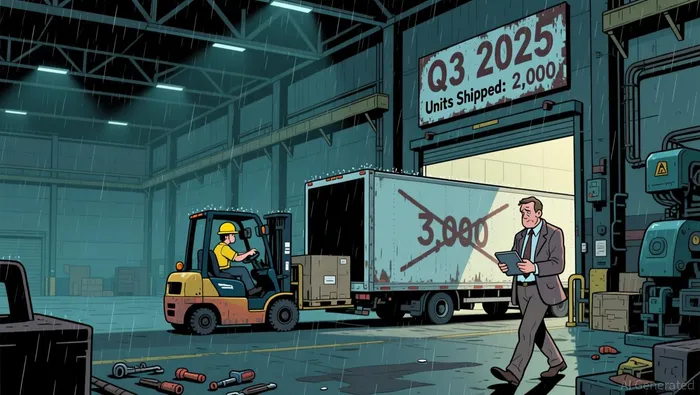
The company's emphasis on domestic sourcing also positions it to benefit from upcoming Section 232-enabled tariffs. With 95% of its supply chain domestically sourced, Wabash is uniquely poised to capitalize on pricing adjustments as supplier costs rise in 2026. However, investors should scrutinize how the company balances near-term cost pressures with long-term investments in technology and partnerships.
Supply Chain Dynamics: Navigating Tariffs and Demand Volatility
The evolving regulatory environment adds another layer of complexity. Wabash has proactively baked in pricing adjustments for trailers and truck bodies to offset anticipated tariff-related costs. This forward-looking strategy contrasts with peers reliant on imported components, but its success hinges on execution. Investors should assess whether these pricing actions are sufficient to offset margin erosion without deterring customers.
Moreover, the company's Q3 performance highlights the fragility of demand in key markets. The housing sector's slowdown, for example, has directly impacted truck body orders. Wabash's ability to diversify its customer base and pivot toward high-growth segments-such as last-mile delivery or renewable energy logistics-will be pivotal in stabilizing revenue.
What Investors Should Watch for in February 2026
The Q4 2025 earnings call will offer critical insights into Wabash's path forward. Key metrics to monitor include:
1. Guidance for 2026: Will the company signal confidence in a recovery, or does it acknowledge prolonged industry weakness?
2. Tariff Preparedness: How are pricing adjustments translating into margin stability, and what contingency plans exist for unexpected regulatory shifts?
3. Operational Efficiency: Are cost-reduction initiatives yielding measurable improvements in SG&A leverage or production flexibility?
4. Strategic Progress: Updates on partnerships (e.g., Kodiak) and digital tools (e.g., predictive maintenance platforms) could indicate Wabash's agility in adapting to market needs.
Conclusion
Wabash's Q4 2025 earnings call represents a pivotal moment for a company navigating a perfect storm of demand volatility, regulatory uncertainty, and competitive pressures. While near-term financial results may remain under pressure, its strategic investments in innovation and domestic supply chain resilience could position it as a consolidator in a fragmented industry. Investors must weigh the company's short-term pain against its long-term potential to emerge stronger in a post-tariff landscape.





Comentarios
Aún no hay comentarios