
Decoding Peter Thiel's AI Bet: Why Microsoft May Outperform Nvidia in the Long Run
Strategic Rationale for Thiel's Shift
Thiel's exit from Nvidia and Tesla aligns with a defensive posture in a market increasingly wary of speculative overvaluation. Nvidia's dominance in AI chips has been unparalleled, with its data center revenue surging to $51.2 billion in Q4 2025, driven by demand for Blackwell-generation accelerators. However, Thiel's decision to divest from the stock suggests a recognition of potential vulnerabilities. Analysts note that Nvidia's valuation has outpaced its fundamentals, with its reliance on a few key customers and geopolitical risks-such as U.S. export controls limiting sales to China-posing long-term threats. In contrast, Microsoft's strategic alignment with AI through its cloud infrastructure and software ecosystem offers a more diversified and monetizable path. The company's Azure cloud platform, for instance, reported 33% year-over-year revenue growth in Q4 2025, supported by AI-driven services like Microsoft 365 Copilot. This ability to monetize AI across software, cloud, and enterprise solutions likely influenced Thiel's preference for Microsoft over hardware-centric bets.
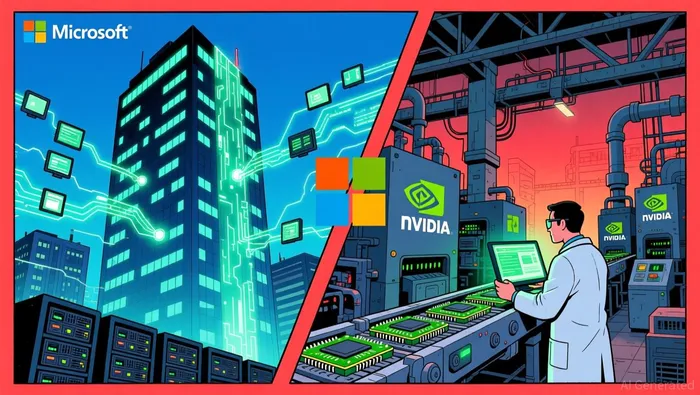
Comparative AI Strategies: Cloud vs. Hardware
Microsoft and Nvidia represent two distinct approaches to the AI revolution. Microsoft's strategy is rooted in its cloud infrastructure, which serves as the backbone for AI development and deployment. The company's capital expenditures in 2025 surged to $34.9 billion, reflecting aggressive investments in AI infrastructure. This approach leverages Microsoft's existing enterprise relationships and its partnership with OpenAI, creating a flywheel effect where cloud usage drives AI adoption and vice versa. Meanwhile, Nvidia's business model is hardware-centric, with its data center segment accounting for 73% year-over-year growth in Q1 2025. While this has fueled extraordinary revenue gains, it also exposes the company to supply chain bottlenecks and customer concentration risks. For example, two of Nvidia's largest clients accounted for 39% of its Q2 2026 revenue, making it vulnerable to shifts in enterprise spending.
Financial Stability and Long-Term Risks
Microsoft's financial stability further strengthens its case as a long-term bet. In 2025, the company reported $281.7 billion in total revenue and over $101 billion in net income, with Azure's revenue accelerating to 40% growth in Q1 2026. Its ability to generate consistent cash flow and reinvest in AI infrastructure positions it to weather market volatility. Conversely, Nvidia's exponential growth-projected to reach $272 billion in revenue by 2027-comes with significant risks. The company's reliance on TSMC for advanced chip manufacturing and packaging technologies creates a critical vulnerability, as any disruption in Taiwan's operations could cripple production. Additionally, regulatory constraints, such as U.S. export controls, have already forced Nvidia to develop lower-performance chips for restricted markets, limiting its global reach.
The Case for Microsoft in a Strategic Portfolio
Thiel's reallocation highlights a preference for companies with durable competitive advantages and diversified revenue streams. Microsoft's ecosystem-spanning cloud computing, enterprise software, and AI services-creates a moat that is harder to replicate than Nvidia's hardware-centric model. While Nvidia's data center revenue is expected to grow at a blistering pace, its exposure to supply chain risks, regulatory hurdles, and customer concentration makes it a more volatile investment. Microsoft, by contrast, benefits from its entrenched position in enterprise markets and its ability to monetize AI through recurring software subscriptions and cloud services. This aligns with Thiel's defensive strategy, prioritizing stability and long-term value over speculative growth.
Conclusion
Peter Thiel's shift from Nvidia to Microsoft is not merely a tactical move but a reflection of deeper structural trends in the AI landscape. While Nvidia's hardware-driven model has fueled unprecedented growth, its vulnerabilities-geopolitical, regulatory, and operational-pose significant risks. Microsoft's diversified approach, combining cloud infrastructure, enterprise software, and AI monetization, offers a more resilient path for long-term value creation. As the AI market matures, investors may find that the company with the broadest ecosystem and deepest financial stability is better positioned to navigate the inevitable headwinds. Thiel's bet, therefore, serves as a compelling case study in strategic portfolio reallocation, favoring durability over velocity in an era of rapid technological change.





Comentarios
Aún no hay comentarios