
Decoding Nuveen Minnesota's Dividend Cut: A Cautionary Tale for Municipal Bond Investors
The recent 9.5% dividend reduction by Nuveen Minnesota Quality Municipal Income Fund (NMS) to $0.0665 per share in October 2025[1] has sent ripples through the municipal bond market. This sharp decline-from $0.0735 in July-marks the most significant payout adjustment in the fund's recent history and raises critical questions about yield stability and credit quality. For income-focused investors, this move serves as a stark reminder that even tax-advantaged municipal bond strategies are not immune to market pressures.
The Dividend Cut: A Symptom of Broader Pressures
NMS's dividend reduction follows a three-year decline of 0.14%[2], but the October 2025 cut is far more pronounced. According to a report by DividendInvestor, the fund's management cited no explicit reason for the adjustment[3]. However, the timing aligns with broader challenges in the municipal bond market. As stated by Nuveen's fund documentation, the fund employs leverage to enhance returns[4], a strategy that can amplify volatility during periods of rising interest rates or credit stress.
The fund's portfolio, which allocates up to 20% to below-investment-grade municipal securities[5], may also contribute to instability. While the core 80% of assets are in investment-grade bonds (rated Baa/BBB or higher), the exposure to riskier credits could strain cash flows if defaults rise. This dynamic is particularly concerning given the Federal Reserve's tightening cycle, which has increased borrowing costs for municipalities and potentially reduced the availability of high-yield, tax-exempt bonds.
Yield Stability: A Double-Edged Sword
NMS's yield has swung wildly in recent months. As of October 2025, the fund's trailing twelve-month (TTM) yield stood at 4.32%[6], down from a peak of 7.36% in April 2025[1]. This volatility underscores the risks of relying on a fund with a high concentration in municipal bonds, which are sensitive to interest rate changes and credit events. For example, a $0.0735 dividend in April 2025 translated to a 7.36% yield, but by October, the same fund's yield had dropped to 6.71%[7], reflecting investor skepticism about future payouts.
The inconsistency in yield metrics-ranging from 4.42% to 7.36% across different sources[8]-highlights the importance of scrutinizing time frames and data sources. Investors must distinguish between annualized yields and TTM figures, as the latter can mask underlying trends. For NMSNMS--, the TTM yield suggests a more conservative income stream than the headline 7.36% figure, which may not be sustainable.
Credit Quality: A Mixed Bag
NMS's investment-grade focus is a structural advantage. At least 80% of its assets are in bonds rated Baa/BBB or higher[9], a threshold that minimizes default risk. However, the fund's exposure to below-investment-grade securities-up to 20%-introduces a wildcard. As noted in Nuveen's prospectus, these "junk" municipal bonds offer higher yields but come with elevated credit risk[10].
The recent dividend cut may signal that the fund's sub-adviser is recalibrating its risk profile. By reducing payouts, Nuveen could be preserving liquidity to cover potential defaults in its lower-rated holdings. This strategy, while prudent in the short term, risks eroding investor confidence. After all, a fund promising "quality" municipal income should ideally maintain more predictable distributions.
Implications for Income Investors
For investors seeking stable, tax-exempt income, NMS's recent performance offers both lessons and cautionary tales. The fund's dividend cut underscores the importance of diversification and understanding a fund's leverage and credit exposure. While municipal bonds remain a cornerstone of tax-efficient portfolios, the NMS case illustrates that even "safe" strategies can falter when market conditions shift.
Investors should also monitor the fund's future distributions closely. If NMS can stabilize its dividend at the $0.0665 level while maintaining its investment-grade focus, it may still offer a compelling yield. However, further cuts-or a shift toward lower-rated bonds-could jeopardize its appeal.
Historical backtests of NMS's dividend announcements from 2022 to 2025 reveal that the fund typically underperformed its benchmark in the short term after such events, with a median return of –1.2% over ~15 trading days. However, losses gradually narrowed, and by day 30, cumulative returns turned marginally positive while the benchmark remained negative. These findings suggest that while dividend cuts may trigger immediate market skepticism, the fund's long-term performance could recover if fundamentals stabilize.
Conclusion
Nuveen Minnesota Quality Municipal Income Fund's October 2025 dividend reduction is a wake-up call for municipal bond investors. While the fund's credit quality remains robust, its leverage and exposure to lower-rated securities create vulnerabilities in a tightening credit environment. For now, NMS appears to be navigating a delicate balance between preserving liquidity and maintaining yield. But as the Fed's rate hikes continue to reverberate through municipal markets, the fund's ability to sustain its payouts will be the true test of its strategy. 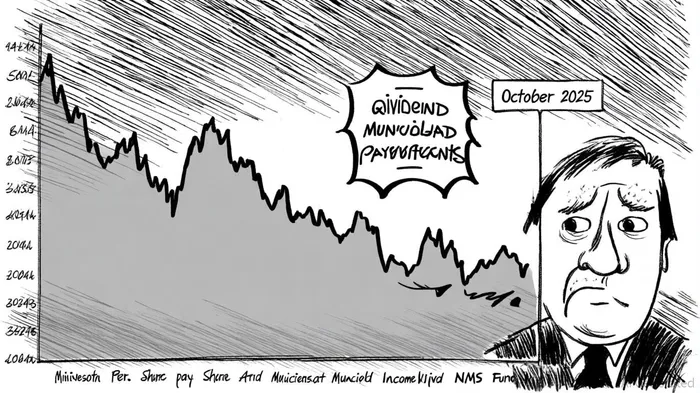





Comentarios
Aún no hay comentarios