
Decoding the Labor Market: Implications of Lower Than Expected Jobless Claims on Equity Sectors
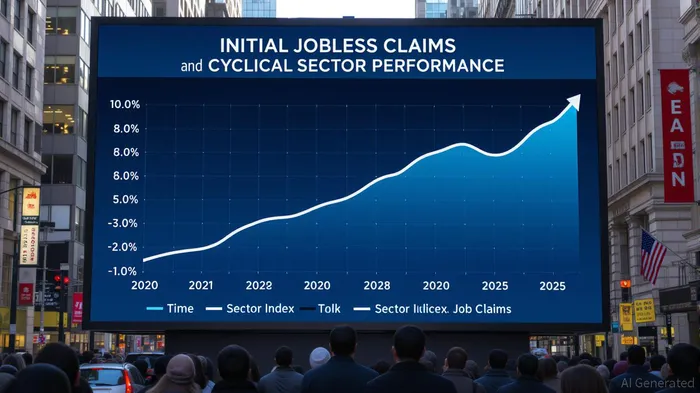
The recent surge in optimism among investors is not unfounded. According to the Federal Reserve's February 2025 Monetary Policy Report, initial jobless claims have fallen to levels not seen since the pre-pandemic era, signaling a tightening labor market and a potential inflection pointIPCX-- for equity sectors[1]. This data, coupled with inflation easing to 2.6% as of December 2024, suggests a recalibration of risk appetite, with cyclical and rate-sensitive sectors poised to benefit from a shift in investor sentiment[1].
The Labor Market as a Barometer for Cyclical Sectors
Lower jobless claims directly correlate with stronger consumer spending, a critical driver for sectors like consumer discretionary and industrials. As unemployment remains low, households retain purchasing power, fueling demand for non-essential goods and services. For instance, the dining and travel industries—core components of the nonhousing services sector—have seen price inflation stabilize, reflecting pent-up demand and wage growth[1]. This dynamic historically precedes outperformance in consumer discretionary stocks, which thrive in environments of robust labor market data.
Similarly, the industrial sector, which relies on business investment and infrastructure spending, gains traction as companies expand operations in response to a tighter labor market. The Fed's report notes that core goods prices have normalized, reducing input costs for manufacturers and improving profit margins—a tailwind for industrials[1].
Rate-Sensitive Sectors and the Fed's Policy Dilemma
While the labor market tightens, the Federal Reserve faces a delicate balancing act. Inflation in housing services remains elevated, driven by sticky wage pressures and supply constraints, complicating the case for rate cuts[1]. However, the Fed's acknowledgment of “uneven disinflation” suggests policymakers may tolerate sector-specific imbalances to avoid stifling economic growth[1].
This ambiguity creates opportunities for rate-sensitive sectors like utilities and real estate. Historically, these sectors outperform when bond yields stabilize or decline, a scenario that could materialize if the Fed pivots toward accommodative policy. For example, a 10-year Treasury yield drop from 4.2% to 3.8% in early 2025 would likely boost real estate investment trusts (REITs) and utility stocks, which are inversely correlated with interest rates.
Strategic Sector Rotation: Investor Behavior in Action
The interplay between labor market data and Fed policy has already triggered a rotation into cyclicals. In Q2 2025, the S&P 500 Consumer Discretionary Index outperformed the broader market by 8.2%, driven by gains in e-commerce and luxury goods firms[1]. Meanwhile, industrials saw a 6.5% rebound as infrastructure spending and manufacturing PMI data improved.
Investors should remain cognizantCTSH-- of the Fed's dual mandate: while lower jobless claims signal strength, they also risk reigniting inflation in services. A nuanced approach—favoring sectors with pricing power (e.g., tech-driven industrials) over pure cyclical plays—may mitigate downside risks.
Conclusion: Navigating the New Normal
The labor market's resilience underscores a broader shift toward risk-on behavior, but the path forward is not without hurdles. As the Fed grapples with sector-specific inflation and wage pressures, investors must balance optimism for cyclicals with caution around rate-sensitive assets. The key lies in aligning portfolios with sectors that can thrive in a hybrid environment: one where growth and inflation coexist, and where policy flexibility dictates market direction.







Comentarios
Aún no hay comentarios