
Decoding JNUG: Leveraged ETF Mechanics and the High-Stakes Game of Junior Gold Miners
The Direxion Daily Junior Gold Miners Index Bull 2X Shares (JNUG) has emerged as a polarizing instrument in the leveraged ETF space, offering investors amplified exposure to junior gold and silver mining equities. Designed to deliver 200% of the daily performance of the MVIS Global Junior Gold Miners Index according to Direxion's product page, JNUG's structure and volatility make it a case study in the risks and rewards of leveraged products. However, its mechanics-particularly the daily rebalancing and compounding effects-pose significant challenges for long-term investors.
Leverage Mechanics: A Double-Edged Sword
JNUG's 2x leverage is reset daily, a feature that amplifies both gains and losses. For example, if the underlying index rises 5% in a day, JNUG aims to deliver 10%. Conversely, a 5% decline in the index would result in a 10% drop for JNUG, as Guggenheim explains in Compounding and the Effect of Leverage. This daily reset, however, creates a compounding trap. Consider a hypothetical two-day period: a 10% gain followed by a 10% loss. A non-leveraged fund would end at 99% of its starting value, while JNUG's 2x leverage would leave it at 96%, a dynamic highlighted in Hidden Costs of Volatility Drag. Over time, this volatility drag erodes returns, making JNUG unsuitable for buy-and-hold strategies.
Expense Ratios and Volatility Drag
JNUG's expense ratio of 1.02% (as of September 2025) compounds the drag from daily rebalancing, according to Yahoo Finance's JNUG page. This cost, combined with the inherent volatility of junior gold miners-companies with smaller market caps and higher operational risks-exacerbates decay. A report by APTUS Capital Advisors notes that volatility drag is particularly pronounced in leveraged products like JNUG, where frequent rebalancing incurs transaction costs and magnifies the impact of market fluctuations.
Historical Performance: A Tale of Wild Swings
JNUG's price history underscores its volatility. As of September 2025, the ETF had surged 354.33% year-to-date, with a 30.69% gain in September alone (see Yahoo Finance's JNUG page). Yet, this performance contrasts sharply with its 2022 low of $20.45 and a 2024 decline of 18.40% in December, documented on ETFdb's JNUG page. These swings reflect not only the leveraged structure but also the cyclical nature of gold mining equities, which are sensitive to commodity prices, geopolitical risks, and exploration costs.
Risk-Reward Dynamics: Who Should Invest?
While JNUG's 251.39% 1-year return as of September 2025 is enticing (per Yahoo Finance's JNUG page), its risks are non-trivial. The fund's 5-day volatility of 216.49% (ETFdb's JNUG page) highlights its suitability for sophisticated traders who can actively manage positions. Direxion itself cautions that JNUG is not designed for long-term holding, a warning echoed by financial analysts who emphasize the importance of understanding leverage decay.
Conclusion: A Tool, Not a Strategy
JNUG exemplifies the potential and perils of leveraged ETFs. Its 2x exposure to junior gold miners offers asymmetric upside in bullish markets but demands rigorous risk management. For investors, the key takeaway is clear: JNUG is a tactical tool for short-term bets, not a passive investment. As the gold sector remains volatile, those who ignore its mechanics risk falling victim to the very decay that defines its structure.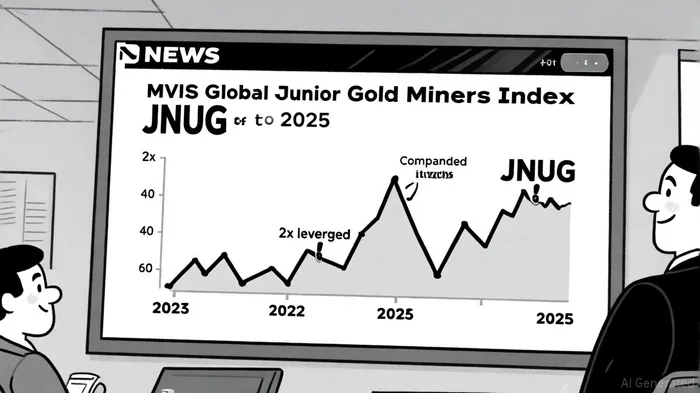







Comentarios
Aún no hay comentarios