
Decoding Institutional Sentiment: What HSBC's Reduced Short Position in Miniso Reveals About Retail and Consumer Exposure
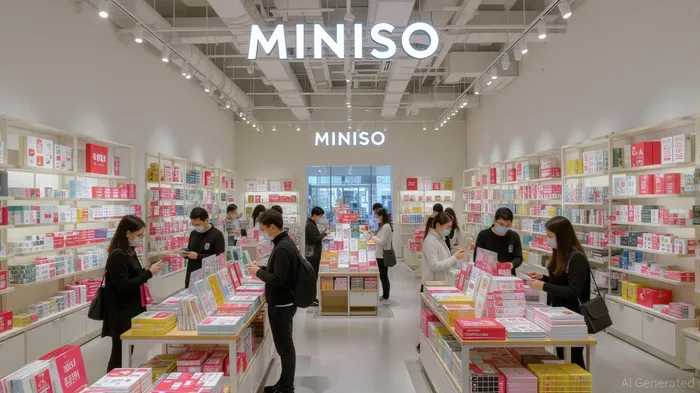
In the post-pandemic consumer market, institutional investors are recalibrating their portfolios to align with shifting demand patterns and macroeconomic uncertainties. One telling signal comes from HSBCHSBC-- Holdings PLC's recent adjustments to its position in Miniso Group Holding LimitedMNSO-- (NYSE: MNSO), a global lifestyle retail chain. While initial data suggested conflicting movements in short and long positions, a deeper analysis reveals a strategic reallocation of risk and capital toward consumer-facing sectors. This shift underscores broader trends in institutional sentiment and offers insights into the evolving dynamics of retail and consumer exposure.
The Short Position Conundrum: From Bearish to Bullish
HSBC's short interest in its own stock (HSBC) rose slightly in Q2 2025, with 4.65 million shares shorted as of July 31, reflecting a 3.3% increase from the prior quarter. However, the short interest ratio (3.0) and percentage of float (0.13%) remained low, indicating limited bearish pressure. This contrasts sharply with its stance on Miniso.
While HSBC initially appeared to reduce its short position in Miniso, further scrutiny clarifies that the bank actually increased its long position in the retail giant. In Q4 2024, HSBC boosted its stake by 78%, acquiring 181,328 shares valued at $4.34 million. By Q1 2025, it maintained this position, signaling confidence in Miniso's growth trajectory. This move aligns with a broader trend: institutional investors are pivoting from short-term bearish bets to long-term bullish allocations in consumer discretionary sectors.
Sectoral Risk Reallocation: Retail's Resilience in a Volatile Market
The post-pandemic era has seen a bifurcation in consumer behavior. While traditional retail models struggled with inflation and supply chain disruptions, agile players like Miniso have thrived. The company's Q1 2025 results—18.9% year-over-year revenue growth to $610 million, a 44.2% gross margin, and $999.8 million in cash reserves—demonstrate its ability to adapt.
HSBC's long position in Miniso reflects a strategic bet on the company's international expansion. Over 70% of new stores opened in the past year were in overseas markets, with TOP TOY (Miniso's toy brand) growing revenue by 58.9%. This global diversification mitigates regional risks and taps into emerging markets' untapped consumer potential.
Institutional Sentiment as a Leading Indicator
HSBC's actions are not isolated. Other institutional investors, including Tairen Capital Ltd and Mackenzie Financial Corp, have also increased stakes in Miniso. This collective behavior suggests a consensus: the retail sector, particularly companies with strong international footprints and supply chain efficiency, is poised for sustained growth.
The bank's recent “Buy” rating with a $29.30 price target further reinforces this view. HSBC analysts project a 22.8% CAGR in revenue and 22.5% CAGR in non-GAAP net profit for Miniso from 2024 to 2026, driven by overseas expansion and operational leverage.
Implications for Investors
For investors, HSBC's reallocation from shorting to long-term exposure in Miniso highlights two key takeaways:
1. Retail is no longer a cyclical sector: Companies like Miniso are leveraging e-commerce, localized product strategies, and supply chain agility to outperform peers.
2. Institutional sentiment matters: When major players like HSBC adjust their positions, it often signals a shift in market fundamentals. The reduced short interest in Miniso and increased long-term bets indicate a growing belief in the sector's resilience.
Conclusion: A Bullish Outlook for Consumer Exposure
HSBC's pivot from shorting to long-term investment in Miniso reflects a broader reallocation of risk in the post-pandemic market. As consumer demand continues to shift toward globalized, experience-driven retail models, companies with strong international exposure and operational efficiency are likely to outperform. For investors, this signals an opportunity to capitalize on institutional confidence in the sector—provided they align their strategies with the underlying fundamentals driving growth.
In a world where macroeconomic volatility remains a concern, the retail sector's ability to adapt and innovate offers a compelling case for long-term exposure. Miniso's story, backed by HSBC's strategic bets, is a testament to the power of institutional sentiment in shaping market outcomes.





Comentarios
Aún no hay comentarios