
Decoding the Evergy Options Signal: What's Priced In vs. What's Real
The options market is explicitly pricing in a significant, uncertain event for EvergyEVRG--. The setup is classic: high implied volatility signals the market expects a big move, but the sentiment embedded in the put/call ratio suggests traders are betting on a positive catalyst, not a crash.
The most telling signal is the March 20, 2026 $40 Call's high implied volatility. This metric shows the market is pricing in substantial future movement. However, implied volatility alone doesn't predict direction-it reflects uncertainty about an upcoming event, which could be a rally or a sell-off. The key question is what traders are doing to position for it.
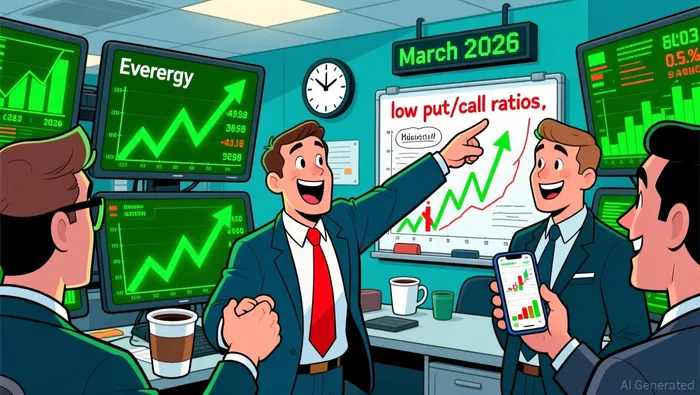
Here, the put/call ratio tells the real story. The overall ratio of 0.17 indicates overwhelmingly bullish sentiment. Since a ratio below one is bullish, this extreme reading suggests options traders are heavily favoring calls over puts. This is a textbook "buy the rumor" dynamic, where traders are positioning for a positive development, likely tied to the event implied by the high volatility.
The bullishness is even more concentrated in the medium term. The put/call ratio for the medium-term March 20 expiry (0.34) is higher than for the near-term January 16 expiry (0.17). This pattern shows that while some traders are acting on immediate news, the more concentrated bullish bets are placed on a catalyst further out. It suggests the market's expectation for a positive event is not just a fleeting reaction but a longer-term view.
In essence, the options market is pricing in a big, directional event for Evergy. The high volatility sets the stage for a potential move, but the put/call ratio reveals the directional bet: traders are overwhelmingly positioned for a rally, not a crash. The expectation gap here is between the priced-in uncertainty and the specific bullish conviction embedded in the trade.
The Reality Check: Fundamentals and the Last Earnings Print
The bullish options positioning now faces a stark reality check from the company's own numbers. Evergy's last earnings print, released on November 6, 2025, showed a clear miss. The company posted Q3 EPS of $2.03, falling short of the $2.09 estimate. That's a 2.87% shortfall, a tangible gap between the whisper number and the actual print. For a stock trading on momentum and options bets, this kind of earnings miss introduces immediate pressure.
Yet the stock has rallied anyway. Evergy's share price has climbed to $73.36 as of January 12, 2026, trading well above its 52-week high of $70.36. This move suggests that the market has already priced in significant positive momentum, perhaps overlooking the recent earnings stumble. The setup now is one of elevated expectations: the stock is near record highs, but the last fundamental report showed the company coming up just short.
This creates a classic expectation gap. The options market is betting on a positive catalyst, but the underlying stock price action implies that catalyst has already been discounted. The disconnect is highlighted by analyst consensus. Despite the recent price surge, the median price target remains at $62.77. That target implies a potential downside of over 15% from current levels, a stark contrast to the bullish sentiment embedded in the options flow. In other words, the market is pricing in a rally, but the fundamental view from analysts still sees room for the stock to fall.
The bottom line is that the priced-in optimism is now stretched. The options signal is a bet on a future event, but the recent earnings miss and the stock's run to new highs mean there's little room for error. Any stumble in the coming months could quickly reset expectations, turning the current bullish momentum into a "sell the news" reaction.
The Expectation Gap and the Catalyst
The bullish options bet is now squarely set against a recent reality of a missed earnings print. The disconnect is clear: traders are positioning for a positive event, but the company's last fundamental report showed it coming up short. This sets up a classic tension where the market's priced-in optimism must be validated by a catalyst.
The next clear catalyst is the next earnings call scheduled for February 26, 2026. This event is a direct reset button for guidance and expectations. If Evergy can deliver a beat and raise, it would confirm the bullish options bet and likely fuel further momentum. However, given the stock's run to new highs and the recent miss, any stumble in the coming quarter could trigger a sharp "sell the news" reaction. The high bar set by the options market and the stock price leaves little room for error.
Beyond the earnings call, the high implied volatility could also be pricing in fundamental regulatory outcomes. Utilities are heavily dependent on rate cases in their key markets of Kansas and Missouri. A favorable outcome there would directly boost earnings and cash flow, providing a tangible catalyst that isn't yet fully reflected in the stock price. The market's uncertainty, captured in volatility, may be a bet on such a positive regulatory development.
Finally, the institutional activity in options signals a specific event is being anticipated. The presence of large block trades indicates smart money is positioning for a defined move, not just general speculation. This suggests the market is not guessing about a catalyst but is actively betting on a particular outcome, likely tied to either the upcoming earnings or a regulatory decision. The expectation gap will close when that specific catalyst materializes.
What to Watch: Closing the Gap
The expectation gap will close with the next catalyst. Traders need to watch for shifts in sentiment and tangible signals that the priced-in optimism is being validated or is about to be punished.
First, monitor the put/call ratio and open interest ahead of the February 26, 2026 earnings call. The current ratio of 0.17 shows extreme bullishness, but a key risk is that this setup becomes a "sell the news" trap. If the company beats expectations, the high bar set by the options market could lead to a price decline as traders take profits. Watch for a spike in put open interest or a widening of the put/call ratio in the days leading up to the call. That would signal smart money hedging against a potential disappointment, even if the earnings print itself is strong.
Second, gauge stability through the dividend. The next quarterly payment of $0.6950 per share is scheduled for December 19, 2025. While this is a past event, its reaction provides a baseline. A smooth, uneventful payment and dividend yield of 3.68% reinforce the stock's reliability as a yield play. Any deviation from the pattern of 20 consecutive years of growth would signal operational or financial stress, widening the gap between the bullish options bet and the underlying fundamentals.
The primary risk remains that the high implied volatility is a bet on a positive catalyst that never materializes. If the February earnings beat expectations but fail to deliver a meaningful raise in guidance, the stock could still fall. The market has already priced in a rally, leaving no room for a "good but not great" result. The options market's extreme bullishness sets a high bar; closing the gap will require more than just a beat-it will demand a clear signal that the company's trajectory is accelerating.





Comentarios
Aún no hay comentarios