
Decoding BlockchainFX's Role in Shaping the Future of Crypto Investment
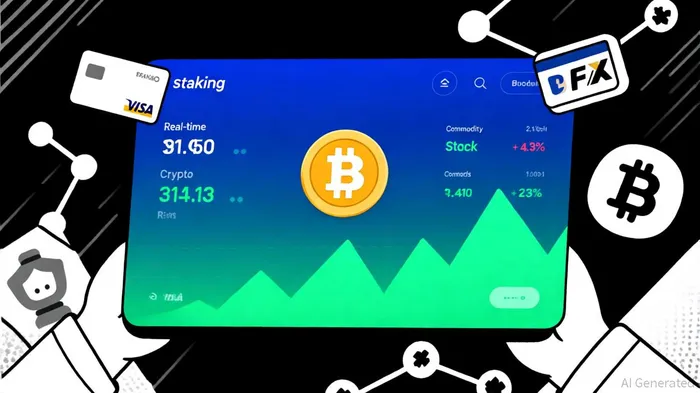
In 2025, the crypto investment landscape is witnessing a paradigm shift as platforms like BlockchainFX (BFX) bridge the gap between traditional finance (TradFi) and decentralized ecosystems. For retail investors, this convergence presents both opportunities and challenges. BlockchainFX, with its multi-asset trading interface, deflationary tokenomics, and real-world utility, is emerging as a pivotal player in this evolution. This analysis deciphers how retail investors can strategically position themselves to capitalize on BFX's unique value proposition while mitigating risks.
Strategic Entry Points: Presale Pricing and Bonus Incentives
BlockchainFX's presale model is engineered to reward early adopters. As of October 2025, the token is priced at $0.022, with a projected public launch price of $0.05—offering a potential 127% return for presale participants, according to a Ju.com analysis. A limited-time 30% bonus (via codes like BLOCK30) further amplifies gains, effectively reducing the cost per token to $0.0154, per a Cryptopolitan report. This tiered pricing structure, where token prices incrementally rise as the presale progresses, creates urgency for early entry, as noted by Crypto News.
For context, traditional crypto entry strategies for BitcoinBTC-- or EthereumETH-- rely on fixed market prices, with no such structured incentives for early buyers. BlockchainFX's approach diverges by combining speculative upside with immediate utility—such as the BFX Visa Card, which allows token holders to spend crypto on everyday purchases, per a Figment insight. This dual focus on price appreciation and real-world adoption strengthens the token's intrinsic value.
Risk Mitigation: Staking Rewards and Deflationary Mechanisms
BlockchainFX's risk framework is anchored in its tokenomics. The Ju.com analysis notes that token holders can stake BFX to earn daily rewards in both BFX and USDTUSDT--, with 50% of trading fees redistributed to stakers. Additionally, 20% of fees fund buybacks and burns, reducing supply and enhancing scarcity, as outlined in Crypto News. These mechanisms create a self-sustaining ecosystem where passive income and deflationary pressure work in tandem to stabilize the token's value.
In contrast, Ethereum's staking model emphasizes operational diversification—requiring investors to spread stakes across multiple validators to mitigate risks like slashing penalties or correlated downtime, as explained in Figment's guide. BlockchainFX's centralized redistribution model, while less decentralized, offers immediate liquidity and predictable returns, appealing to retail investors seeking simplicity.
Comparative Advantage: BFX vs.
Traditional Crypto Platforms
BlockchainFX's hybrid model distinguishes it from both Bitcoin and Ethereum. While Bitcoin's proof-of-work (PoW) system prioritizes network security through energy-intensive mining, according to Coinlaw statistics, and Ethereum's proof-of-stake (PoS) framework focuses on validator diversity (as discussed in Figment's guide), BFX integrates TradFi tools (e.g., stocks, forex) with DeFi features (e.g., staking, cross-chain interoperability). This integration reduces the learning curve for new investors and provides a single interface for managing diverse portfolios, as noted in the Ju.com analysis.
Moreover, BFX's projected price trajectory—averaging $0.151 by 2025 and $2.58 by 2030—reflects confidence in its utility-driven growth, according to Crypto News. Analysts attribute this optimism to the platform's expanding user base, regulatory compliance efforts (e.g., pursuing an ATS license in the U.S.), and partnerships with Nasdaq for real-time data integration.
Challenges and Considerations
Despite its strengths, BlockchainFX faces headwinds. Regulatory scrutiny, particularly from the SEC, remains a wildcard, as does competition from platforms like FTX 2.0 and CoinbaseCOIN-- Derivatives (noted in Crypto News). Retail investors must also navigate the inherent volatility of crypto markets. For instance, Bitcoin's 2025 price range of $95,000–$120,000 underscores the sector's unpredictability (per Coinlaw statistics). Diversification—allocating to both BFX and traditional assets like stocks or gold—can help balance risk.
Conclusion: A Strategic Play for Retail Investors
BlockchainFX represents a compelling case study in the evolution of crypto investment. Its presale incentives, utility-driven tokenomics, and hybrid TradFi-DeFi model position it as a high-yield opportunity for retail investors willing to navigate regulatory and market risks. However, success hinges on timing—early entry via the presale and strategic staking—alongside a diversified portfolio. As the platform's mainnet launches in Q3 2025 and expands its exchange listings, the window for optimal entry is narrowing. For investors seeking to decode the future of crypto, BFX offers a blueprint of innovation and accessibility.





Comentarios
Aún no hay comentarios