
The Declining Investment Attractiveness of French Payment Firms
The French payments sector, once a cornerstone of European financial innovation, is increasingly losing its luster for investors. Regulatory scrutiny, competitive threats from fintechs, and macroeconomic headwinds are converging to erode profitability and diminish the sector's appeal. This shift is evident in the recent exclusions of major players like Edenred and Worldline from the CAC 40 index, signaling a broader reassessment of the industry's long-term viability.
Regulatory Pressures: Merchant Fees and Compliance Costs
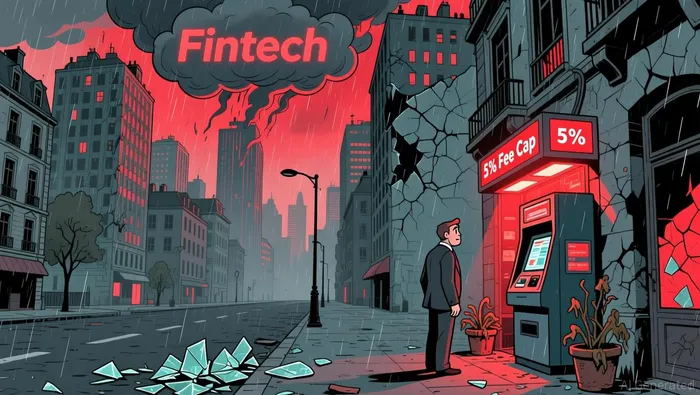
French payment firms are under intense regulatory scrutiny, particularly regarding merchant fees. Edenred, for instance, has faced criticism for charging merchants up to 5%, a practice regulators in some EU countries are now capping to protect consumers. Such interventions directly compress margins, forcing firms to either absorb losses or pass costs to businesses-a precarious balancing act. Meanwhile, the European Central Bank's tightening of credit standards for firms, driven by heightened risk sensitivity in the eurozone, has further constrained liquidity.
 The sector also grapples with evolving compliance frameworks. While specific EU regulations like PSD2 and DORA have not been explicitly cited in recent analyses, the broader trend toward stricter anti-fraud measures and safeguarding rules-such as the UK's FCA Supplementary Regime-reflects a global push for operational resilience. These requirements, though necessary for consumer protection, add layers of complexity and cost, squeezing already thin profit margins.
Competitive Threats: Fintechs and Investor Patience
Fintechs are reshaping the payments landscape with cheaper, faster, and more user-friendly solutions. Traditional firms like Worldline and Edenred are struggling to keep pace, as investors grow impatient with their sluggish adaptation. Worldline's recent 500-million-euro capital raise-a move to restore confidence-highlights the sector's fragility, driven by uneven anti-fraud implementations and strained relationships with high-risk merchants.
The competitive erosion is not just operational but existential. As fintechs capture market share, legacy firms face declining valuations. Edenred's 42% share price drop in 2025, which led to its removal from the CAC 40, underscores this trend. The index's criteria-market capitalization and liquidity-now increasingly exclude payment firms unable to demonstrate growth or resilience against digital disruptors.
Index Inclusion and Market Dynamics
The CAC 40's composition reflects broader market dynamics. While regulatory changes or capital declines are not the sole reasons for exclusions, they amplify existing vulnerabilities. For example, France's decision to ease capital requirements for banks in 2025 indirectly highlights the sector's fragility, as traditional financial institutions and payment firms alike face recalibration in a risk-averse environment.
Investor sentiment further exacerbates the challenge. A Reuters analysis notes a "sell-off" in European payment firms' shares as markets lose patience with their performance. This exodus reduces liquidity, making it harder for firms to meet index inclusion thresholds. The result is a self-reinforcing cycle: declining profitability, reduced market capitalization, and exclusion from indices that once symbolized stability.
Conclusion: A Sector in Transition
French payment firms stand at a crossroads. Regulatory pressures and fintech competition are not merely short-term hurdles but structural shifts redefining the industry. For investors, the message is clear: the era of high-margin, low-risk returns in this sector is over. As Edenred and Worldline's struggles demonstrate, firms that fail to innovate or adapt will find themselves increasingly marginalized-both in the market and in the indices that define investment benchmarks.







Comentarios
Aún no hay comentarios